TL;DR
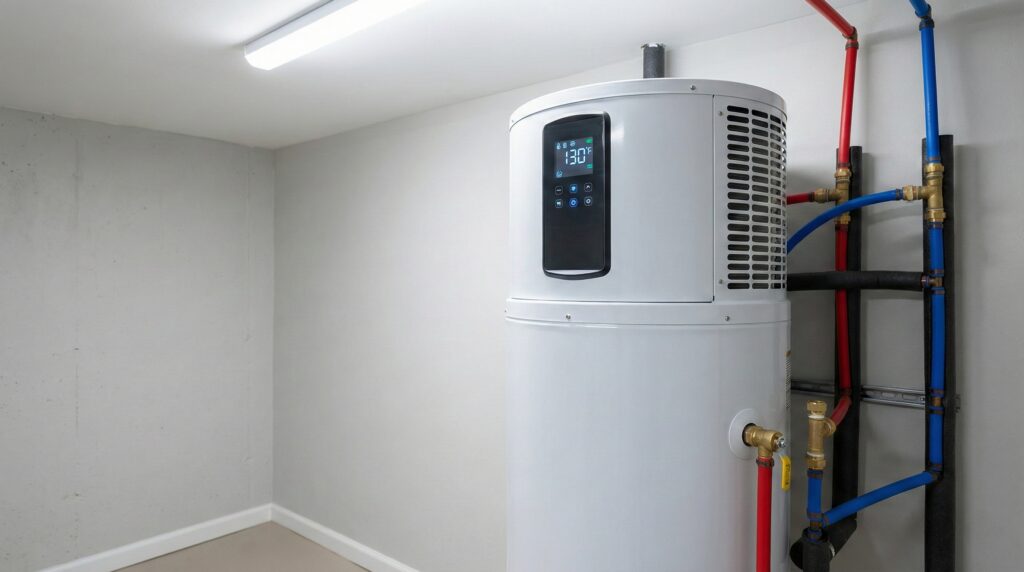
Heat pump water heaters, often called hybrid heaters, represent the most significant efficiency leap in home plumbing in decades. Unlike traditional electric tanks that use massive amounts of energy to create heat, these units move heat from the surrounding air into your water. This process can cut your water heating bills by up to 70%. However, the transition isn’t without its quirks. Real-world users frequently report that these units are noisier than expected, require more physical space for airflow, and have slower recovery times than gas or standard electric models. For most households, an 80-gallon hybrid tank is the “sweet spot” to avoid cold showers, and choosing a brand with a solid local service network is more important than chasing the highest efficiency rating on paper.
Why the Switch to Heat Pump Technology is Non-Negotiable
If you are still using a standard electric resistance water heater, you are essentially using a giant toaster to warm your bathwater. It is an incredibly inefficient process. Modern water heating systems have moved toward “heat transfer” rather than “heat creation.” By pulling thermal energy from the air in your basement or garage and pumping it into the tank, a heat pump water heater achieves efficiency ratings (UEF) of 3.5 to 4.0, compared to the 0.9 of a standard tank.
In the broader context of home electrification, this switch is often the single biggest “win” for your utility bill, second only to installing a whole-home heat pump for HVAC. While the upfront cost is higher—often double or triple a standard tank—federal tax credits and local utility rebates frequently bridge the gap. In many regions, you can find these units for under $500 after all incentives are applied, making the long-term savings pure profit for your household budget.
What Real Users Are Saying (Reddit Insights)
General Sentiment
The consensus among the r/heatpumps and r/HomeImprovement communities is overwhelmingly positive regarding savings, but cautious regarding reliability. Most users report their monthly “water heating” line item on their energy bill dropping from $40–$60 down to less than $15. There is a general sense that the technology has matured, but it is not yet “set it and forget it” in the same way an old-fashioned “dumb” tank was. Enthusiasts emphasize that you are buying a complex piece of HVAC equipment that just happens to be attached to a water tank.
Top Complaints & Warnings
The “unfiltered reality” from forum discussions highlights a few recurring headaches that manufacturers tend to downplay.
“Had a Rheem for a month. Noisy. 70 db noise level and so far we haven’t been able to get them to fix it. They are no longer publishing the noise level of the unit; it used to be 49db.” — r/heatpumps
Beyond the noise, the “thermistor issue” is a frequent topic of debate. Users have reported that certain high-volume brands have sensors that fail prematurely, often within the first year. Connectivity is another pain point; while many units feature Wi-Fi for scheduling and leak detection, the apps are frequently described as “clunky” or “completely worthless” for anything beyond basic temperature adjustments.
Budget Tips & Value Picks
The community secret for getting the best value isn’t just finding the lowest price. It’s the “upsizing” strategy.
“Go with 80 gallons if you have room… at least the Rheem has no way to prevent the resistive element from running in high demand, so bigger is better.” — r/heatpumps
Savvy buyers also recommend looking for units with top-mounted water connections (like A.O. Smith) if you are replacing a standard tank, as it simplifies the plumbing work and reduces labor costs. If you’re tackling multiple upgrades, integrating these with heating and cooling improvements can often trigger larger “whole home” rebate tiers from state programs.
The Best Heat Pump Water Heaters: Top Picks Compared
| Product Name | Best For | Price Range | Pros/Cons | Visit |
|---|---|---|---|---|
| Rheem Performance Platinum / ProTerra Series | mainstream homeowners who want the security of built-in leak protection and e… | Check price on Amazon | ✅ Integrated leak detection and automatic water shut; Multiple operating modes (Heat Pump, Eco, High Dem ❌ Frequent reports of thermistor (temperature sensor; Noise levels can reach 65-70dB, which is significa |
|
| LG Inverter & Stiebel Eltron Accelera | indoor installations where noise is a dealbreaker | Check price on Amazon | ✅ LG’s 42dB noise rating is among the lowest in the ; Stiebel Eltron uses an impressed current anode (el ❌ LG is newer to the US water heater market; finding; Stiebel Eltron units are physically taller and wid |
|
| A.O. Smith Voltrex AL / Signature 900 | large families who prioritize a straightforward installation and high hot wat… | Check price on Amazon | ✅ Top-mounted water connections make for a much clea; Very high recovery rates in “Hybrid” mode, ensurin ❌ The Wi-Fi application is basic and lacks the advan; Standard warranty support often requires going thr |
|
| Bradford White AeroTherm | homeowners who want a “pro-grade” install and peace of mind knowing a local c… | Check price on Amazon | ✅ “Hybrid Plus” mode engages both heating elements a; Superior build quality with a focus on ease of ser ❌ You generally cannot buy this yourself; you must h; The upfront cost is higher because you are paying |
|
| SANCO Split System (CO2 Refrigerant) | cold-climate homes or those with zero indoor space for a traditional hybrid tank | Check price on Amazon | ✅ Unrivaled efficiency in extreme cold climates wher; Zero noise inside the home because the compressor ❌ Extremely high equipment and installation costs (o; Requires a specialized HVAC technician to install |
Best Overall: Rheem Performance Platinum / ProTerra Series
The Rheem Performance Platinum (often sold as ProTerra through plumbing supply houses) is the most recognizable name in the space for a reason. It is widely available and features a built-in LeakGuard auto-shutoff valve that can prevent thousands of dollars in water damage. In practice, the energy savings are undeniable, but you must be prepared for the noise. The fan unit on top is essentially a small air conditioner, and it sounds like one.
The Good
- Integrated leak detection and automatic water shutoff valve come standard.
- Multiple operating modes (Heat Pump, Eco, High Demand, Electric) offer flexibility.
- Very high availability at big-box retailers makes it easy to source for urgent replacements.
The Bad
- Frequent reports of thermistor (temperature sensor) failures after 12-18 months.
- Noise levels can reach 65-70dB, which is significantly louder than a standard dishwasher.
- The EcoNet app is often laggy and can be difficult to pair with home Wi-Fi.
Should You Buy? Best for mainstream homeowners who want the security of built-in leak protection and easy availability. Skip if you plan to install this near a bedroom wall.
Best for Quiet Operation: LG Inverter & Stiebel Eltron Accelera
If your water heater is located in a finished basement or near a living area, noise is your primary concern. The LG Inverter Heat Pump uses a variable-speed compressor that significantly reduces the harsh “start-up” buzz found in cheaper models. Similarly, the Stiebel Eltron Accelera 300 E is an engineering marvel from Germany designed specifically to be a heat pump first, rather than a standard tank with a heat pump bolted on top.
The Good
- LG’s 42dB noise rating is among the lowest in the industry—hardly louder than a modern refrigerator.
- Stiebel Eltron uses an impressed current anode (electric), meaning you never have to replace a sacrificial anode rod.
- Sleek designs that look far more modern than the typical “beige tank.”
The Bad
- LG is newer to the US water heater market; finding a local plumber comfortable with repairs can be a challenge.
- Stiebel Eltron units are physically taller and wider than competitors, requiring more clearance.
- Both brands carry a price premium that may take longer to recoup through energy savings.
Should You Buy? Best for indoor installations where noise is a dealbreaker. Skip if you are on a tight budget and don’t care about a “buzz” in the garage.
Best for Large Households: A.O. Smith Voltrex AL / Signature 900
A.O. Smith has focused heavily on the “drop-in replacement” market. Their Voltrex AL and Signature 900 models feature water connections on the top, which is the standard layout for almost every home in America. This sounds like a small detail until your plumber tells you it will save you $300 in repiping labor. For a family of four or more, their 66-gallon and 80-gallon tanks are the gold standard.
The Good
- Top-mounted water connections make for a much cleaner, cheaper installation.
- Very high recovery rates in “Hybrid” mode, ensuring the third or fourth shower is still hot.
- Solid build quality with a long-standing reputation for tank durability.
The Bad
- The Wi-Fi application is basic and lacks the advanced scheduling found in Rheem’s app.
- Standard warranty support often requires going through a licensed plumber, which can be frustrating for DIYers.
Should You Buy? Best for large families who prioritize a straightforward installation and high hot water volume. Skip if you want the most “high-tech” app experience.
Professional Grade Choice: Bradford White AeroTherm
Plumbers generally love Bradford White AeroTherm because they don’t sell to the general public through big-box stores. This means their support line is staffed by people who talk to professionals all day. The AeroTherm is built in America and features one of the fastest recovery speeds in the industry when in its “Hybrid Plus” mode.
The Good
- “Hybrid Plus” mode engages both heating elements and the heat pump for incredibly fast recovery.
- Superior build quality with a focus on ease of service for plumbers.
- Quiet operation compared to the first-generation Rheem units.
The Bad
- You generally cannot buy this yourself; you must hire a professional installer.
- The upfront cost is higher because you are paying for professional procurement and labor.
Should You Buy? Best for homeowners who want a “pro-grade” install and peace of mind knowing a local company stands behind the product. Skip if you are a dedicated DIYer looking to save on labor.
The Efficiency Leader: SANCO Split System (CO2 Refrigerant)
Most heat pumps use R-134a refrigerant, which loses efficiency as it gets colder. The SANCO Split System uses CO2 as a refrigerant, allowing the outdoor unit to pull heat even when it is -20°F outside. This is a “split” system, meaning the noisy part sits outside your house like an A/C compressor, while the tank sits inside.
The Good
- Unrivaled efficiency in extreme cold climates where indoor heat pumps might struggle.
- Zero noise inside the home because the compressor is located outdoors.
- Higher water temperatures (up to 150°F) without needing electric backup.
The Bad
- Extremely high equipment and installation costs (often $5,000+).
- Requires a specialized HVAC technician to install the refrigerant lines.
Should You Buy? Best for cold-climate homes or those with zero indoor space for a traditional hybrid tank. Skip if you live in a temperate climate where a standard hybrid works fine.
Buyer’s Guide: 4 Things Competitors Don’t Tell You
1. The 80-Gallon Rule for Heat Pumps
If you are replacing a 50-gallon gas water heater, do not buy a 50-gallon heat pump. Heat pumps take longer to recover. While a gas heater can blast a tank back to temp in 20 minutes, a heat pump in “Heat Pump Only” mode might take two hours. By sizing up to an 80-gallon tank, you create a larger buffer of hot water, allowing the unit to stay in its most efficient mode longer without ever needing to kick on the expensive electric resistance elements.
2. Why You Need a Mixing Valve
To maximize your 80-gallon tank, you should set the temperature to 140°F and install a thermostatic mixing valve. This valve mixes that very hot water with cold water at the exit of the tank, delivering 120°F water to your taps. This effectively turns your 80-gallon tank into a 100-plus gallon tank of usable hot water, ensuring you never run out during back-to-back showers. If you are also using a best smart thermostat to manage your home’s air, this “thermal battery” approach is the next logical step in energy management.
3. Basement Cooling: The Hidden Benefit (or Flaw)
A heat pump water heater vents cold, dry air. In the summer, this is like having a free dehumidifier and a small air conditioner in your basement. However, in the winter, it can make a basement feel like a refrigerator. If your basement is finished and used as a living space, you may want to duct the exhaust air outside or to a different room.
4. Understanding Tax Credits (25C) and Local Rebates
Under the Inflation Reduction Act, you can often claim a 30% tax credit (up to $2,000) for a heat pump water heater. Many local utilities also offer “instant” rebates of $500 to $1,000. Before you buy, check your local utility website—you might find that the most efficient model is actually the cheapest after incentives.
Best Heat Pump Water Heaters by Usage Segment
Best for Cold Basements
The SANCO Split System is the clear winner here. Because it pulls heat from the outside air using CO2 refrigerant, it won’t turn your basement into an icebox during the winter months. It’s the most robust solution for northern climates.
Best for High-Usage Families
The A.O. Smith Signature 900 80-Gallon model is built for volume. When paired with a mixing valve, it provides enough hot water for a family of five to take morning showers without the last person getting a cold surprise. If you’ve considered a best tankless water heater but want to stick with a tank for reliability, this is your best bet.
Quietest Model for Indoor Installation
The LG Inverter Heat Pump is the one you want if the unit is near a bedroom or home office. Its variable-speed compressor avoids the loud “thunk” and high-pitched whine that plagues many of the budget-friendly models found at Home Depot.
Frequently Asked Questions
Is a 50-gallon heat pump water heater enough for a family of four?
Generally, no. Because heat pumps recover more slowly than gas or standard electric heaters, a 50-gallon unit can leave the fourth person with a cold shower. We highly recommend upgrading to an 80-gallon model like the Rheem ProTerra or A.O. Smith Voltrex for a family of four. This extra capacity allows the unit to stay in high-efficiency “Heat Pump Only” mode without needing the backup electric elements.
Why is my heat pump water heater making a loud buzzing sound?
A loud buzzing or humming sound is usually the compressor or the evaporator fan running. While all hybrid heaters make some noise (usually 45-60dB), a “loud” buzzing could indicate a vibration issue or a failing fan motor. Many Rheem owners have reported higher-than-advertised noise levels. If the noise is unbearable, consider the LG Inverter model, which is specifically designed for quiet operation at 42dB.
What is the difference between ‘Heat Pump Only’ and ‘Eco’ mode?
‘Heat Pump Only’ mode is the most efficient, using only the compressor to heat water, but it is slow. ‘Eco’ mode is a hybrid setting that uses the heat pump primarily but allows the electric resistance elements to kick in if the water temperature drops too fast (like during back-to-back showers). For maximum savings, stay in Heat Pump mode; for family convenience, ‘Eco’ is the safer daily choice.
Are heat pump water heaters worth it in cold climates?
Yes, but with caveats. If the unit is in a basement that stays above 40°F, it will work fine year-round. However, in extremely cold areas, an integrated unit might struggle or cool your basement too much. In these cases, a split system like the SANCO, which uses an outdoor compressor and CO2 refrigerant, is much more effective, as it can operate efficiently in temperatures as low as -20°F.
Do I need a mixing valve with a hybrid water heater?
While not strictly “required,” a mixing valve is highly recommended. It allows you to set your tank to a higher temperature (140°F) to kill bacteria and store more thermal energy, while the valve mixes it down to a safe 120°F for your faucets. This effectively extends the capacity of your tank, making a 65-gallon A.O. Smith or Rheem unit feel like an 80-gallon unit.
How often do thermistors need to be replaced on Rheem units?
Based on many Reddit user reports, some Rheem ProTerra units have had issues with thermistors failing roughly every 12 to 18 months. Rheem has updated the part design recently to use different metals to prevent corrosion. If you own one, it is a good idea to know how to access these sensors, or choose a professional-grade model like the Bradford White AeroTherm which typically sees fewer sensor-related complaints.
Switching to a heat pump water heater is one of the smartest moves you can make for your home’s energy future. While the noise and slow recovery times are real factors to consider, the massive reduction in energy consumption—and the accompanying carbon footprint—makes it a clear winner. By sizing your tank correctly and choosing a brand that fits your noise tolerance, you can enjoy decades of low-cost hot water.
We may earn affiliate commissions from qualifying purchases. This doesn’t influence our reviews.