TL;DR
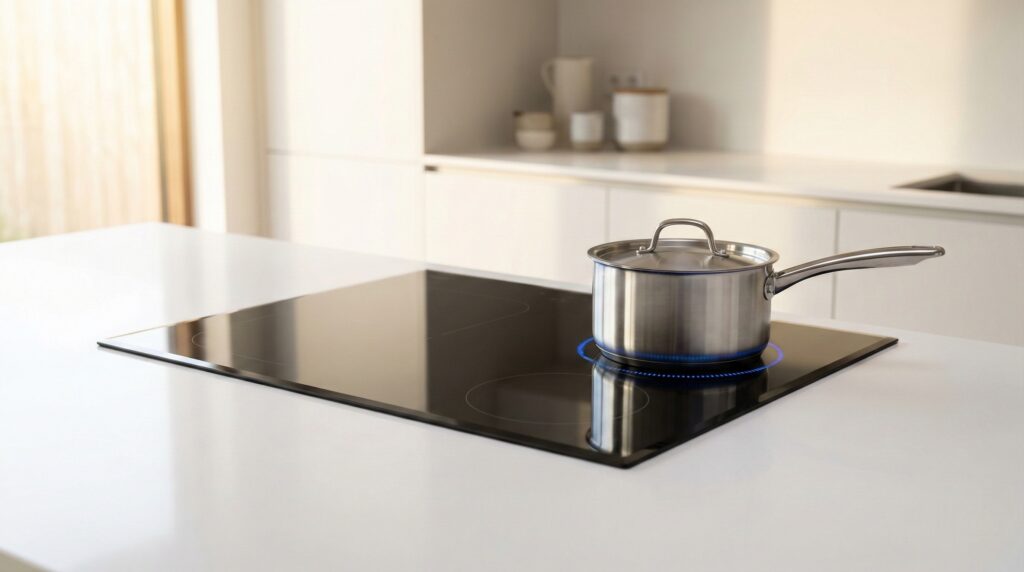
If you’re shopping for the best electric cooktop, start by deciding between induction (fast, responsive, efficient, but needs magnetic cookware) and radiant electric (slower, but works with any pot). For most US homes that can support a dedicated 240V circuit and have compatible cookware, we generally prefer induction for day-to-day control and speed — but fit (cutout size/clearances) and electrical capacity should decide what’s “best” for your kitchen.
Top Recommended Electric Cooktops
| Product | Best For | Price | Pros/Cons | Visit |
|---|---|---|---|---|
| 30” Induction Cooktop | UltraHeat 4.3kW Element & Smart (CBIH3013BE) | Most kitchens wanting fast induction power | $1300 – $1400 | Strong 4.3kW element per manufacturer positioning; you must confirm cutout and 240V circuit requirements before ordering | Visit LG |
| Impulse Labs | High-performance cooking in an electrification-first kitchen | $900 – $1200 | Performance-focused induction approach; model-specific fit/electrical details vary and need careful verification | Visit Impulse |
| Bosch 800 Series | Premium-feel controls and a mainstream appliance ecosystem | $1200 – $2000 | Well-known line with cooktop options; customer experience on the brand site is mixed so check retailer/service support | Visit Bosch |
| Miele 36-inch | Larger kitchens that want more space for multiple pans | $2000 – $4000 | Premium 36-inch class for better pan spacing; exact model specs and cutout requirements must be matched carefully | Visit Miele |
Top Pick: Best Overall Electric Cooktop
30” Induction Cooktop | UltraHeat 4.3kW Element & Smart (CBIH3013BE)
Best for: a typical 30-inch cutout replacement where you want induction speed for weeknight boils and real-time control, and you can support a dedicated 240V circuit in a US home panel.
The Good
- Induction cooking style is typically faster and more responsive than radiant electric for boiling and quick heat changes (as explained by ENERGY STAR).
- Brand highlights a high-power “UltraHeat” element (4.3kW in the product naming), which is the kind of “real high-power zone” we look for when you want rapid boiling or a hard sear (per manufacturer positioning).
- Built-in format (not a portable hob), which is what most homeowners want for a clean countertop install and reliable ventilation clearances.
- “Smart” features are called out in the product naming, which can be useful for households that want status/alerts or app-based management (feature usefulness varies by cook’s preferences).
The Bad
- Induction requires magnetic cookware (cast iron and many stainless pans work; many aluminum/copper pans won’t unless they have an induction-ready base).
- Electrical and fit are non-negotiable: you need to confirm the required circuit size (commonly 240V on a dedicated breaker), junction box access, and exact cutout/clearances before you buy.
- If you frequently cook with oversized griddles or long fish pans, you’ll want to confirm whether your specific layout supports a bridge/flex function (not confirmed from the provided product detail fields).
Our Take: For a homeowner doing a standard 30-inch cooktop swap — especially in a kitchen where you boil pasta, sear meats, and want cleaner temperature control — this LG induction pick is the most straightforward “best overall” option in this shortlist, as long as you verify cutout dimensions, cookware compatibility, and your dedicated 240V circuit with a licensed electrician (NEC-certified).
Impulse Labs
Best for: an electrification-first remodel where you’re willing to do extra up-front homework on electrical capacity, installation details, and exact model configuration to prioritize high-performance induction cooking.
The Good
- Strong “performance-first” reputation in the electrification conversation for cooking, which can matter if you’re trying to replace gas cooking without feeling like you’re giving anything up.
- Induction as a category tends to deliver fast boil times and quick responsiveness compared with radiant electric, with less wasted heat (per consumer-facing explanations from ENERGY STAR).
- Good fit for households that do a lot of heat-sensitive cooking (sauces, eggs, candy) where quick adjustments help you avoid overshooting.
- Aligned with all-electric kitchen planning — helpful if you’re coordinating other upgrades like panel work or ventilation changes at the same time.
The Bad
- “Impulse Labs” here is brand-level, not a specific verified cooktop model — so you’ll need to confirm the exact cutout dimensions, clearance requirements, and electrical specs for the unit you choose before purchase.
- As with any induction cooktop, non-magnetic cookware can add hidden cost if you need to replace a pot/pan set.
- Depending on model, high-output cooking may trigger power-sharing behavior across zones; confirm how simultaneous high-heat cooking is handled in the manual before committing.
Our Take: If you’re building a high-performance, all-electric kitchen in a newer home (or a remodel where a 240V circuit upgrade is already on the table), Impulse Labs is worth a look — but we’d only buy after confirming the exact model’s cutout and electrical requirements with your installer.
Bosch 800 Series
Best for: homeowners who want a premium-feel cooktop experience in a mainstream appliance ecosystem, especially when coordinating a matching wall oven or other Bosch kitchen appliances.
The Good
- The 800 Series is a well-known premium line, and Bosch commonly competes on usability — things like control layout, timers, and day-to-day fit-and-finish.
- Good option if you want to shop within a single brand family for a cohesive look across appliances.
- Likely to have multiple size/configuration options (30-inch and sometimes 36-inch class), which can help if you’re constrained by an existing countertop cutout.
- As a mainstream appliance brand, it’s generally easier to find installers familiar with the product category and service networks than with niche brands.
The Bad
- Customer experience signals are mixed at the brand level (Trustpilot shows a low overall rating for the brand domain), so we’d put extra weight on retailer reviews, local service availability, and warranty/support responsiveness for your area.
- This entry isn’t tied to a single verified cooktop model — so key specs like max boost wattage, zone sizes, and bridge/flex support must be checked on the exact unit you’re buying.
- Like most built-in electric cooktops, installation typically involves a dedicated 240V circuit and correct wiring practices; don’t treat it as a DIY swap unless you’re qualified.
Our Take: For a homeowner replacing a cooktop while keeping the rest of the kitchen in a familiar, serviceable appliance ecosystem, Bosch 800 Series can be a sensible “premium mainstream” path — just be disciplined about verifying the exact model’s power/zone layout and your local service situation before checkout.
Miele 36-inch
Best for: a larger kitchen island setup where you routinely run multiple pans at once (or cook with larger sauté pans) and want the breathing room of a 36-inch cooktop footprint.
The Good
- 36-inch format typically gives you better pan spacing — helpful when you’re simultaneously using a large skillet, a stockpot, and a saucepan without crowding.
- Miele is positioned as a premium brand, which often correlates with strong fit-and-finish and thoughtful UI details (varies by model).
- Good choice when your existing cutout is already 36-inch class and you want to avoid countertop modification.
- Premium cooktops often include higher-end convenience features like more precise timers, better pan detection behavior, and flexible cooking zones (confirm on the specific model).
The Bad
- This is a size/brand entry rather than a confirmed model, so you must match the exact cutout dimensions, required clearances, and electrical specs for the specific unit you select.
- 36-inch cooktops can require more electrical capacity depending on total kW rating; that can mean a larger breaker/wire size — confirm with a licensed electrician (NEC-certified).
- Premium pricing can jump quickly, and some performance benefits depend on features (like flex zones) that vary by model.
Our Take: If you’re outfitting a bigger cooking surface in a high-use family kitchen — and you already have (or can build) the right 36-inch cutout and dedicated 240V circuit — Miele is a compelling premium lane, but we’d only choose after verifying the exact model’s zone layout and power-sharing behavior.
FAQ
Induction vs radiant electric cooktops: which is better?
For most people, induction is “better” in the ways you feel every day: faster boiling, quicker response when you lower heat, and less wasted heat because energy goes into the pan rather than warming the glass top and surrounding air. Radiant electric can still be the right pick if you don’t want to replace cookware (or you use lots of aluminum/copper that won’t work on induction) and you want simpler compatibility. ENERGY STAR has a helpful plain-English overview of how induction works and why it’s efficient on ENERGY STAR.
What electrical requirements do most electric cooktops need?
Most built-in electric and induction cooktops in the US are 240V appliances and typically require a dedicated branch circuit sized to the cooktop’s electrical load (kW rating) and the manufacturer’s installation instructions. Because incorrect breaker/wire sizing can create shock and fire risk, it’s smart to have a licensed electrician (NEC-certified) confirm your breaker, wire gauge, grounding, and junction box access — especially in older homes or crowded panels. For code context, see the NFPA’s National Electrical Code (NEC).
How do I measure my countertop cutout for a cooktop replacement?
Don’t measure the visible glass — measure the actual countertop cutout (the hole) and note the cabinet depth and any nearby drawers or braces. Then compare your measurements to the manufacturer’s installation guide for the exact model you’re buying (they usually publish a cutout range plus minimum clearances). If your cutout is slightly off, don’t assume it’ll “flex” — many glass cooktops need very specific support and clearance, so you may need a trim kit, countertop modification, or a different model.
Does higher wattage always mean a better cooktop?
No. Peak power matters, but so does the size of the high-power zone, how boost mode behaves, and whether the cooktop power-shares across burners when multiple zones run high. Two cooktops can advertise similar max watts, yet feel very different when you’re running a stockpot at full blast while also sautéing and simmering. When comparing, look for at least one genuinely high-power zone for fast boils/searing and read the manual for details on simultaneous output limits.
What cookware works on induction cooktops?
Induction needs cookware with a magnetic (ferromagnetic) base — cast iron and many stainless-steel pans work well, while many aluminum and copper pans won’t unless they’re induction-ready. A quick test is the “magnet test”: if a magnet sticks firmly to the bottom of the pan, it will generally work on induction. If you love non-compatible cookware, you can use an induction interface plate, but it adds thermal lag and can reduce some of induction’s speed advantage.
Are bridge or flex zones worth paying for?
They can be, if you regularly cook on a griddle, a long fish pan, or two pans you want to treat like one heating surface. The catch is that “bridge” performance varies a lot by model: sometimes it’s excellent, and sometimes the center heating is weaker than you’d expect. If you mostly cook with standard round pans, two well-spaced separate burners can be more practical than a bridge feature you rarely use.
What safety certifications should I look for on an electric cooktop?
Look for a recognized safety listing/mark from a reputable lab (commonly UL or ETL) and buy from established retailers/brands with clear installation documentation and warranty support. For background on safety standards used for household electric cooking appliances, UL Solutions’ standards catalog (including UL 858 for household electric ranges/cooktops) is a good reference point: UL Standards Catalog (UL 858 overview).
Looking for these on Amazon? Browse best electric cooktop on Amazon →
Bottom Line
For most US kitchens that can support a dedicated 240V circuit and have (or are willing to buy) induction-compatible cookware, an induction cooktop is usually the best “electric cooktop” experience for speed and control. From the picks we can verify here, the LG 30” Induction Cooktop (CBIH3013BE) is our best overall choice thanks to its induction format and a clearly positioned high-power element — just confirm your cutout and electrical requirements with a licensed electrician (NEC-certified) before you order.
Affiliate disclosure: We may earn affiliate commissions from qualifying purchases. This doesn't influence our reviews.