TL;DR
Finding the right griddle for an induction surface is notoriously tricky because induction technology demands two things that many traditional griddles lack: perfect flatness and high magnetic permeability. While many brands claim compatibility, real-world testing and community feedback show that common issues like warping, “spinning” on glass tops, and cold spots between burners are frequent frustrations. The Demeyere Plancha stands out as the premium choice for its multi-layer construction that prevents bowing, while the Rocky Mountain 10-gauge steel griddle is a cult favorite for those who want heavy-duty durability without the high price tag of designer brands. For those using bridge elements, the Staub Enameled Cast Iron is a reliable performer, provided you give it ample time to preheat. Always avoid reversible griddles with ribbed undersides, as they fail to make the necessary contact with the induction sensors.
Best Griddle for Induction Cooktop: Top-Rated Picks & Real User Wisdom
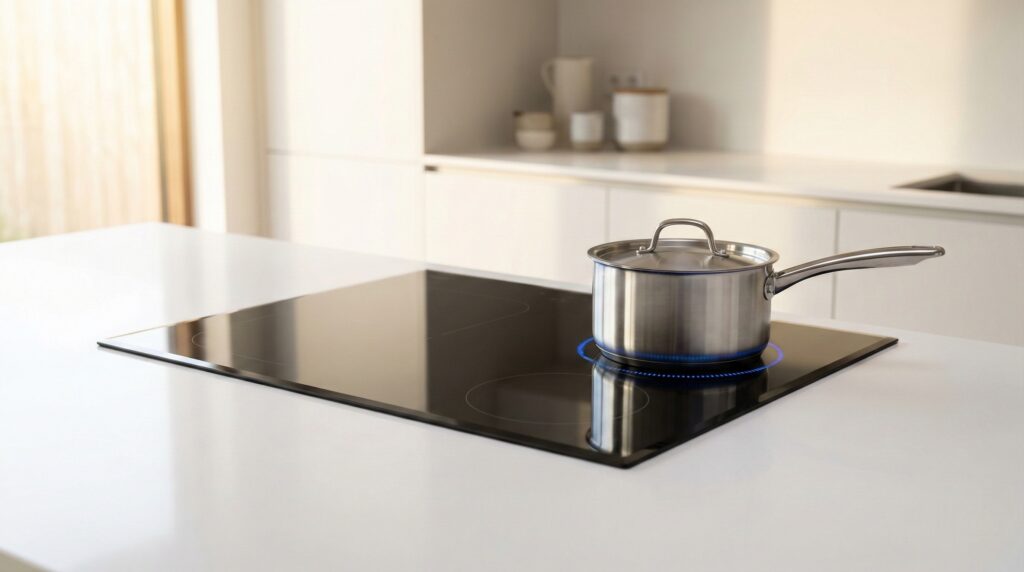
Moving to an induction cooktop is one of the most satisfying upgrades you can make for your kitchen’s efficiency. However, your old cast iron griddle might not be ready for the transition. Induction cooking relies on electromagnetism to heat the pan directly, which means the connection between the glass surface and the metal base must be nearly perfect. If a griddle is even slightly warped, the magnetic field won’t engage properly, leading to uneven cooking or annoying buzzing sounds.
Selecting the best induction cooktop is only half the battle; you need the right tools to take advantage of those high-powered bridge elements. Unlike gas, where flames can wrap around a slightly curved pan, induction is unforgiving. If the metal doesn’t touch the glass, it doesn’t get hot. This guide digs into the specific physics of induction griddling and highlights which products actually stay flat under pressure.
What Real Users Are Saying (Reddit Insights)
General Sentiment
The consensus among the induction community is one of cautious optimism. Users generally love the responsiveness of induction but are frequently frustrated by the “bowing” effect. When a long metal griddle heats up, physics dictates that the metal expands. On a gas range, you wouldn’t notice a 2mm lift. On induction, that 2mm lift can cause the cooktop to shut off or create a massive cold spot. Many users have shifted away from thin “budget” carbon steel toward thicker, 10-gauge options or high-end multi-ply stainless steel to combat this.
The ‘Paper Towel’ Hack
One of the most surprising tips frequently shared in the community involves a common household item. Because induction uses magnetic fields rather than thermal radiation or open flame, the glass surface itself doesn’t get “red hot” instantly. This allows for a clever protection method.
“Put a paper towel under your pots and pans to protect the stovetop. We’ve had our induction stove for a year now and not a single scratch yet. While this sounds scary, there is no direct flame so the paper does not catch alight.” — r/inductioncooking
While this method is community-vetted, you should still exercise caution. If you are searing at extremely high temperatures for long periods, the residual heat from the pan can eventually char the paper. However, for standard pancake or egg duty, it is a brilliant way to prevent the “scuffing” that occurs when heavy cast iron is moved across glass.
Cons & Real-World Complaints
- Flatness Issues: A recurring nightmare for induction owners is the “spinning” pan. The Lodge 18-inch carbon steel griddle is frequently cited as a offender here. If the base isn’t machined perfectly flat, it acts like a top on the smooth glass.
- Bridge Element Gaps: Even with a “bridge” feature, many cooktops have a small gap between the two main magnets. Users report that the Staub Enameled Griddle, while excellent, requires a solid 5-10 minute preheat to ensure the middle section reaches the same temperature as the areas directly over the elements.
- Price Barriers: There is a significant “sticker shock” in this category. Premium brands like Demeyere and Made In often cost three to four times more than standard cast iron, leading many to wonder if the performance justifies the investment.
Best Induction Griddles: Top Picks
1. The Gold Standard: Demeyere Plancha/Teppanyaki
If you are looking for the absolute peak of engineering, the Demeyere Plancha is it. Unlike cheaper models that use a single layer of metal, this is constructed with 7-ply material including an aluminum core. This isn’t just for show; the multi-layer design is specifically engineered to remain flat even when subjected to rapid temperature changes. It fits perfectly over bridge elements found on high-end electric kitchen appliances.
The Good
- Indulgent Heat Distribution: The 7-ply construction ensures that the edges are nearly as hot as the center.
- Silky Surface: The Silvinox treatment makes cleanup significantly easier than raw stainless steel.
- Stability: It is heavy enough to stay put but won’t warp or “spin” on your glass top.
The Bad
- Extreme Price: This is one of the most expensive griddles on the market.
- Size Constraints: Ensure your bridge element dimensions match, as this is a large piece of equipment.
Should You Buy? Best for serious home chefs who want professional-grade performance and have a bridge-capable induction range. Skip if you are on a tight budget.
2. Best for Bridge Elements: Staub Enameled Cast Iron Double Griddle
Staub is legendary for its enamel work, and this double griddle is no exception. Because it is cast iron, it has incredible heat retention. Once this thing gets hot, it stays hot, making it ideal for a big batch of burgers. The enameled bottom is also smoother than raw cast iron, which offers a bit more peace of mind regarding scratches.
The Good
- Exceptional Retention: Holds heat better than carbon steel or stainless, which is great for searing.
- No Seasoning Required: The matte black enamel is ready to go out of the box.
- Attractive Design: It looks beautiful enough to go from the stovetop directly to the table as a serving platter.
The Bad
- Preheat Time: Users on Reddit note it takes a long time to heat the middle section between burners.
- Weight: It is very heavy; you must lift it straight up to avoid dragging it across the glass.
Should You Buy? Best for those who prioritize heat retention and want a low-maintenance, “buy-it-for-life” tool. Skip if you want a lightweight pan for quick morning eggs.
3. Best Professional Grade: Made In Carbon Steel Griddle
Carbon steel is the darling of the culinary world because it offers the heat properties of cast iron at a fraction of the weight. Made In has designed a griddle that is specifically responsive to induction. It heats up much faster than the Staub, allowing you to get cooking in a matter of minutes. However, carbon steel requires a bit of “babying” with seasoning.
The Good
- Responsiveness: Reacts almost instantly to changes in your induction settings.
- Lighter Weight: Much easier to maneuver and clean in the sink than cast iron alternatives.
- Removable Handles: Great for finishing dishes in the oven.
The Bad
- Seasoning Learning Curve: If you don’t maintain the oil coating, it will rust.
- Sensitivity to Heat: Cranking it to “Power Boost” immediately can cause the metal to bow; it requires a gradual warm-up.
Should You Buy? Best for kitchen enthusiasts who enjoy the process of seasoning and want a highly responsive surface. Skip if you prefer “set it and forget it” cookware.
4. Best Value: Vigor 11 x 23 Portable Steel Griddle
Often found in restaurant supply stores, the Vigor griddle is the “no-frills” champion. It is a thick slab of stainless steel that is surprisingly compatible with induction. It doesn’t have the fancy branding of Made In or the heritage of Staub, but it gets the job done for a fraction of the cost.
The Good
- Unbeatable Value: Often found for under $100, which is rare for a large induction-ready griddle.
- Spacious: At 23 inches long, it can handle a massive amount of food.
- Durability: Built for commercial environments, so it can take a beating.
The Bad
- Industrial Aesthetics: It looks like a piece of lab equipment, not a designer kitchen tool.
- Rough Edges: Some users report the finish isn’t as polished as premium brands.
Should You Buy? Best for budget-conscious cooks who need maximum surface area. Skip if you want your cookware to match your kitchen’s high-end aesthetic.
5. Best Heavy-Duty: Rocky Mountain 12×20 10-Gauge Griddle
This is the “insider’s secret” of the induction world. Rocky Mountain Cookware produces a 10-gauge steel griddle that is significantly thicker than the standard retail competition. That thickness is your insurance policy against warping. It is flat, stays flat, and provides a massive thermal mass that rivals the best cast iron.
“We have the Rocky Mountain 12×20 10 gauge griddle… It’s not the cheapest option but we’ve found it to be reliable. It’s kinda like a carbon steel and takes a while to truly heat up. But it works well with our cooktop.” — u/jylertones1
The Good
- Warp Resistance: The 10-gauge thickness is a fortress against bowing.
- Perfect Flatness: Designed specifically to sit flush on flat-top surfaces.
- Longevity: This is a simple, heavy piece of steel that will likely outlive your stove.
The Bad
- Weight: It is incredibly heavy, making it difficult for some to wash or store.
- Slow Preheating: Because of the mass, you need to give it time to reach temperature.
Should You Buy? Best for those who have been burned by warping pans in the past and want the most stable surface possible. Skip if you have trouble lifting heavy objects.
6. Most Versatile: Hexclad Double Griddle
Hexclad has become a household name for its hybrid technology—combining the durability of stainless steel with the ease of non-stick. Their double griddle is very popular with induction users because it is lightweight and features a completely flat magnetic base. It is particularly effective for sticky foods like pancakes and eggs.
The Good
- Easy Release: The hybrid surface is much more forgiving than raw steel or cast iron.
- Dishwasher Safe: One of the few double griddles that you can actually toss in the dishwasher.
- Fast Heating: Reaches cooking temperature very quickly on induction elements.
The Bad
- Surface Longevity: While tougher than standard non-stick, the coating can eventually wear down.
- Lower Heat Ceiling: Not the best choice for high-heat steak searing compared to cast iron.
Should You Buy? Best for busy families who prioritize easy cleanup and frequently cook breakfast foods. Skip if you are a “sear-at-all-costs” steak purist.
Comparison Table: Top Induction Griddles
| Product Name | Best For | Price Range | Pros/Cons | Visit |
|---|---|---|---|---|
| Hexclad Double Griddle | Easy Cleanup | High ($) | Pros: Non-stick hybrid, dishwasher safe. Cons: Coating lifespan. | |
| Demeyere Plancha/Teppanyaki | serious home chefs | — | See Review Above | |
| Staub Enameled Cast Iron Double Griddle | Bridge Elements: | — | See Review Above | |
| Made In Carbon Steel Griddle | kitchen enthusiasts | — | See Review Above | |
| Vigor 11 x 23 Portable Steel Griddle | budget-conscious cooks | $100,+ | See Review Above | |
| Rocky Mountain 12×20 10-Gauge Griddle | those | — | See Review Above |
How to Choose: Cast Iron vs. Carbon Steel for Induction
Choosing between materials isn’t just about weight; it’s about how you cook. When you’re selecting the best cookware for induction cooktop use, you have to balance responsiveness with thermal mass.
Heat Retention vs. Responsiveness
Cast iron (like Staub) is the champion of heat retention. If you drop four cold steaks onto a preheated cast iron griddle, the temperature won’t plummet. However, if you realize the pan is too hot and turn down the induction element, the cast iron will stay at that high heat for a long time. Carbon steel and multi-ply stainless (like Made In or Demeyere) are much more responsive. You turn the dial, and the temperature changes almost immediately. This is better for delicate items like crepes or eggs.
Enameled vs. Raw Surfaces
Enameled surfaces provide a smoother interface for your glass cooktop, reducing the risk of micro-scratches. They also require zero maintenance. Raw steel or cast iron requires seasoning to become non-stick. If you enjoy the ritual of maintaining your gear, raw steel is fantastic. If you want to put it in the cabinet and forget about it, go with enamel or a hybrid like Hexclad.
The Reversible Griddle Warning
Many homeowners try to use their old Lodge reversible griddle—the kind with one flat side and one ribbed side for grill marks. These almost never work on induction. When the flat side is up, the ribbed underside doesn’t have enough surface area contact with the glass for the induction magnets to engage properly. You will likely get an “Error” code or extremely inefficient heating. For induction, you must have a completely flat, solid base on the bottom.
Best Induction Griddles by Category
Best for GE Cafe Induction Range
The GE Cafe series is famous for its precise bridge element. The Demeyere Plancha is the perfect match here. Its dimensions align with the GE bridge magnets, and its high-end aesthetic matches the Cafe’s premium look.
Best Under $100
If you don’t want to spend triple digits, the Vigor 11 x 23 is the clear winner. It’s a workhorse that provides more surface area than almost any other option in this price bracket.
Best for Bridge Elements
The Staub Double Griddle is specifically designed to span across two burners. Its thick cast iron base helps bridge the “cold gap” that exists between many burners, provided you give it a proper preheat.
Tips for Protecting Your Induction Cooktop
Your induction stove is a significant investment, and the glass top is the most vulnerable part. To keep it looking pristine, follow these rules:
- Clean the base: Before placing your griddle down, wipe the bottom of the pan. A single grain of salt trapped under a 15-pound griddle can act like a diamond-tipped glass cutter.
- The “Lift, Don’t Slide” Rule: Never drag your griddle to reposition it. Always lift it straight up. The heavy weight of griddles makes them much more likely to scratch the surface than standard pans for induction cooktop.
- Avoid “Power Boost”: Most manufacturers recommend avoiding the highest heat setting with large griddles. The extreme, localized heat can cause the metal to expand too quickly, leading to permanent warping. Slow and steady is the way to go.
Frequently Asked Questions
Can I use a cast iron griddle on an induction cooktop without scratching it?
Yes, but you must be careful. Cast iron is heavy and abrasive. To prevent scratches, ensure the base is clean and always lift the griddle rather than sliding it. Many users also use the “paper towel hack”—placing a single layer of paper towel between the glass and the griddle. This is safe on induction because there is no open flame, and it provides a protective barrier against scuffs. Enameled options like the Staub are also slightly smoother than raw cast iron.
Why does my griddle spin or wobble on my induction stove?
This is usually caused by thermal warping. When a griddle is too thin, the heat causes the metal to expand and bow. Because induction cooktops are perfectly flat glass, even a tiny curve in the metal turns the pan into a “spinning top.” This is a common complaint with the Lodge 18-inch carbon steel model. To avoid this, look for thicker options like the 10-gauge Rocky Mountain griddle or multi-ply stainless steel like the Demeyere Plancha, which are designed to resist warping.
Is carbon steel or cast iron better for induction griddling?
It depends on your cooking style. Carbon steel is lighter and more responsive, meaning it heats up and cools down quickly. This is ideal if you want precision control. Cast iron has much higher heat retention, which is better for maintaining a consistent temperature when cooking large amounts of cold food, like a dozen burgers. However, cast iron is significantly heavier and requires more care when handling it on a glass surface to avoid damage.
Do reversible griddles work on induction?
Generally, no. Reversible griddles have one flat side and one ribbed side. For induction to work efficiently, the metal must have broad, flat contact with the glass surface. When the ribbed side is facing down, there isn’t enough contact area for the magnetic field to transfer heat effectively. You will likely experience very slow heating or find that your cooktop won’t even recognize the pan. It is much better to buy a dedicated flat-bottom griddle for induction use.
How do I fix the cold spot in the middle of my double burner griddle?
Most induction cooktops have a small gap between the magnets, even when using a bridge feature. To fix the cold spot, you must allow for a longer preheat time. Using a heavy griddle like the Rocky Mountain or Staub helps, as the thick metal will eventually conduct heat into that middle zone. Start your preheat at a low-to-medium setting for 5 to 10 minutes before you start cooking. This allows the heat to spread evenly through the entire slab of metal.
Final Thoughts
Upgrading your kitchen with high-efficiency appliances is a journey that often requires rethinking your tools. While induction is a superior way to cook, its demands for flatness and magnetic contact mean you can’t just grab the cheapest griddle on the shelf. If you want a seamless experience, investing in a high-quality, thick-gauged, or multi-ply griddle is the way to go. Whether you choose the luxury of the Demeyere or the rugged reliability of the Rocky Mountain, your breakfast routine will thank you for the even, consistent heat that only a well-matched induction setup can provide.
For more advice on building an energy-efficient home, check out our guides on heating and cooling solutions or explore our latest reviews of the best portable induction cooktops for smaller spaces.
Disclosure: We earn a small commission on qualifying purchases through our Amazon links, at no extra cost to you. This helps us continue providing honest, expert advice for your home electrification journey.