TL;DR
Finding the right electric water heater involves balancing your daily hot water needs against long-term energy costs and the physical constraints of your home. For most households, the Bradford White RE Series stands out as a top choice for traditional storage because of its superior build quality and tank thickness. If energy efficiency is your primary driver, the Rheem Performance Platinum Hybrid is hard to beat, potentially saving hundreds on annual utility bills. However, those looking to reclaim space might prefer a tankless unit like the Stiebel Eltron Tempra Plus, provided your electrical panel can handle the massive 30kW surge. This guide breaks down the real-world performance, common maintenance headaches, and honest user feedback to help you make an informed decision for your home’s electrification journey.
After researching and comparing dozens of home electrification products across heating, cooling, and energy efficiency categories, I’ve found that the “best” unit often depends more on your local water quality and electrical infrastructure than the brand name on the tank. Most modern electric units are highly efficient at converting electricity to heat, but the difference lies in how long the tank holds up before springing a leak and how well the manufacturer handles warranty claims when things go sideways.
Understanding Electric Water Heater Types
Before diving into specific models, you need to decide which technology fits your lifestyle. Not every home is ready for a high-tech hybrid, and not every family will be happy with the flow rates of an electric tankless system.
Traditional Storage Tank Heaters
These are the workhorses of the American home. They keep a large volume of water (usually 40 to 80 gallons) hot and ready at all times. They are relatively inexpensive to buy and simple to repair. The downside is “standby loss”—you are paying to keep water hot even when you’re asleep or at work. If you are looking for a straightforward replacement without a massive upfront investment, browsing our water heating systems category will show you why these remain the standard.
Heat Pump (Hybrid) Water Heaters
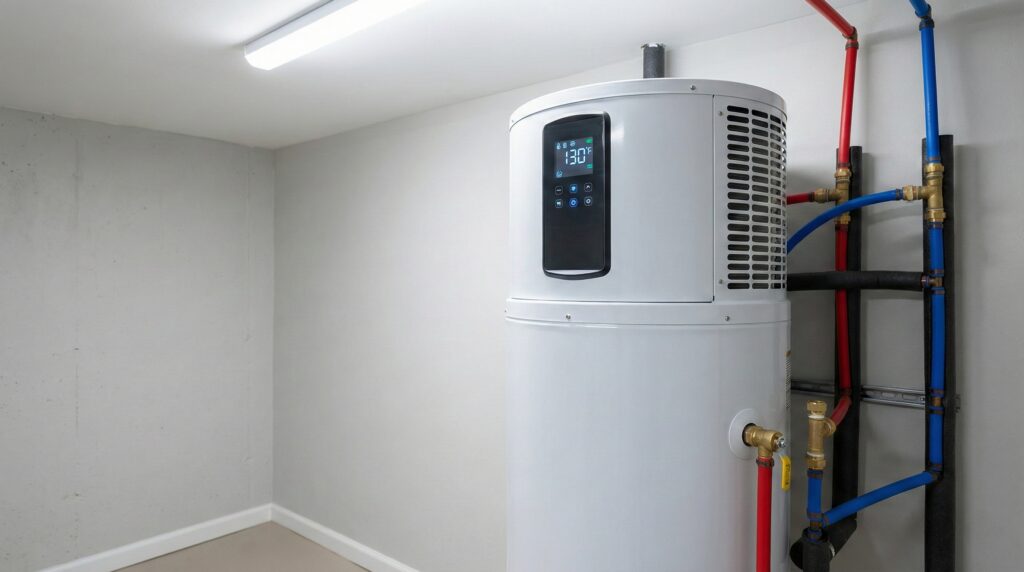
Hybrid heaters are the darlings of the electrification movement. They pull heat from the surrounding air and move it into the tank. This process is incredibly efficient—often 3 to 4 times more than standard electric tanks. In practice, the heat pump cuts heating costs by 40-60%, and most homeowners see the difference in their first few utility bills. They do require more vertical space and a way to handle condensation, but the energy savings often pay for the unit within a few years.
Electric Tankless Water Heaters
Often called “on-demand” heaters, these units flash-heat water as it flows through. They are the size of a suitcase and never run out of hot water—theoretically. However, electric tankless units have a massive drawback: they require a huge amount of electrical current. You may need to upgrade your home’s electrical panel to 300 or 400 amps to support a whole-house unit, which can cost more than the heater itself. We explored these trade-offs in our deep dive into the best electric tankless water heater options.
| Product Name | Best For | Price Range | Pros/Cons | Visit |
|---|---|---|---|---|
| Bradford White RE Series | Overall Reliability | $900 – $1,400 | Heavy-duty tank; Hard to find at retail. | |
| Rheem Performance Platinum Hybrid | Maximum Efficiency | $1,600 – $2,100 | Huge energy savings; Noisy compressor. | |
| Stiebel Eltron Tempra Plus | Whole-House Tankless | $700 – $950 | Endless hot water; High electrical demand. | |
| AO Smith Signature Series | Budget Value | $500 – $800 | Widely available; Plastic drain valves. | |
| Ruud Professional Series | Long-Term Durability | $1,000 – $1,500 | Excellent warranty; Professional install recommended. | |
| Stiebel Eltron DHX | Point-of-Use | $250 – $400 | Great for ADUs; Not for whole house. |
Top Picks for Best Electric Hot Water Heater
Bradford White RE Series
If you talk to any old-school plumber, Bradford White is usually the first name out of their mouth. They don’t sell to big-box stores, focusing instead on professional supply houses like Ferguson. This exclusivity often leads to better quality control and a tank that is noticeably heavier than its competitors. That weight comes from a thicker steel tank and more robust welds, which are the primary defense against the inevitable corrosion that kills most heaters.
The Good
- Superior tank thickness reduces the likelihood of pinhole leaks after five or six years.
- Proprietary “Hydrojet” system helps reduce sediment buildup at the bottom of the tank.
- Serviceability is high; parts are standard and easy for any plumber to source.
The Bad
- Hard to buy as a DIYer; most distributors will only sell to licensed contractors.
- Base models often ship with plastic drain valves which should be upgraded immediately.
Should You Buy? Best for homeowners who want a “set it and forget it” solution and are willing to pay a plumber for a professional installation. Skip if you are a dedicated DIYer looking to buy a unit from a local hardware store today.
Rheem Performance Platinum Hybrid
This is arguably the most efficient way to heat water in a residential setting. It operates like a refrigerator in reverse, sucking heat out of the air to warm your water. In summer, it even provides a bit of “free” dehumidification and cooling to your garage or basement. Your energy bill will thank you, but you need to be aware of the mechanical complexity involved.
The Good
- Energy Star certification qualifies it for significant federal tax credits and local rebates.
- Integrated Wi-Fi allows you to set schedules and track energy usage from your phone.
- Multiple modes (Heat Pump, High Demand, Electric) let you prioritize speed or savings.
The Bad
- The compressor makes a humming noise similar to a loud refrigerator; don’t install it right next to a bedroom.
- Some users report issues with “broken dip tubes” upon delivery, which can lead to luke-warm water early in the tank’s life.
Should You Buy? Best for eco-conscious families looking to slash their carbon footprint and monthly costs. Skip if you have a very small, unventilated utility closet or are sensitive to mechanical noise.
Stiebel Eltron Tempra Plus
Stiebel Eltron is the gold standard for electric tankless technology. Unlike cheaper models that struggle to maintain temperature when you turn on a second faucet, the Tempra Plus features “Advanced Flow Control.” If the demand exceeds the heating capacity, it slightly slows the water flow to ensure the temperature stays consistent. This prevents that dreaded “cold water sandwich” effect.
The Good
- Zero standby heat loss means you only pay for the hot water you actually use.
- Compact design frees up 10-15 square feet of floor space in your utility room.
- Consistent temperature delivery even during peak morning shower times.
The Bad
- Massive electrical requirements; you will likely need two or three 40-amp double-pole breakers.
- Performance drops significantly in northern climates where the incoming “groundwater” is near freezing.
Should You Buy? Best for small homes or apartments where space is at a premium and the electrical panel is already upgraded. Skip if you live in a cold climate and enjoy high-flow 3.0 GPM showerheads.
AO Smith Signature Series
For many, the best water heater is the one they can actually afford when the old one starts leaking at 2 AM. AO Smith is widely available at major retailers and offers a solid, reliable tank that won’t break the bank. While it lacks the “tank thickness” prestige of Bradford White, it is a significant step up from bottom-tier generic brands.
The Good
- Easily available for same-day pickup and DIY installation.
- Simple, dual-element design that is easy to troubleshoot if a heating element burns out.
- Reasonable price point for the 40-gallon and 50-gallon sizes.
The Bad
- Standard 6-year warranty is shorter than premium models.
- Plastic drain valves are prone to leaking if you try to flush the tank for maintenance.
Should You Buy? Best for budget-conscious homeowners or rental properties where a standard replacement is needed quickly. Skip if you want a unit guaranteed to last 15+ years.
Ruud Professional Series
Ruud is essentially the professional-grade cousin of Rheem. Their Professional Series tanks are often sold with longer warranties (up to 12 years) and include upgraded components like brass drain valves and more durable heating elements. It’s a “plumber’s choice” that balances retail accessibility with higher-end build standards.
The Good
- Excellent balance of price and durability with a focus on high-quality internal components.
- The 12-year warranty provides peace of mind that the manufacturer stands behind the tank welds.
- Consistent heating performance even in high-demand households.
The Bad
- Warranty reimbursement can be a “hassle” according to some users, often requiring you to pay for labor yourself.
- Requires professional installation to ensure the full warranty period is honored.
Should You Buy? Best for homeowners who want a high-quality traditional tank with a long warranty. Skip if you are looking for the absolute lowest price or the highest energy efficiency.
Stiebel Eltron DHX
Sometimes you don’t need a whole-house solution. Maybe you have a guest bathroom that takes five minutes for hot water to reach, or a detached garage/office. The DHX is a “point-of-use” tankless heater designed to sit right under the sink. It provides instant hot water for a single faucet, saving gallons of water that would otherwise go down the drain while waiting for the main tank to kick in.
The Good
- Virtually maintenance-free compared to storage tanks.
- Extremely small footprint—fits easily inside a standard vanity cabinet.
- Eliminates the “wait time” for hot water in remote areas of the house.
The Bad
- Cannot handle more than one faucet at a time.
- Needs its own dedicated electrical circuit, which can be tricky to add to a finished bathroom.
Should You Buy? Best for supplemental hot water in ADUs or remote sinks. Skip if you are trying to provide hot water for a shower or multiple fixtures.
What Real Users Are Saying (Reddit Insights)
General Sentiment
The general consensus among the DIY and plumbing communities is that electric water heaters are remarkably similar in their heating efficiency (all convert electricity to heat at nearly 100%), but they differ wildly in “tank longevity.” Users on r/Plumbing frequently advise against buying the cheapest possible unit from a big-box store, noting that these often have thinner tanks and more plastic components that fail shortly after the warranty expires.
Top Complaints & Warnings
The most common warning involves the transition to electric tankless. Many homeowners are lured by the promise of “endless hot water” only to realize their local power grid or home panel cannot support the load.
“118 degree water at 1.5 GPM? That is horrible! That’s not even piss warm water, and 1.5 GPH is a bloody trickle… Your experience is similar to mine, these tankless units are absolute garbage.” — r/Plumbing
Another frequent complaint involves the “dip tube” on certain Rheem models. If the tube is cracked or broken during shipping, cold water enters at the top of the tank rather than the bottom, resulting in only 10 minutes of hot water regardless of tank size.
Expert Plumber Recommendations: Why Weight Matters
When choosing between a Bradford White and a competitor, plumbers often look at the shipping weight.
“Bradford white… are considerately and noticeably heavier than the ruud/Rheem/ao smith… the only thing that would make them so much heavier is usually the thickness of the actual tank. I’d go with Bradford white because simply the tank is thicker.” — r/Plumbing
A thicker tank means more metal to resist corrosion, which is the #1 cause of catastrophic water heater failure. If you’re comparing similar setups, check the specs for the weight—it’s a silent indicator of quality.
Advanced Maintenance: How to Make Your Heater Last 20+ Years
Most people install a water heater and never touch it again until it leaks. If you want to double the lifespan of your unit, you need to be proactive. This is especially true for homes with hard water, where scale buildup can “cook” your bottom heating element. For more on managing your home’s infrastructure, check out our heating and cooling solutions for broader context on system longevity.
The Case for Electric Anode Rods
A standard water heater uses a “sacrificial” magnesium or aluminum rod. The water eats the rod instead of the tank. Once the rod is gone, the water eats your tank. An Electric Anode Rod (like those from Corro-Protec) uses a small electrical current to provide constant protection without the rod ever dissolving. It also kills the bacteria that causes “sulfur smell” in well water.
Upgrading to Brass Drain Valves
Cheap plastic drain valves are notorious for stripping or failing to close once opened. Replacing your stock valve with a full-port brass ball valve allows you to flush out sediment much more effectively. A clean tank bottom means your heating elements don’t have to work through two inches of “sand” to heat your water.
Installing a Halo Ionizer for Scale Prevention
Scale is the silent killer of electric heaters. A Halo Ionizer or a similar physical water conditioner helps prevent calcium from sticking to the heating elements and tank walls. It’s a less aggressive alternative to a salt-based softener and can significantly extend the life of a best electric water heater by keeping the internal surfaces clean.
Sizing Guide: Do You Really Need an 80-Gallon Tank?
Many homeowners over-size their tanks “just in case.” However, for most families of four, a 50-gallon tank is more than sufficient.
“2 showers simultaneously, at 2.4 gallons per minute, a 50 gallon tank will still last 20 minutes of concurrent showers. Keep in mind, it is actually a bit more as the tank is re-filling and heating during those 20 minutes.” — r/homeowners
If you have a massive soaking tub or five teenagers, you might consider an 80-gallon unit, but keep in mind that larger tanks have higher standby losses. It’s often better to go with a high-quality 50-gallon tank and set the temperature slightly higher (130-140°F) using a mixing valve to “stretch” the hot water capacity.
Installation Requirements & Infrastructure
Switching from a gas or oil-fired system to electric isn’t always a “plug and play” situation. In 2026, many homeowners are discovering that their electrical panels are the bottleneck for electrification upgrades. For a storage tank, you’ll need a dedicated 30-amp, 240-volt circuit. For a whole-house tankless unit, you might need up to 120-amps of dedicated space—that’s more than half the capacity of a standard 200-amp panel. If you’re planning multiple upgrades, such as adding an EV charger, browse our home appliances section to help plan your total load.
Space and Venting for Heat Pump Models
Heat pump water heaters need room to breathe. They generally require about 1,000 cubic feet of air space (roughly a 10′ x 12′ room) to function efficiently. If you’re putting one in a small closet, you’ll need louvered doors or a ducting kit. You also need to plan for a condensate drain, as these units pull moisture out of the air just like an air conditioner.
Other Notable Alternatives Worth Considering
State Select Heaters: Often found in new construction, these are reliable mid-range units that offer similar performance to AO Smith but are usually sold through wholesale channels. Search State Select.
Rheem Gladiator Series: This is an upgrade over the standard Performance series, featuring built-in leak detection and an automatic water shut-off valve—great for second-floor installations. Search Rheem Gladiator.
Eemax Home Advantage: A strong competitor in the electric tankless space, often praised for its modular heating elements that are easy to replace individually. Search Eemax.
Frequently Asked Questions
Is an 80-gallon tank necessary for two simultaneous showers?
Generally, no. A 50-gallon tank is usually plenty for two people showering at the same time. Since you mix hot water with cold to reach a comfortable temperature, you only use about 1.2 to 1.5 gallons of hot water per minute per shower. A 50-gallon tank like the AO Smith Signature Series can easily handle 20+ minutes of concurrent usage. Only consider an 80-gallon tank if you have a massive garden tub or a very large family.
Why do plumbers recommend Bradford White over big-box store brands?
Plumbers prefer Bradford White because they are built with thicker steel and higher-quality welds. They are also exclusively sold through professional distributors, meaning they aren’t subjected to the same cost-cutting measures as retail-focused brands. The added weight of a Bradford White tank is a primary indicator of its longevity. For more details on professional picks, see our guide on the best electric water heater models.
Can I use a commercial-rated water heater in my home?
While you can physically install a commercial unit, it is often overkill and may void your homeowner’s insurance if it’s not rated for residential use. Commercial heaters are designed for rapid recovery in high-use environments like restaurants. For a home, a high-quality residential tank like the Ruud Professional Series offers better insulation and a longer warranty tailored to household needs.
What are the electrical requirements for an electric tankless water heater?
A whole-house electric tankless unit like the Stiebel Eltron Tempra Plus requires a massive amount of power—often 24kW to 36kW. This usually translates to three separate 40-amp double-pole breakers. Before buying, check if your electrical panel has enough open slots and if your main service (usually 200 amps) can handle the peak load when the heater, dryer, and stove are all running at once.
Does a heat pump water heater need a drain for condensation?
Yes. Because heat pump models like the Rheem Performance Platinum act as a dehumidifier, they create condensation that must be drained away. You’ll need to run a small PVC pipe to a floor drain or install a condensate pump to move the water to a nearby sink or outdoors. This is a critical step in the installation process to prevent flooding in your utility room.
How do I make my electric water heater last more than 20 years?
The secret to longevity is maintenance. Replace your sacrificial anode rod every 3-5 years, or better yet, install an electric anode rod that never dissolves. Additionally, flushing the tank annually to remove sediment and upgrading to a brass drain valve will prevent the bottom of the tank from corroding. Using a scale-prevention system like a Halo Ionizer also helps keep the heating elements efficient and clean.
Choosing the best electric hot water heater comes down to your home’s infrastructure and your long-term goals. If you have the space and want to save money, a hybrid heat pump is a logical choice. If you’re looking for a simple, reliable replacement, stick with a professional-grade storage tank. Whatever you choose, remember that a little maintenance goes a long way in ensuring you never wake up to a cold shower.
We may earn affiliate commissions from qualifying purchases. This doesn’t influence our reviews.