TL;DR
A mini split system (ductless heat pump) can be one of the cleanest ways to heat and cool a home — especially if you don’t have ducts, want room-by-room control, or need to fix hot/cold spots. The two biggest “make or break” factors are (1) correct sizing using a room-by-room Manual J load calculation and (2) installation/commissioning quality (electrical, line-set, vacuum/charge, drainage).
If you’re shopping, compare models by SEER2/HSPF2 and ENERGY STAR certification, confirm low-temperature heating performance for your climate, and verify you have the right 230V circuit capacity before you buy.
What Mini Split System Actually Is
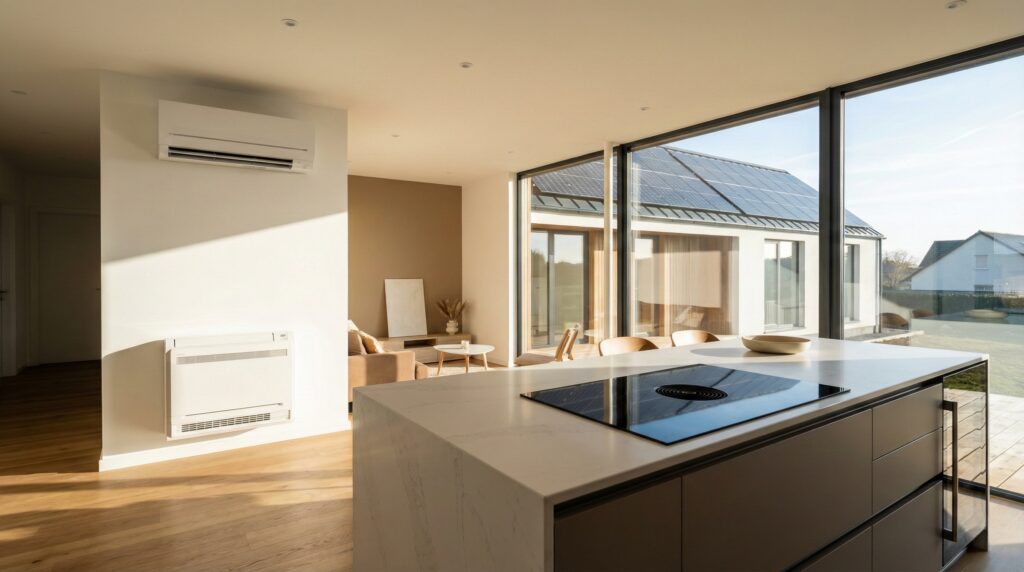
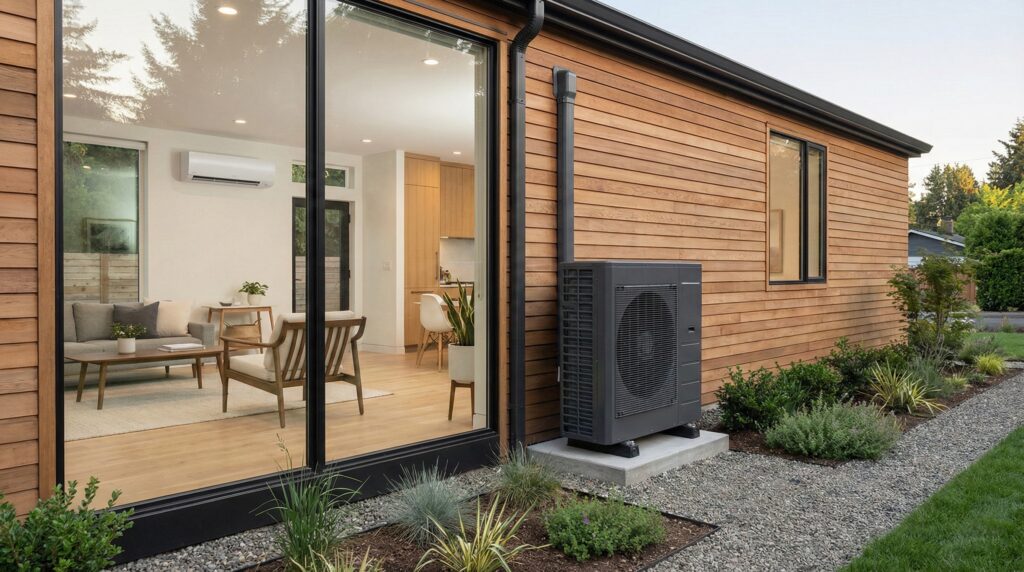
A mini split system is a ductless heating and cooling setup that typically includes one outdoor unit (the condenser/heat pump) connected to one or more indoor units (air handlers) by a small bundle: refrigerant lines (line set), power/control wiring, and a condensate drain. In cooling mode it moves heat out of your home; in heating mode (if it’s a heat pump) it reverses and moves heat into your home. Because it moves heat rather than generating it, a mini split heat pump can be very efficient — often a good match for home electrification.
Most modern mini splits are inverter-driven. In plain English: instead of running full blast and shutting off repeatedly like older single-stage systems, the compressor can ramp up and down to match what the room needs. In practice, that often means steadier temperatures, better dehumidification, and less “on/off” noise — assuming the system is sized and installed correctly.
Where mini splits tend to make the most sense:
- No ducts (or bad ducts): Older homes, additions, finished garages, bonus rooms, and converted attics often don’t have ductwork — or the ducts are leaky, undersized, or impossible to route.
- Zoned comfort: Each indoor unit can be controlled independently, which helps when rooms have different sun exposure, insulation levels, or schedules.
- Efficiency goals: If you’re trying to cut gas use and electrify, a heat-pump mini split is a common stepping-stone (or the whole solution).
Where they’re not automatically the best choice: if your home already has well-designed, sealed ductwork and you just need to replace a central system, a ducted heat pump (or even keeping the same ducted layout) can be simpler and sometimes cheaper per ton of capacity.
Two concepts matter more than any brand name:
- Sizing: You want a room-by-room load calculation (ACCA Manual J). Rule-of-thumb sizing by square footage is a common path to oversizing and comfort issues.
- Installation/commissioning: Line-set length/routing, deep vacuum evacuation (when applicable), leak checks, drainage, and startup verification are the difference between “quiet and efficient” and “loud and disappointing.” The U.S. Department of Energy’s overview is a solid starting point: U.S. Department of Energy guidance on ductless mini-splits.
Who Mini Split System Fits Best
A mini split system tends to be a great fit if you recognize your situation in one (or more) of these:
- You need a targeted fix for a problem room: An addition, garage gym, home office, or upstairs bedroom that never matches the rest of the house.
- You want zone control without opening walls for ducts: One outdoor unit plus one head per zone can be far less invasive than adding ductwork.
- You’re electrifying and want efficient heating: In many climates, a heat-pump mini split can replace (or significantly reduce) fossil-fuel heating — especially in shoulder seasons.
- You care about operating cost and comfort stability: Inverter modulation can maintain tighter temps than many basic systems.
DIY-minded homeowners sometimes pick mini splits specifically for simplified installation kits. In customer experience around DIY-friendly systems, one homeowner put it plainly: “I purchased this with some curiosity whether it was truly DIY and was pleasantly surprised that it was.” — verified buyer, 5 stars.
Also: if you live somewhere brutally hot, a single-zone mini split dedicated to a critical room (office/bedroom) can be a sanity-saver. One buyer report captures that “keep one room comfortable” use-case: “Anyone can look up Phoenix summer weather data for 2023 and (especially) 2024 to see how brutal things were. My office was never above 75 degrees” — verified buyer, 5 stars.
Who Should Skip Mini Split System
A mini split system isn’t the right move for every home or every homeowner. You should think twice (or plan differently) if:
- You’re in a cold climate and want it as primary heat, but you haven’t verified low-temp capacity: “Has heat” isn’t enough. You need rated heating performance at low outdoor temperatures and an operating range that matches your winters.
- You’re expecting a “set it and forget it” install without a skilled installer: Even good equipment can perform poorly with bad line-set work, poor evacuation, or sloppy drainage.
- You hate visible indoor units: Wall-mounted heads are the norm. Concealed ducted mini-split air handlers exist, but they’re a different design/price tier.
- You already have great ducts and just need replacement HVAC: A ducted heat pump swap can be more straightforward.
Cold-weather expectations are one of the most common mismatch points. A critical homeowner report is a good reminder to verify performance in your actual winter conditions: “Will not stay running for heat when it’s below 30 degrees. On and off.” — verified buyer, 1 star.
We also see frustration when buyers assume “any HVAC company” will treat a mini split install like a simple box swap. In reality, the details matter (breaker sizing, torque specs, vacuum, charge, condensate routing). If your contractor isn’t comfortable with ductless commissioning, you’re taking on avoidable risk.
Price and Value
Mini split system pricing has a wide spread because “mini split” can mean anything from a budget 12,000 BTU single-zone to multi-zone cold-climate systems with multiple indoor units — and installation cost can rival (or exceed) equipment cost.
Using the two commonly shopped configurations as reference points:
- DIY-oriented 24,000 BTU single-zone heat pump kits: Often land in the $2,400–$2,600 range for equipment (example: MRCOOL DIY 24k 4th gen Energy Star).
- Budget 12,000 BTU 230V single-zone systems: Often land in the $800–$900 range for equipment (example: Cooper & Hunter MIA Series 12k).
Installation and electrical work are the swing factors. Many systems require a dedicated 230V circuit with a correctly sized breaker/disconnect per the manufacturer’s nameplate specs. If you need a panel upgrade or a new circuit run across the house, that can change the total project cost quickly — so it’s worth having a licensed electrician (NEC-certified) look at your panel capacity before you commit.
On “value,” we think it helps to frame it this way:
- You’re buying comfort control and efficiency, not just cold air. Inverter modulation, zoning, and good dehumidification are what make mini splits feel premium.
- Efficiency claims only matter if you match the system to your climate. Compare models by SEER2/HSPF2 and look for third-party verification like ENERGY STAR certification where available.
- Workmanship is part of the product. If the install is poor, your “high-efficiency” system can behave like a mediocre one.
Common Mistakes When Trying Mini Split System
These are the issues we see most often in homeowner reports and installer feedback — especially for first-time buyers.
- Skipping a Manual J load calculation: Oversizing is a classic mistake. It can lead to short cycling, weaker humidity control, and comfort complaints. Ask for a room-by-room Manual J (ACCA) and size each zone to the room’s load — not a rough square-foot guess.
- Buying for “BTUs” without checking cold-weather heating specs: If you need winter heating, look for rated capacity at low outdoor temperatures and the minimum operating temperature. Don’t assume all heat pumps behave the same in the 20s, teens, or below.
- Underestimating electrical requirements: Many mini splits are 230V and require a dedicated circuit. Confirm voltage, MCA (minimum circuit ampacity), and breaker/fuse sizing in the installation manual, and follow code. When in doubt, hire a licensed electrician.
- Poor condensate planning: Water has to go somewhere. If you can’t gravity-drain safely, you may need a pump, freeze protection, and a plan that won’t create hidden leaks.
- Assuming “DIY-friendly” means “no skills required”: Some kits simplify refrigerant connections, but mounting, line routing, electrical, and correct setup still matter a lot.
A common real-world version of that last mistake is expecting the project to be straightforward just because the equipment shows up in a box. One homeowner noted: “I purchased this with some curiosity whether it was truly DIY and was pleasantly surprised that it was.” — verified buyer, 5 stars. That’s the good outcome — but it still hinges on careful execution and following the manual.
On the flip side, if winter performance is your priority and you don’t validate low-temp behavior, you can end up disappointed. This critical report is exactly why we recommend verifying cold-climate specs before buying: “Will not stay running for heat when it’s below 30 degrees. On and off.” — verified buyer, 1 star.
Finally, keep refrigerant rules in mind. Refrigerant handling is regulated, and improper work can be unsafe and illegal. If your installation involves evacuation/charging beyond a sealed DIY design, use a certified HVAC contractor and follow U.S. EPA Section 608 refrigerant regulations.
FAQ
How many BTUs do I need for a mini split system?
Start with a room-by-room Manual J load calculation (ACCA methodology). That tells you the heating/cooling load per room (zone), which is how you avoid oversizing and comfort issues. Square-foot “rules of thumb” are a common reason mini splits short-cycle or struggle with humidity.
Is a mini split system good for heating in winter?
It can be — if the specific model is designed for your climate. Look for rated heating capacity at low outdoor temperatures and the minimum operating temperature, and ask how much capacity is retained as temps drop (not just the nominal BTU rating at mild conditions). The U.S. Department of Energy’s mini-split overview is a helpful baseline for what to check.
Do mini splits require 230V power?
Many do, especially higher-capacity systems, but not all. Verify the unit’s nameplate and installation manual for voltage and electrical requirements (MCA and breaker/fuse sizing). If you’re adding a new circuit or you’re unsure about panel capacity, bring in a licensed electrician (NEC-certified).
Is single-zone or multi-zone better?
Single-zone is often the simplest path to high efficiency and strong performance because one outdoor unit is dedicated to one indoor unit. Multi-zone can be a better fit when you need multiple indoor heads but have limited outdoor space; just know it can introduce capacity-sharing compromises when rooms have very different loads or schedules.
Can I DIY a mini split system installation?
Some systems are built for DIY installation, but even then, you still need to get mounting, clearances, drainage, and electrical right. If the system requires traditional evacuation/charging, refrigerant work should be handled by a qualified HVAC pro and must comply with U.S. EPA Section 608 regulations. When in doubt, hire an HVAC contractor (NATE-certified) to commission the system so it actually performs like it should.
What should I compare when shopping mini split systems?
Compare (1) efficiency metrics (SEER2 for cooling and HSPF2 for heating), (2) cold-weather performance ratings if you heat with it, (3) indoor unit style and placement constraints, and (4) electrical requirements. For efficiency screening, start with ENERGY STAR and then confirm the exact model number matches what’s certified.
What are the biggest comfort problems mini splits run into?
The big three are incorrect sizing (especially oversizing), poor indoor head placement/airflow (blowing directly on a bed or desk, or struggling to mix air in a chopped-up layout), and installation issues (line-set problems, bad vacuum/charge, or condensate drainage mistakes). If you fix those three, mini splits are usually very comfortable.
Looking for these on Amazon? Browse mini split system on Amazon →
Bottom Line
A mini split system is a strong choice when you want efficient heating and cooling without ducts, plus room-by-room control. Just don’t treat it like a plug-and-play appliance: get a Manual J load calc, confirm cold-climate performance if you’ll rely on it for heat, and budget for proper electrical work and commissioning.
If you do those steps first, you’ll avoid most of the comfort complaints homeowners report — and you’ll get the efficiency and zoning benefits mini splits are known for.
Affiliate disclosure: We may earn affiliate commissions from qualifying purchases. This doesn't influence our reviews.