TL;DR
Choosing the right mini split heat pump is about balancing upfront costs with long-term reliability and your specific local climate. Mitsubishi remains the gold standard for serviceability and parts availability, especially through their Diamond Dealer network. LG offers striking aesthetics and impressive extreme-cold performance, though some technicians report more frequent control board issues compared to Japanese competitors. For those on a budget, the Midea-manufactured brands like Senville offer incredible value, often using the same internal components as premium labels at a fraction of the price. Real-world data from HVAC professionals suggests that installing multiple single-zone units is often more efficient and reliable than a single large multi-zone system, particularly in harsh northern winters.
Why the Shift to Ductless Mini Splits?
Think of your traditional central HVAC system like a single light switch for your entire house. When you turn it on, every room gets light, whether you are using it or not. Ductless mini splits change that dynamic entirely. They act more like a faucet; you can turn the “flow” of heating or cooling on exactly where you need it, and leave it off in the guest room you haven’t stepped in for weeks.
Your home’s energy setup benefits from this “zoning” because you aren’t wasting power pushing air through leaky, dusty attic ducts. Since mini splits don’t require ductwork, they eliminate the 20% to 30% energy loss typical of central systems. This efficiency is why many homeowners are pairing these systems with other modern upgrades. For instance, if you are already looking into heating and cooling solutions to lower your carbon footprint, a mini split is often the single most effective move you can make.
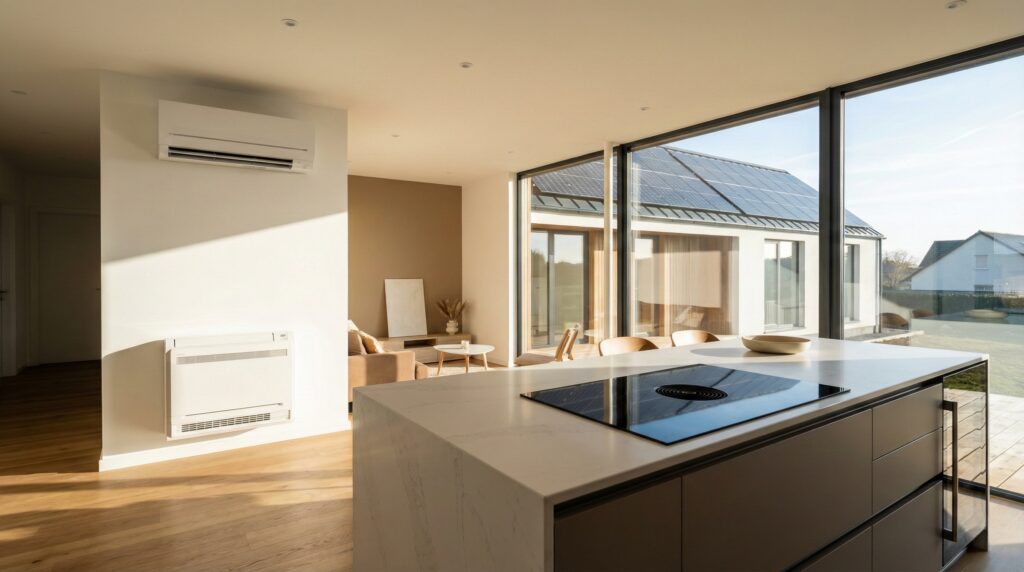
Beyond the monthly savings, there is a comfort factor that is hard to beat. You can keep your bedroom at a crisp 68°F while the living room stays a cozy 72°F. This granular control is why these systems have moved from niche “room additions” to primary heating and cooling sources for entire homes.
Top-Tier Brands: The Reliability Leaders
Mitsubishi Electric Premier MSZ-GX
If you ask an HVAC technician which unit they would put in their own mother’s house, nine times out of ten, they will say Mitsubishi. The Premier MSZ-GX series is the backbone of the industry for a reason. They don’t just focus on moving air; they focus on how that air feels and how long the machine lasts. Their “Hyper-Heat” technology changed the way we look at electric heating, proving that a heat pump can keep you warm even when the mercury drops well below zero.
One major advantage of choosing Mitsubishi is the Diamond Dealer network. These are contractors who have undergone specific training and offer extended warranties (often 12 years). If a part breaks, these dealers usually have it in the van or can get it within 24 hours. In the world of HVAC, the “best” unit is the one that can be fixed on a Tuesday night in January.
The Good
- Incredible parts availability; you won’t be waiting weeks for a proprietary sensor.
- The blower wheels are designed to be easily removed, making deep cleaning much simpler for homeowners or techs.
- Extremely quiet operation that won’t disrupt your sleep or conversations.
The Bad
- The “Mitsubishi Premium” price tag can be 30-50% higher than budget brands.
- The aesthetics are very traditional; it looks like a white plastic box on your wall.
- Requires professional installation to maintain that industry-leading warranty.
Should You Buy? Best for homeowners who view their HVAC as a long-term investment and want the absolute highest floor for reliability. Skip if you are on a tight budget or want a “hidden” look.
Check prices for the Mitsubishi Electric MSZ-GX Series.
LG Artcool Deluxe KNSAL Series
LG has taken a different path than the Japanese manufacturers. While others focus on the “box,” LG focuses on how that box fits into your life. The Artcool series is famous for its sleek, dark finish and mirrored faces, which help it blend into modern decor far better than the standard “appliance white” units. Under the hood, the KNSAL series is a beast, with some models rated to provide heat down to -31°F.
However, the tech-heavy approach comes with a caveat. Your home’s energy setup might be more susceptible to electronic hiccups with LG. HVAC forums are often filled with discussions about LG’s sensitive control boards. While they are high-performers, they can be more “finiticky” than a Mitsubishi or Daikin when faced with power surges or high humidity.
The Good
- The most attractive indoor heads on the market; the mirror finish is genuinely stunning.
- Industry-leading low-temperature heating performance for extreme climates.
- Built-in Wi-Fi and ThinQ app integration are generally more polished than competitors.
The Bad
- Reports of control board failures are more common than with Mitsubishi or Fujitsu.
- Finding a qualified LG-certified tech can be difficult outside of major metropolitan areas.
- Replacement parts can sometimes take longer to ship compared to domestic or Japanese rivals.
Should You Buy? Best for style-conscious homeowners in extreme cold climates who have access to a reputable LG service provider. Skip if you live in an area with frequent power fluctuations or lack specialized techs.
Check prices for the LG Artcool Series.
Fujitsu Halcyon & Daikin Systems
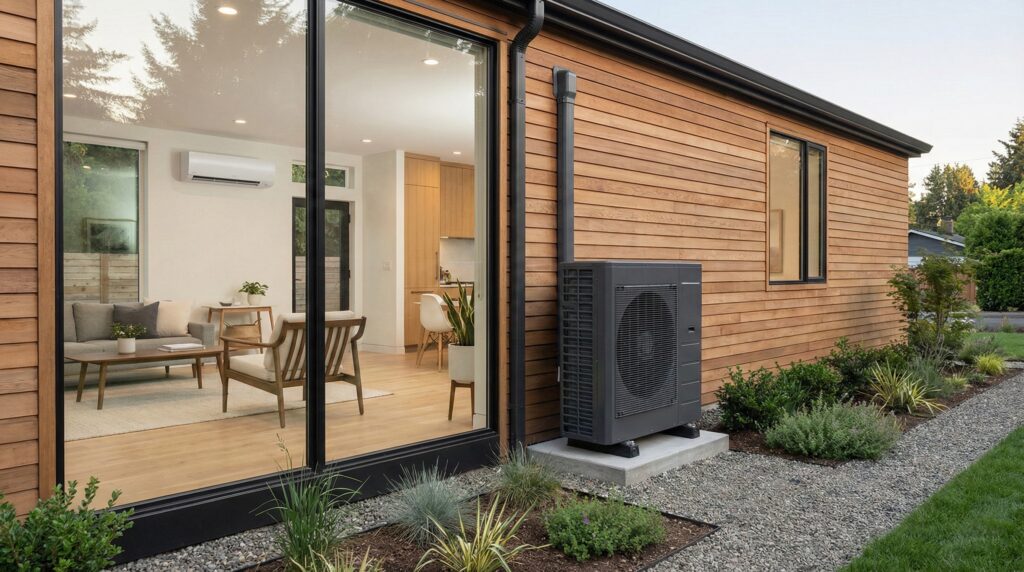
Fujitsu and Daikin are the “reliable alternatives” that often offer slightly better value than Mitsubishi while maintaining Japanese engineering standards. Daikin is actually the largest HVAC manufacturer in the world, and they specialize in “inverter” technology, which allows the unit to sip electricity rather than gulping it. Fujitsu’s Halcyon line is particularly praised for its small footprint; their outdoor condensers are often much thinner than Mitsubishi’s, making them perfect for narrow side-yards or balconies.
If you are exploring other electric fireplaces or supplemental heat sources, you might find that a Daikin unit provides such consistent “base-load” heat that you rarely need to turn the fireplace on. These units are designed to run 24/7 at very low speeds, maintaining a perfect temperature without the “on-off” blasts of air common with cheaper systems.
The Good
- Excellent efficiency ratings (SEER2) that often qualify for the highest federal tax credits.
- Daikin offers some of the best multi-zone flexibility in the industry.
- Fujitsu units have a reputation for surviving salty coastal air better than most.
The Bad
- The “Wall of Plastic” look is still very much present here.
- Fujitsu’s tech support is notoriously geared toward professionals, making it hard for DIYers to get help.
- Proprietary parts mean you cannot easily swap in “universal” components if something breaks.
Should You Buy? Best for efficiency-obsessed homeowners who want a premium Japanese brand but want to save a few hundred dollars over Mitsubishi. Skip if you need the absolute easiest-to-service unit on the market.
Check prices for Daikin Systems and Fujitsu Halcyon.
Budget-Friendly Alternatives & The Midea Connection
Senville Leto & Aura Series
Senville has become the darling of the DIY community and budget-conscious renovators. Based in Canada, their support team is surprisingly responsive, which is rare for a “budget” brand. The Aura series, in particular, offers cold-climate performance that rivals units twice its price. You won’t get the same fit and finish as a Mitsubishi, but for a garage, a workshop, or a rental property, the value proposition is hard to ignore.
The Good
- Unbeatable price-to-performance ratio.
- Surprisingly good customer support based in North America.
- Available through major retailers, making the buying process very transparent.
The Bad
- The plastic casings are thinner and can occasionally rattle or “pop” as they expand and contract.
- The remote controls feel cheap and lack the advanced scheduling of premium brands.
- Longevity is a question mark; expect a 7-10 year lifespan rather than 15-20.
Should You Buy? Best for budget-minded homeowners, DIYers, or secondary spaces like home offices and garages. Skip if this is the only heat source for your primary residence in a harsh climate.
Check prices for the Senville Aura Series.
The Midea Ecosystem
Here is a little industry secret: a huge portion of the mini splits on the market are actually manufactured by Midea in China. This includes brands like Carrier, Toshiba, Goodman, Samsung, and Lennox. When you buy a Senville or a MrCool, you are often getting a Midea-engineered heart inside a different shell. This isn’t necessarily a bad thing—Midea is a global leader in inverter technology. It just means that if you are paying for a “name brand” like Carrier for a mini split, you should double-check if you are just paying a premium for the sticker on the front. This same manufacturing consolidation happens in other industries, such as water heating systems, where a few factories produce units for dozens of labels.
What Real Users Are Saying (Reddit Insights)
Professional HVAC Sentiments
On subreddits like r/HVAC, the consensus among installers is clear: serviceability is king. Professionals frequently praise Mitsubishi for its “clean” interior layout. One technician noted that being able to pull a blower wheel in ten minutes makes the difference between a routine cleaning and a nightmare service call. Conversely, there is a general wariness toward LG and Samsung units due to complex electronic layouts that can be difficult to troubleshoot without specialized (and expensive) diagnostic tools.
“We rarely have an issue with Mitsubishi and when we do, it’s usually a fried board. The blower wheels are easy to pull also which is nice.” — r/HVAC
The Efficiency ‘Secret’: Single-Zone vs. Multi-Zone
A common debate on r/heatpumps revolves around whether to buy one large outdoor unit with multiple indoor “heads” or several independent single-zone units. The “secret” that pros often share is that single-zone units are almost always more efficient. They can modulate (slow down) to a much lower level. A large multi-zone unit often has a “minimum” output that is too high for a single bedroom, causing it to cycle on and off frequently, which wastes energy and wears out the compressor. If you have the wall space, two or three separate units are often better than one “octo-split.”
“The best kept ‘secret’ is simply having more single-zone splits, instead of having 1 big multi-split. Single-zones are more efficient because they can modulate much lower.” — r/heatpumps
Cons & Real-World Complaints
- The “Wall of Plastic” Aesthetic: Many homeowners complain that even the “nice” units are still bulky. If you hate the look, you might consider a “ceiling cassette” or a “slim duct” unit, though these are more expensive to install.
- Refrigerant Transition: The industry is moving toward R454B refrigerant. Some users report anxiety about buying “older” R410A units that might face higher recharge costs in a decade.
- Humidity Issues: In very humid areas, budget boards can corrode if the installer doesn’t properly seal the cabinet.
- Installer Scarcity: “I bought a great LG unit, but the only guy who can fix it is three towns away and charges a $200 travel fee.” This is a common refrain for niche brands.
Best Mini Splits for Cold Climates
If you live in a place where the air hurts your face, you cannot just buy any mini split. You need “Hyperheat” or “Low-Ambient” technology. Traditional heat pumps lose their ability to extract heat from the air as it gets colder. A cold-climate unit uses a “vapor injection” or “flash injection” circuit to keep the compressor running hot even when it’s -15°F outside. Brands like the Mitsubishi H2i and the LG Red series are designed specifically for these conditions. If you are also upgrading your best tankless water heater to go fully electric, ensuring your heat pump can handle the dead of winter is your top priority.
The DIY Installation: Essential Tools & Risks
The rise of “Quick-Connect” systems like MrCool has tempted many to DIY their install. While possible, it’s not a “plug and play” weekend project. Reddit’s r/DIY and r/HVAC communities emphasize that even with pre-charged lines, you need a specific toolset to ensure the system doesn’t leak its expensive (and environmentally harmful) refrigerant within the first year.
Essential tools include a high-quality vacuum pump (like ZENY or Robinair), a micron gauge to ensure the lines are dehydrated, and a torque wrench for the flare nuts. A tiny leak might not show up for six months, but once the refrigerant is gone, your “saved” installation money will be spent on a professional repair that could cost $1,000 or more. For a complete look at managing your home’s climate automatically, checking out the best smart thermostat options can help you bridge the gap between DIY and pro-level control.
Product Comparison
| Product Name | Best For | Price Range | Pros/Cons | Visit |
|---|---|---|---|---|
| Mitsubishi Electric Premier MSZ-GX | homeowners who view their HVAC as a long-term investment and want the absolut… | Check price on Amazon | ✅ Incredible parts availability; you won’t be waitin; The blower wheels are designed to be easily remove ❌ The “Mitsubishi Premium” price tag can be 30-50% h; The aesthetics are very traditional; it looks like |
|
| LG Artcool Deluxe KNSAL Series | style-conscious homeowners in extreme cold climates who have access to a repu… | Check price on Amazon | ✅ The most attractive indoor heads on the market; th; Industry-leading low-temperature heating performan ❌ Reports of control board failures are more common ; Finding a qualified LG-certified tech can be diffi |
|
| Fujitsu Halcyon & Daikin Systems | efficiency-obsessed homeowners who want a premium Japanese brand but want to … | Check price on Amazon | ✅ Excellent efficiency ratings (SEER2) that often qu; Daikin offers some of the best multi-zone flexibil ❌ The “Wall of Plastic” look is still very much pres; Fujitsu’s tech support is notoriously geared towar |
|
| Senville Leto & Aura Series | budget-minded homeowners, DIYers, or secondary spaces like home offices and g… | Check price on Amazon | ✅ Unbeatable price-to-performance ratio.; Surprisingly good customer support based in North ❌ The plastic casings are thinner and can occasional; The remote controls feel cheap and lack the advanc |
Frequently Asked Questions
Is a single-zone mini split more efficient than a multi-zone system?
Yes, in most cases, single-zone units are more efficient. They have a lower “minimum modulation,” meaning they can turn down to a very low power state when the room is close to the target temperature. Multi-zone units often have a higher minimum threshold, causing them to cycle on and off, which wastes energy. Brands like Mitsubishi and Daikin excel in single-zone efficiency ratings.
Which mini split brands are actually manufactured by Midea?
Midea is a massive OEM manufacturer. They produce units for brands like Senville, Carrier, Toshiba, Goodman, Samsung, Trane, and Lennox. While the internal components (the compressor and inverter) are often identical, these brands may differentiate themselves through different exterior casings, filter sets, and North American customer support structures.
Can mini splits work in temperatures as low as -30°F?
Yes, but only specific “cold climate” models. Units like the LG Artcool KNSAL and Mitsubishi’s Hyper-Heat line are engineered for these extremes. Most standard mini splits will stop working or become highly inefficient once temperatures drop below 5°F. Always check the “Low Ambient” rating before buying if you live in a northern climate.
What are the common problems with LG mini split units?
The most frequent complaints from both technicians and owners involve the control boards. These electronics can be sensitive to power surges or moisture. While LG units like the Artcool series are praised for their style and extreme cold performance, they generally require more frequent technical intervention than Mitsubishi units according to community feedback on Reddit.
Is it worth paying the premium for a Mitsubishi Diamond Dealer install?
For most homeowners, yes. A Diamond Dealer installation often extends the parts warranty from 5 or 7 years up to 12 years. Given that a major repair (like a compressor) can cost nearly as much as a new unit, that extra peace of mind and the guarantee of a factory-trained installer is a significant value-add for the Mitsubishi MSZ-GX series.
Final Verdict: Which Mini Split Should You Buy?
If you want a “set it and forget it” system that will likely last twenty years and can be fixed by any reputable tech in your town, buy a Mitsubishi. It’s a larger upfront investment, but the reliability is unmatched. If you are building a modern home and can’t stand the look of a white plastic box, the LG Artcool is the clear winner for style, provided you have a local tech who knows how to work on them. For DIYers and those looking to heat a workshop or a garage, Senville offers the best “bang for your buck” by utilizing the global manufacturing power of Midea. Whichever you choose, moving toward a ductless heat pump is a massive step toward a more efficient, comfortable home.
We may earn affiliate commissions from qualifying purchases. This doesn’t influence our reviews.
Affiliate disclosure: We may earn affiliate commissions from qualifying purchases. This doesn't influence our reviews.