TL;DR
A ductless mini split is one of the best ways to add efficient heating and cooling without installing new ductwork — but only if it’s sized correctly and installed cleanly. Start with a Manual J load calculation, then choose an AHRI-matched, cold-climate-capable system that can meet your heating needs at your local design low temperature.
What Ductless Mini Split Actually Is
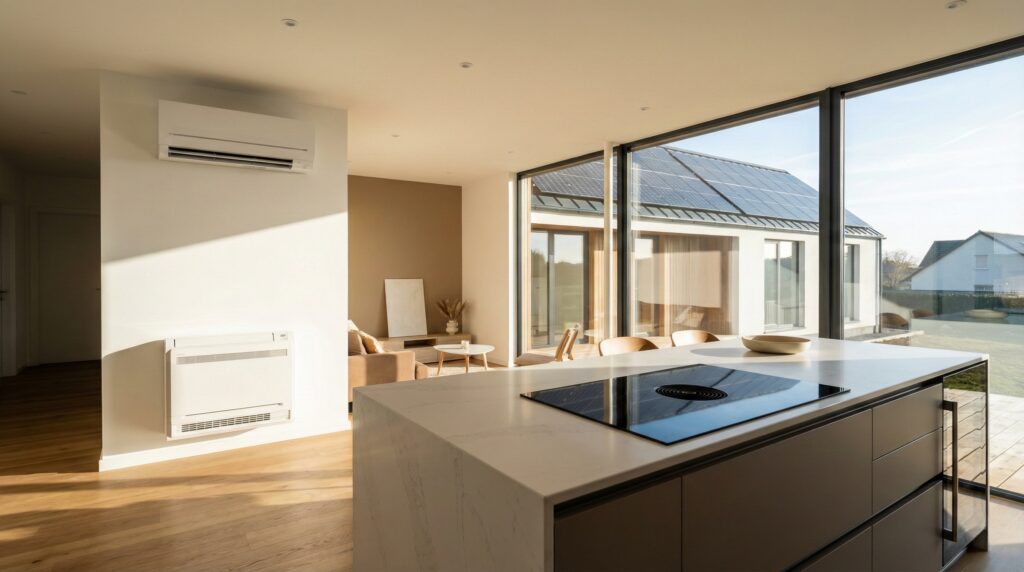
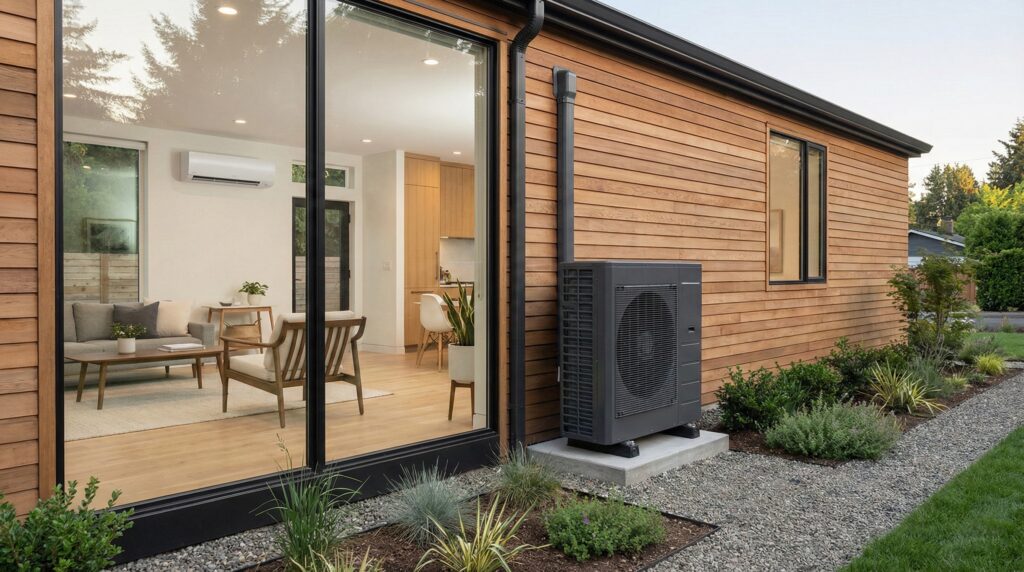
A ductless mini split is a heat pump system that provides both air conditioning and heating without using traditional ductwork. “Mini split” refers to the split between an outdoor unit (compressor/condenser) and one or more indoor units (often wall-mounted “heads,” but sometimes ceiling cassettes or compact ducted air handlers). Refrigerant lines and control wiring connect the outdoor and indoor equipment through a small wall penetration, which is why ductless is a go-to option for retrofits.
Functionally, it’s a variable-speed (inverter-driven, in many models) heat pump: it moves heat instead of creating it. In summer, it moves heat from inside your home to outside (cooling). In winter, it reverses and moves heat from outside air into your home (heating). Because it’s moving heat rather than generating it with electric resistance, a mini split can be dramatically more efficient than baseboards, wall heaters, or older electric furnaces — especially in mild-to-moderate climates. The U.S. Department of Energy also highlights ductless systems as a way to avoid the energy losses that can come with leaky or poorly insulated ducts.
There are two main configurations:
- Single-zone: one outdoor unit paired with one indoor unit — best when you’re conditioning a single space (garage conversion, addition, finished basement, bonus room).
- Multi-zone: one outdoor unit feeding multiple indoor units — best when you want multiple rooms or zones without multiple outdoor units.
Where mini splits shine is zoning and part-load efficiency. They can ramp output up and down to match the moment-to-moment demand, which can mean steadier temperatures and lower operating costs than single-stage equipment.
Where they can disappoint is when buyers assume “one head will do the whole floor.” Ductless heads primarily condition the air in the room they’re in. If doors are closed or the layout is chopped up, you can end up with uneven temperatures. Another big variable is cold-climate performance: heating output and efficiency at low outdoor temperatures can vary a lot by model and — critically — by the exact matched indoor/outdoor combination.
Bottom line: ductless mini splits are a high-efficiency electrification-friendly HVAC option, but they’re not plug-and-play appliances. Correct sizing (Manual J), matched-system verification (AHRI), and careful installation planning are what separate “amazing comfort” from “why is it clammy and drafty?”
Who Ductless Mini Split Fits Best
Ductless mini splits tend to be the best fit when you want efficient heating/cooling without the mess and cost of adding ductwork — and when you’re willing to treat installation as a real HVAC project (not a weekend shortcut).
They’re especially well-suited for:
- Additions, ADUs, and conversions where extending existing ductwork is expensive or impractical.
- Older homes that never had ducts (or where ducts would mean major carpentry), but where you still want modern comfort.
- Room-by-room comfort control—like keeping a home office cooler during the day and bedrooms comfortable at night.
- Electrification upgrades (moving away from fuel oil/propane or reducing gas use), especially in regions with relatively clean grid power or strong local incentives.
- Homes with uneven comfort where a targeted ductless zone can fix a problem area (hot upstairs, cold basement) without replacing the whole HVAC system.
If you’re handy and considering a DIY-leaning approach (or coordinating your own subcontractors), homeowner feedback suggests it can go well — but you should expect tooling, wiring, and commissioning steps you may not already own. As one owner put it: “Unit is very quiet, inside and outside. Works well.” — verified buyer, 4 stars
Two “fit checks” we recommend before you buy:
- Comfort expectations: Ductless is great at conditioning the room the head is in. If you need even temperatures in multiple closed-off rooms, plan on multiple indoor units or a ducted mini-split style air handler.
- Climate expectations: If you’re relying on it for heat, confirm the system maintains enough heating capacity at your design low temperature (not just “it has heat”).
For most buyers, the “best fit” formula looks like this: Manual J sizing + right number of zones + cold-climate rated equipment (if needed) + installer who will commission it correctly.
Who Should Skip Ductless Mini Split
Ductless mini splits aren’t the right answer for every house — or every homeowner temperament. You should think twice (or budget for a more hands-on install) if any of these are true:
- You can’t place an indoor head well. If the only location blasts air onto a bed/sofa/desk, you may hate the “air-on-you” feeling. In those cases, consider a compact ducted air handler or rethink zoning.
- You need high-MERV whole-home filtration. Many ductless heads have basic washable filters. If allergies, smoke, or fine particulates are a top priority, you may need a separate IAQ plan (standalone air cleaner, ERV/HRV, or a ducted solution that supports better filtration).
- You don’t want visible equipment. Wall heads are… wall heads. Some people never get used to the look.
- You’re expecting “central-air mixing.” Ductless doesn’t naturally move air between closed rooms; temperature balancing can be tricky in compartmentalized layouts.
- You’re not prepared for real installation requirements. Even when a system is marketed toward consumers, proper evacuation, correct flares/torque, electrical supply, and condensate management still matter.
Installer and homeowner feedback is pretty consistent that the tool-and-supplies reality surprises people. One buyer review warns: “Be prepared to buy a vacuum pump, flaring tool, special torque wrench, fuse box, and wiring supplies for this job.” — verified buyer, 4 stars
If you’re not comfortable dealing with refrigerant best practices, line-set routing, or code-compliant electrical work, this is a strong sign to involve a licensed electrician (NEC-certified) and an HVAC contractor (NATE-certified) for at least the critical steps. Poor commissioning and sloppy electrical/condensate work are where mini-split “bad experiences” are born.
Price and Value
Ductless mini split pricing can be confusing because your total cost depends on (1) equipment, (2) install complexity, and (3) how many zones you’re adding. As a rough structure:
- Equipment-only (single-zone): often lands in the low-to-mid thousands, depending on brand, efficiency tier, and whether it’s cold-climate optimized.
- Installed price: can vary widely based on electrical upgrades, line-set routing length, mounting needs, wall/roof penetrations, condensate pumping, and local labor rates.
- Multi-zone systems: typically raise both equipment and labor costs; they can still be a good value versus adding ducts, but the install details matter more.
For a concrete equipment anchor, the MAXWELL Daikin Entra Series Mini Split 12,000 BTU is commonly listed around $1900–$2000 for the equipment package.
Where the value comes from:
- Efficiency: Higher SEER2/HSPF2 can reduce operating cost, but only if the system is correctly sized and commissioned (a “high-efficiency” unit installed poorly won’t perform like the label).
- Zoning: Conditioning only the rooms you use can be a real savings lever in shoulder seasons and in homes with low occupancy during the day.
- Avoided ductwork: In many retrofits, ductwork is the budget-breaker; ductless can be cheaper and less invasive.
What we’d verify before calling it a “good value” for your house: the exact matched indoor/outdoor efficiency ratings (SEER2/HSPF2/EER2) using the AHRI listing, and whether the heating capacity at low ambient is enough for your winter design temperature. If you’re shopping for qualified efficiency tiers, you can also cross-check guidance in the ENERGY STAR heat pump guidance.
Common Mistakes When Trying Ductless Mini Split
Most mini-split disappointments come down to a few repeatable mistakes — many of which show up in homeowner reports and installer feedback.
- Skipping Manual J (or sizing by square footage). Oversizing is common and can lead to short cycling, worse dehumidification, and temperature swings. ACCA’s Manual J is the standard approach contractors use for residential load calculations.
- Buying based on a headline efficiency number. SEER2/HSPF2/EER2 depends on the exact indoor/outdoor match, not just the brand family. Ask for the AHRI certificate/submittal for your configuration.
- Assuming one head will condition multiple closed rooms evenly. Ductless is not a ducted distribution system; doors and hallways matter. For bedrooms, you may need additional zones or a ducted mini-split air handler.
- Underestimating line-set and condensate planning. Long runs, too many bends, or poor drain routing can create reliability issues or water damage risk.
- DIY’ing without the right tools or process. Proper commissioning typically includes a nitrogen pressure test, a deep vacuum evacuation, and correct charge verification per manufacturer instructions.
That last point is worth emphasizing because it’s a very common “hidden cost” for DIY-minded buyers. One homeowner review puts it plainly: “Be prepared to buy a vacuum pump, flaring tool, special torque wrench, fuse box, and wiring supplies for this job.” — verified buyer, 4 stars
Even if you’re capable, missing just one of the commissioning steps (like not pulling a deep vacuum) can set you up for poor performance or early failure. And on the electrical side, mini splits are high-voltage appliances — so plan for a correctly sized circuit, a service disconnect, and code-compliant wiring. When in doubt, hire a licensed electrician (NEC-certified) for the electrical portion.
FAQ
What’s the difference between a ductless mini split and central air?
Central air uses ducts to distribute conditioned air throughout the home from a central air handler/furnace. A ductless mini split uses one or more indoor units in specific rooms/zones, connected to an outdoor unit by refrigerant lines — no ducts required. Ductless usually delivers better zone control, but it won’t naturally mix air between closed rooms the way a duct system can.
Do I really need a Manual J load calculation for a mini split?
Yes if you want comfort and efficiency you can count on. Manual J is the residential load calculation standard used by HVAC pros to size heating/cooling equipment based on your home’s actual heat loss/gain — not rules of thumb. Oversizing is a frequent cause of short cycling and weak humidity control, so this step often pays for itself in performance.
How do I know a mini split will heat my home in freezing weather?
Don’t rely on “heat pump” as a guarantee. Check the system’s rated heating capacity at low outdoor temperatures close to your winter design low (for example, 5°F or 0°F, depending on where you live). Also consider whether the unit includes cold-climate features like base-pan heating to manage ice. If the low-ambient capacity won’t meet your Manual J heating load, plan a backup heat strategy.
What do SEER2, HSPF2, and EER2 actually tell me?
They’re standardized efficiency ratings for cooling (SEER2, EER2) and heating (HSPF2). Higher numbers generally mean better efficiency, but only when you’re looking at the exact matched indoor/outdoor combination. A good practice is to ask your contractor for the AHRI certificate for your specific pairing and keep it for rebates and future service. You can verify combinations in the AHRI Directory.
Can I install a ductless mini split myself?
Some homeowners do, but it’s not a simple “hang it and plug it in” project. You’ll need a safe, code-compliant electrical circuit and disconnect, correct line-set work (including flares/torque), and proper commissioning (pressure test and deep vacuum). If you’re unsure on either refrigerant handling or wiring, hire an HVAC contractor (NATE-certified) and a licensed electrician (NEC-certified) for the critical steps.
Where should the indoor head and outdoor unit be located?
Indoors, aim for a spot with unobstructed airflow that won’t blow directly on beds, desks, or seating. Outdoors, choose a location with proper clearances for airflow and service access, and account for snow/ice, roof drip lines, and noise near bedrooms or neighbors. Line-set length and elevation limits also matter — confirm them before committing to a route.
Do ductless mini splits bring in fresh air or improve indoor air quality?
They generally recirculate indoor air and do not provide ventilation (fresh air) by default. Filtration on many wall heads is basic. If indoor air quality is a priority, consider pairing the system with a dedicated solution like a standalone HEPA air purifier and, for tighter homes, discuss ERV/HRV ventilation with your HVAC contractor.
Looking for these on Amazon? Browse ductless mini split on Amazon →
Bottom Line
A ductless mini split is a strong choice when you want efficient heating and cooling without new ductwork — especially for additions, problem rooms, and electrification upgrades. Get a Manual J load calculation, verify AHRI-matched performance, and take installation planning seriously (line-set, condensate, electrical) to avoid the most common comfort and reliability issues.
Affiliate disclosure: We may earn affiliate commissions from qualifying purchases. This doesn't influence our reviews.