Quick Summary
Finding the right wok for an electric stove requires moving away from traditional round-bottom designs. Because electric burners rely on direct contact to transfer heat, a flat-bottom wok is essential for efficiency. Carbon steel remains the gold standard for its quick heat response, though cast iron offers superior heat retention for lower-powered burners. While no electric setup perfectly mimics the “breath of the wok” found in professional gas kitchens, the Yosukata 13.5” Flat Bottom Wok and the Iwatani butane stove hack are the most effective ways to achieve high-quality stir-fry at home.
Why Cooking on an Electric Stove is a Challenge
If you have ever tried to use a traditional Chinese wok on an electric range, you probably noticed the “cold zone” problem. Traditional woks are designed for high-BTU gas burners where flames lick up the sides, heating the entire vessel. Electric stoves, whether coil or glass-top, primarily heat the surface in direct contact with the element. When you place a round-bottom wok on a flat electric burner, only a tiny fraction of the metal touches the heat source. This results in a lukewarm pan that boils your vegetables in their own juices rather than searing them.
Heat distribution is the second hurdle. Electric elements cycle on and off to maintain temperature, which can lead to frustrating drops in heat just as you add your ingredients. To combat this, you need a wok that either responds instantly to heat changes or has enough thermal mass to stay hot when the element cycles off. Moving toward a more efficient kitchen setup often involves understanding these nuances of electric kitchen appliances and how they interact with your cookware.
Key Features of a High-Performance Electric Stove Wok
Flat Bottom vs. Round Bottom
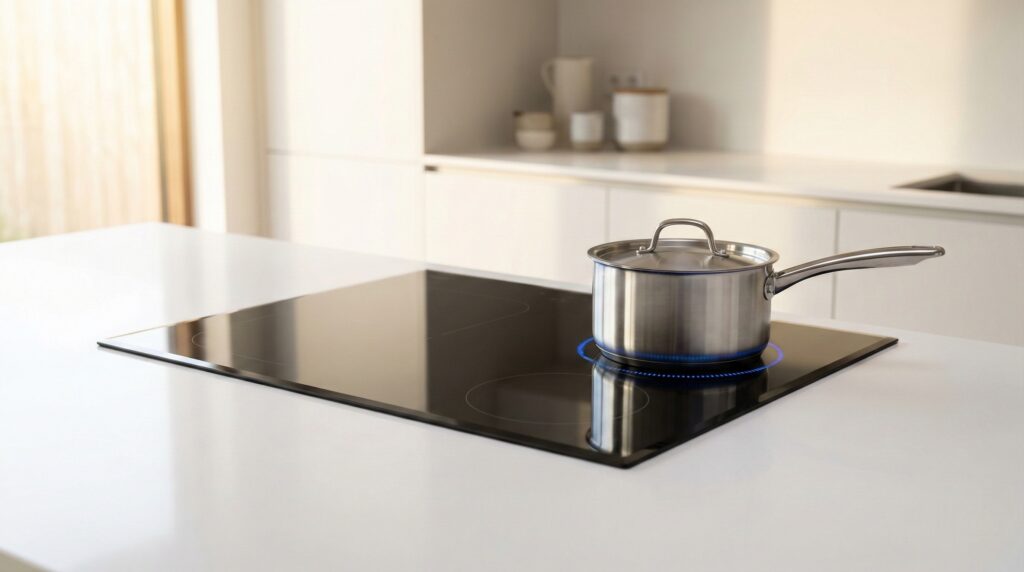
For an electric stove, this isn’t even a debate: you need a flat bottom. A flat base ensures maximum surface area contact with the burner. This allows the heat to conduct efficiently into the metal. Look for a flat base that is roughly 5 to 6 inches in diameter. This provides stability on glass cooktops and ensures the wok won’t wobble or tip when you are tossing ingredients. If you are currently using an older stovetop, you might be considering an upgrade; our look at the best induction range options highlights how flat-bottom cookware is even more critical for magnetic induction technology.
Material Selection: Carbon Steel, Cast Iron, or Enamel
Carbon Steel: This is the favorite of professionals and enthusiasts. It is lightweight, heats up almost instantly, and develops a natural non-stick patina over time. However, it requires seasoning and can warp if exposed to extreme temperature shocks.
Cast Iron: Traditional cast iron is heavy but holds heat like a champion. This is a massive advantage on electric stoves that struggle to maintain high temperatures. “Light” cast iron woks offer a middle ground, providing the seasoning benefits of iron without the wrist-breaking weight.
Enamel/Non-Stick: While convenient for cleanup, these woks usually can’t handle the high heat required for true stir-frying. Enamel can chip, and standard non-stick coatings can release toxic fumes if pushed to the temperatures needed for a proper sear.
Weight and Handle Design for Maneuverability
You want a wok that is heavy enough to sit still on the burner but light enough to toss. A long wooden or stay-cool handle is vital. Because electric cooking often requires keeping the pan in contact with the burner, a “helper handle” (a small loop on the opposite side) is incredibly useful for moving a heavy, food-filled wok from the stove to the table.
Best Woks for Electric Stoves: 2025 Top Picks
Best Overall: Yosukata 13.5” Flat Bottom Carbon Steel Wok
The Yosukata Carbon Steel Wok is frequently cited as the gold standard for home cooks dealing with electric ranges. It strikes a perfect balance between thickness (for durability) and weight (for tossing). The 13.5-inch diameter is the “Goldilocks” size—large enough to feed a family without being so big that it overpowers a standard 12-inch electric burner.
✅ What Home Cooks Love
- Pre-seasoned finish makes the initial setup much faster than raw steel.
- The flat bottom is perfectly sized for maximum contact on glass and coil tops.
- Excellent heat conductivity that rivals professional gear.
❌ Watch Out For
- The handle can sometimes arrive slightly loose and may require tightening.
- Susceptible to rust if not dried immediately after washing—standard for carbon steel but frustrating for beginners.
💰 Street Price: $40 – $60
💼 The Verdict: Best for enthusiasts who want the most authentic stir-fry experience possible on an electric range. Skip if you aren’t willing to maintain a seasoned patina.
Best for Heat Retention: Lodge 14-Inch Cast Iron Wok
If your electric stove feels “wimpy,” the Lodge Cast Iron Wok is your best friend. Because it is thick and heavy, it acts as a thermal battery. Once it gets hot, it stays hot, even when you dump in a pound of cold sliced beef. It is virtually indestructible and works beautifully on induction surfaces too.
✅ What Home Cooks Love
- Unmatched heat retention prevents the “stewing” effect often seen on electric stoves.
- Extremely stable; it won’t slide around your cooktop while you’re stirring.
- Made in the USA and lasts for generations.
❌ Watch Out For
- It is very heavy (around 11 pounds), which makes “tossing” food nearly impossible.
- Can take a long time to heat up—usually 5 to 10 minutes for full saturation.
💰 Street Price: $30 – $40
💼 The Verdict: Best for cooks who prioritize durability and heat retention over maneuverability. Skip if you have weak wrists or want to do “tossed” stir-fry.
Best Lightweight Option: Joyce Chen Light Cast Iron Wok
The Joyce Chen Light Cast Iron Wok offers the best of both worlds. It seasons like cast iron but handles more like carbon steel. For glass-top owners who are terrified of cracking their stove with a heavy Lodge pan, this is a much safer, more manageable alternative.
✅ What Home Cooks Love
- Significantly lighter than traditional cast iron, allowing for better control.
- Retains heat better than thin carbon steel woks.
- Flat bottom is very stable and doesn’t warp easily.
❌ Watch Out For
- The surface can be a bit rough initially, requiring a few rounds of extra seasoning.
- The wooden lid (if included) is often low quality and may warp.
💰 Street Price: $30 – $40
💼 The Verdict: Best for glass-top stove owners who want cast iron performance without the weight-related anxiety. Skip if you want a perfectly smooth, machined surface.
Best for Beginners: Joyce Chen Classic Series Carbon Steel Wok
If you are just starting your stir-fry journey and don’t want to drop $60+, the Joyce Chen Classic Series is the go-to recommendation. It is an affordable entry point that teaches you how to manage heat and seasoning without a huge financial commitment.
✅ What Home Cooks Love
- Very affordable and widely available.
- Lightweight and easy to move around the stove.
- Comes with a stay-cool birch wood handle.
❌ Watch Out For
- The steel is thinner than the Yosukata, making it prone to warping if you use the “power boil” setting on your stove.
- It arrives with a protective coating that is quite difficult to scrub off before the first use.
💼 The Verdict: Best for students or beginners on a budget. Skip if you want a professional-grade tool that will last 20 years.
Best Easy-Maintenance: GreenPan Pre-Seasoned Carbon Steel Wok
For those who love the idea of carbon steel but hate the high-maintenance “never use soap” rules, GreenPan offers a modernized version. This wok is pre-seasoned and designed to be more resilient to modern cleaning methods while still providing the heat response of steel.
✅ What Home Cooks Love
- Easier to maintain than raw carbon steel.
- The flat bottom is specifically designed for modern electric and induction cooktops.
- Lighter than cast iron but sturdier than budget steel woks.
❌ Watch Out For
- The “pre-seasoning” is not a substitute for building a real patina over time.
- More expensive than basic carbon steel options.
💰 Street Price: $40 – $60
💼 The Verdict: Best for busy cooks who want the performance of steel with less fuss. Skip if you are a purist who wants to season your own pan from scratch.
Best Budget Choice: Bamboo Brand Carbon Steel Wok
Bamboo Brand offers a no-frills, traditional carbon steel wok that is often found in Asian grocery stores. It is simple, effective, and very inexpensive. If you want the “real thing” without the marketing markup, this is it.
✅ What Home Cooks Love
- Extremely low price point.
- Traditional design that focuses on function over aesthetics.
- The flat base is wide enough for good stability on electric coils.
❌ Watch Out For
- Zero bells and whistles; it is literally just a piece of shaped steel.
- Requires a very thorough initial cleaning to remove industrial oils.
💰 Street Price: $40 – $60
💼 The Verdict: Best for the no-nonsense cook who wants a “workhorse” pan. Skip if you prefer a more refined, gift-worthy kitchen tool.
Comparison of Best Woks for Electric Stoves
| Product Name | Best For | Price Range | Pros/Cons | Visit |
|---|---|---|---|---|
| Yosukata 13.5” Flat Bottom Carbon Steel Wok | enthusiasts who want the most authentic stir-fry experience possible on an el… | $40 – $60 | ✅ Pre-seasoned finish makes the initial setup much f; The flat bottom is perfectly sized for maximum con ❌ The handle can sometimes arrive slightly loose and; Susceptible to rust if not dried immediately after |
|
| Lodge 14-Inch Cast Iron Wok | cooks who prioritize durability and heat retention over maneuverability | $30 – $40 | ✅ Unmatched heat retention prevents the “stewing” ef; Extremely stable; it won’t slide around your cookt ❌ It is very heavy (around 11 pounds), which makes “; Can take a long time to heat up—usually 5 to 10 mi |
|
| Joyce Chen Light Cast Iron Wok | glass-top stove owners who want cast iron performance without the weight-rela… | $50 – $70 | ✅ Significantly lighter than traditional cast iron, ; Retains heat better than thin carbon steel woks. ❌ The surface can be a bit rough initially, requirin; The wooden lid (if included) is often low quality |
|
| Joyce Chen Classic Series Carbon Steel Wok | students or beginners on a budget | $60 | ✅ Very affordable and widely available.; Lightweight and easy to move around the stove. ❌ The steel is thinner than the Yosukata, making it ; It arrives with a protective coating that is quite |
|
| GreenPan Pre-Seasoned Carbon Steel Wok | busy cooks who want the performance of steel with less fuss | $60 – $80 | ✅ Easier to maintain than raw carbon steel.; The flat bottom is specifically designed for moder ❌ The “pre-seasoning” is not a substitute for buildi; More expensive than basic carbon steel options. |
|
| Bamboo Brand Carbon Steel Wok | the no-nonsense cook who wants a “workhorse” pan | $40 – $50 | ✅ Extremely low price point.; Traditional design that focuses on function over a ❌ Zero bells and whistles; it is literally just a pi; Requires a very thorough initial cleaning to remov |
What Real Users Are Saying (Reddit Insights)
General Sentiment
The consensus among the Reddit cooking community (specifically r/wok and r/cooking) is that while electric stoves are far from ideal, you can still produce excellent food with the right technique. Most users recommend staying away from non-stick woks entirely, as they simply cannot handle the heat required. The “Iwatani setup”—using a portable butane stove inside the house (with ventilation)—is frequently cited as the only way to get true restaurant-quality results in an apartment.
Top Complaints & Warnings
One of the most common warnings involves glass-top stoves. Users frequently report the “smoke alarm issue,” where the high heat needed for a wok sets off alarms because most apartment vent hoods are inadequate. There is also a significant concern regarding heavy woks:
“Do not use cast-iron on the glass tops… too heavy! You will have to slide it back and forth… Do not bang it on the stovetop or you will break the glass top!” — r/wok
Another frequent frustration is the inability to season the sides of the wok. Since the heat is only at the bottom, the sides of a carbon steel wok often stay “raw,” leading to sticking when food is pushed up the walls.
Budget Tips & Value Picks
For those on a budget, Reddit users often suggest visiting local Chinese restaurant supply stores. You can often find a “The Wok Shop Hand-Hammered Wok” or similar generic carbon steel pans for under $30.
“If there are Chinese food stores where you live, that’s where you should buy your wok. You’ll get the real thing for much less than anywhere else.” — r/cookingforbeginners
Many users also suggest that if you can’t afford a high-end wok, just use a large stainless steel skillet; it often performs better on electric than a cheap, thin, round-bottom wok.
The Secret to Stir-Frying on ‘Wimpy’ Electric Burners
The ‘Waiting’ Technique: Developing a Caramelized Crust
On gas, you can throw ingredients in and they sear instantly. On electric, you must wait. Let your wok heat up until a drop of water dances and evaporates instantly. Once you add your oil and meat, do not move it for at least 30-45 seconds. This allows the electric element to recover its heat and create a crust. If you stir too early, the temperature will plummet and the meat will bleed moisture.
Identifying Your Hottest Burner
Not all electric burners are created equal. Usually, the largest front burner has the highest wattage. Use this one exclusively. If you have an induction stove, you’ll benefit from even faster heating, but you still need that flat bottom for the magnetic connection. You can read more about how induction compares in our best induction cooktop guide.
The Ultimate Workaround: The Portable Butane Stove Hack
If you are serious about stir-fry, many experts suggest the “Iwatani Hack.” Buy a high-output portable butane stove (like the Iwatani 15,000 BTU model). Place it on your counter (or even on top of your glass stove with the vent fan on). This gives you the concentrated flame of a gas range, allowing you to use a traditional round-bottom wok and achieve true wok hei.
How to Care for Your Wok Without a Gas Range
Seasoning a wok on an electric stove is tricky because the heat doesn’t climb the sides. To fix this, you can use your oven. After the initial scrub, apply a paper-thin layer of oil and put the wok upside down in a 450°F oven for an hour. This creates a uniform base layer of seasoning. For daily cleaning, avoid soap if possible; use hot water and a bamboo brush. Always dry the wok on the burner for 30 seconds to ensure every drop of moisture is gone, then wipe with a tiny bit of oil before storing.
Managing your home’s energy efficiency doesn’t mean sacrificing great food. Whether you are looking into heating and cooling solutions or optimizing your kitchen, choosing the right tools makes all the difference.
Frequently Asked Questions
Can you use a round bottom wok on an electric glass top stove?
Technically yes, but it is highly inefficient. A round bottom only touches a tiny point of the flat burner, leading to poor heat transfer. You would need a wok ring, but even then, the wok won’t get hot enough for a proper stir-fry. It is much better to use a flat-bottom option like the Yosukata Carbon Steel Wok for these surfaces.
Will a cast iron wok break my glass cooktop?
It can if you aren’t careful. Heavy woks like the Lodge 14-inch can crack glass if dropped or “banged” down. However, if you place it gently and avoid sliding it (which can scratch the glass), it is perfectly safe. For those worried about weight, a Joyce Chen Light Cast Iron Wok is a safer, lighter alternative.
How do you get wok hei (breath of a wok) on an electric stove?
True wok hei requires flame and vaporized oil. On electric, it is nearly impossible. However, you can mimic it by using a blowtorch on the food as you toss it, or by using a portable butane stove. Ensuring your carbon steel wok is ripping hot before adding ingredients also helps develop the smoky flavor associated with wok hei.
Do I need a wok ring for an electric stove?
Only if you are using a round-bottom wok on an electric coil stove, but even then, it’s not recommended. For glass tops, a wok ring is useless as it lifts the pan away from the heat source. Stick to flat-bottom woks to ensure the pan stays in direct contact with the electric element for maximum efficiency.
Is carbon steel better than non-stick for electric stir-frying?
Absolutely. Carbon steel can handle the extreme heat (500°F+) required for stir-frying, whereas non-stick coatings like Teflon begin to break down and release fumes at those temperatures. Carbon steel woks like the Joyce Chen Classic also develop a natural non-stick surface over time that actually improves with use.
Conclusion: Choosing Your Best Match
Cooking with a wok on an electric stove doesn’t have to be a compromise. If you want the most authentic experience and are willing to do a little maintenance, the Yosukata 13.5” Carbon Steel Wok is your best bet. If you find your stove’s heat frustratingly inconsistent, the Lodge Cast Iron Wok will provide the thermal mass you need to keep things sizzling. For those moving toward a fully electrified home, pairing the right cookware with an efficient best induction cooktop setup can actually outperform old gas ranges in speed and control. Choose the wok that fits your lifestyle, keep it seasoned, and don’t be afraid to crank up the heat.
Disclosure: We earn a small commission on qualifying purchases through our Amazon links, at no extra cost to you.