Quick Summary
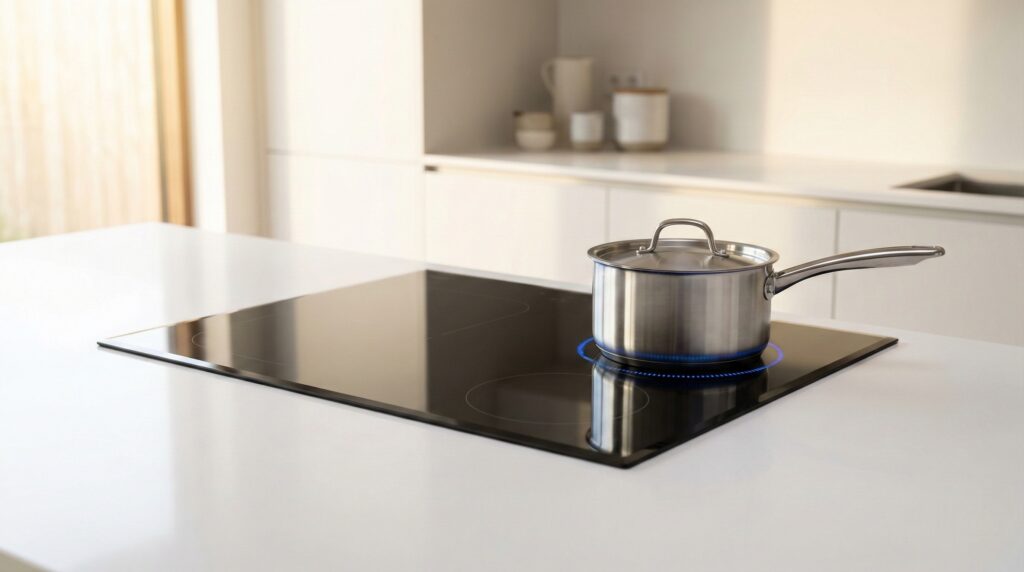
Choosing the best pans for an electric stove requires a focus on two things: a perfectly flat base and high thermal mass. Because electric burners—especially radiant glass tops—rely on direct contact to transfer heat, any slight warp or “rocking” in a pan will lead to frustrating cold spots. Fully-clad stainless steel like the All-Clad D3 remains the top recommendation for its warp resistance and even heating. For those on a budget, heavyweight cast iron offers incredible heat retention, though it requires a longer preheat. Avoid thin, stamped aluminum pans and be wary of “hybrid” pans that often fail to justify their high price tags over the long term.
Why Choosing the Right Cookware for Electric Stoves Matters
If you have ever struggled with a fried egg that is burnt on one side and raw on the other, your electric stove might not be the only culprit. Electric ranges, whether they use traditional exposed coils or smooth radiant glass tops, operate differently than gas. A gas flame wraps around the bottom of a pan, forgiving slight curves or imperfections. An electric burner, however, is a flat surface that demands a flat partner. Any gap between your pan and the burner acts as an insulator, slowing down heat transfer significantly.
Your home’s energy setup might benefit from understanding how different materials interact with these heat sources. On a glass-top stove, heat is transferred via infrared radiation and thermal conduction. If your pan is warped, only a fraction of that energy reaches your food. This is why “disc-bottom” pans—those with a thick plate slapped onto the bottom of a thin pot—often struggle on electric ranges. The disc can expand at a different rate than the sides, causing the pan to bow and “spin” on your glass cooktop. For a broader look at energy-efficient kitchen upgrades, browse our electric kitchen appliances category.
Top Recommended Cookware Categories for Electric Ranges
1. Fully-Clad Stainless Steel: The Efficiency King
Fully-clad means the aluminum core (the heat conductor) runs from the base all the way up the sidewalls. This construction is remarkably stable. It resists the warping that plagues cheaper pans when they hit a hot electric element. For most households, 3-ply or 5-ply stainless steel is the most reliable option for daily use. It responds relatively quickly to temperature adjustments—a common struggle on electric stoves which are notoriously slow to cool down.
2. Cast Iron & Carbon Steel: The Heat Retention Heavyweights
Because electric burners often cycle on and off to maintain temperature, you need a pan with enough “thermal mass” to bridge those gaps. Cast iron acts like a battery for heat. Once it is hot, it stays hot. Carbon steel offers a similar benefit but with a lighter weight and a smoother surface, though you must be careful not to “shock” these pans with cold water, which can cause them to warp on flat electric surfaces.
3. Ceramic & Non-Stick: The Specialty Solutions
While great for eggs, non-stick coatings are the most fragile tool in your kitchen. On an electric stove, it is easy to accidentally overheat a pan because the burner stays hot long after you turn the dial down. This leads to the rapid degradation of non-stick surfaces. If you choose these, keep the heat at medium or lower to preserve the coating.
What Real Users Are Saying (Reddit Insights)
General Sentiment
The consensus across communities like r/cookware and r/BuyItForLife is clear: durability beats flashy features. Most veteran home cooks suggest that if you are using a glass-top electric stove, you should prioritize weight and flatness above all else. There is a strong lean toward “Buy It For Life” (BIFL) materials like stainless steel and cast iron because they can handle the high, direct heat of electric elements without losing their shape or performance over the years.
“I’ve used everything imaginable under the sun… it’s the only non-cast-iron pan I’ve used where I actually was able to keep using the pan… it literally did not have a single scratch in it.” — r/cookware
Top Complaints & Warnings
The most common frustration among electric stove users is the “rocking” pan. Even expensive cookware can sometimes arrive with a slight “upward bow” (meant to flatten when heated), but if the manufacturer gets the tolerance wrong, the pan will wobble on your glass top forever. Another frequent warning concerns Hexclad. Many users on Reddit argue that while the hybrid design looks modern, the non-stick portion eventually fails, leaving you with an overpriced stainless pan that doesn’t perform as well as a dedicated All-Clad or Demeyere.
Users also highlight the limitations of woks. A traditional round-bottom wok is useless on an electric stove. Even flat-bottom woks struggle because the heat is concentrated only on the very bottom, failing to reach the sides where much of the “wok hei” stir-frying action happens. If you’re looking for a better way to cook, we compared similar setups in our best induction cooktop breakdown—worth a look if fast, efficient cooking appeals to you.
Budget Tips & Value Picks
The “Essential 5” strategy is the most cited advice for saving money: stop buying 12-piece sets. Most sets include filler pieces you will rarely use. Instead, the community recommends investing in five high-quality individual pieces: a 10-inch skillet, a 12-inch cast iron pan, a 3-quart saucier, a 5-quart Dutch oven, and a large stockpot. Brands like Lodge are frequently praised as the ultimate budget BIFL pick because a $20–$30 pan can literally last several generations.
Detailed Reviews: The Best Pans for Electric Stoves
All-Clad D3 Stainless Steel: The Gold Standard
The All-Clad D3 is the benchmark for a reason. Its 3-ply construction (aluminum sandwiched between stainless steel) provides a balance of weight and heat conductivity that works perfectly on electric coils. In practice, the D3 series heats evenly across the entire surface, preventing the “ring of fire” effect often seen with thinner pans on electric burners.
✅ What Home Cooks Love
- Superior warp resistance ensures the pan stays flat on glass tops.
- Relatively lightweight compared to 5-ply alternatives, making it easier to toss food.
- Classic design that is easy to clean with a bit of elbow grease.
❌ Watch Out For
- The “straight” handle design is polarizing; some find it uncomfortable or “diggy” in the palm.
- High price point compared to entry-level clad cookware.
💰 Street Price: $130 – $200
💼 The Verdict: Best for serious home cooks who want a reliable, “set it and forget it” pan that handles 95% of kitchen tasks. Skip if you have wrist issues and find the All-Clad handles difficult to grip.
Heritage Steel 5-Ply: The US-Made Challenger
If you want more “heft” than the D3, Heritage Steel offers a 5-ply construction that uses a titanium-strengthened stainless steel. This makes it exceptionally resistant to salt pitting and corrosion. Since electric stoves can have “hot spots,” the extra layers in 5-ply cookware help spread that heat more laterally before it reaches your food.
✅ What Home Cooks Love
- Family-owned, US-based manufacturing with excellent customer service.
- Ergonomic handles that stay cooler than many competitors.
- The 5-ply build provides extra thermal mass, which helps maintain temperature when you drop a cold steak into the pan.
❌ Watch Out For
- Heavier than 3-ply pans, which might be a drawback for some users.
- The high thermal mass means it takes longer to preheat on slow electric elements.
💰 Street Price: $250 – $350
💼 The Verdict: Best for those who prioritize US manufacturing and want a slightly more “premium” feel than the standard All-Clad. Skip if you prefer a very lightweight pan.
Demeyere Proline: The Ultimate Heat Spreader
For those with a glass cooktop, the Demeyere Proline is often considered the peak of engineering. It features a 7-ply construction and a proprietary “TriplInduc” base that stays flat even under extreme temperature changes. It is incredibly thick, almost mimicking the heat retention of cast iron but with the precision of stainless steel.
✅ What Home Cooks Love
- Silit-free rivetless interior; there are no rivets for food or gunk to get stuck around.
- Industry-leading flatness makes it the most efficient pan for radiant electric and induction.
- Stays looking new longer thanks to the Silvinox surface treatment.
❌ Watch Out For
- It is very heavy—nearly as heavy as cast iron.
- Extremely expensive; it is a significant investment for a single skillet.
💰 Street Price: $100 – $150
💼 The Verdict: Best for perfectionists who want the most technologically advanced pan for a flat-top stove. Skip if you are on a budget or have difficulty lifting heavy cookware.
Lodge Cast Iron: The Budget BIFL Pick
You don’t need to spend hundreds of dollars to get great results on an electric stove. A Lodge Cast Iron skillet is a powerhouse. Because electric burners can be inconsistent, the thick iron walls of a Lodge pan soak up that energy and release it steadily. If you’re looking for more ways to optimize your home’s energy use, our guide to the best tankless water heater explores other efficiency-focused upgrades.
✅ What Home Cooks Love
- Virtually indestructible; you can use metal utensils and high heat without worry.
- Incredible heat retention for searing and frying.
- Low cost makes it accessible to everyone.
❌ Watch Out For
- The surface is pebbly and rough out of the box; it takes time to build a smooth seasoning.
- Can be slow to react to temperature changes on the dial.
- Requires specific maintenance (hand washing and drying immediately).
💼 The Verdict: Best for high-heat searing and those who want a pan that lasts a lifetime for under $40. Skip if you don’t want to deal with seasoning and manual maintenance.
de Buyer Mineral B Carbon Steel: The Professional Choice
Carbon steel is the secret weapon of professional kitchens. The de Buyer Mineral B offers the seasoning capabilities of cast iron with a smoother surface and better responsiveness. On an electric range, it provides a middle ground between the heavy Lodge and the fast All-Clad.
✅ What Home Cooks Love
- Naturally non-stick once seasoned, without the chemicals of Teflon.
- The signature French handle design offers great leverage.
- Excellent for “slidey eggs” once you master the seasoning process.
❌ Watch Out For
- Can warp if you use the “Power Boil” setting on your electric stove too quickly.
- The epoxy-coated handle on the Mineral B line cannot go into the oven for long seasoning sessions.
💰 Street Price: $180 – $280
💼 The Verdict: Best for enthusiasts who enjoy the process of “nurturing” their cookware. Skip if you want to put your pans in the dishwasher.
Hestan NanoBond: High-End Durability for Glass Tops
The Hestan NanoBond uses a titanium-based coating bonded to stainless steel. It is incredibly scratch-resistant and can handle temperatures up to 1050°F. For electric stoves that sometimes “run away” with heat, this durability is a huge plus.
✅ What Home Cooks Love
- The flush rivets make cleaning the inside of the pan incredibly easy.
- Highly resistant to staining and heat tint.
- Beautiful aesthetic that maintains its shine even after heavy use.
❌ Watch Out For
- The price is among the highest in the industry.
- While it is “stick-resistant,” it is NOT a true non-stick pan; you still need oil.
💰 Street Price: $150 – $250
💼 The Verdict: Best for those who want a “luxury” cooking experience and a pan that will never scratch. Skip if you are looking for a bargain.
Comparison of Top Pans for Electric Stoves
| Product Name | Best For | Price Range | Pros/Cons | Visit |
|---|---|---|---|---|
| The Gold Standard | serious home cooks who want a reliable, “set it and forget it” pan that handl… | $130 – $200 | ✅ Superior warp resistance ensures the pan stays fla; Relatively lightweight compared to 5-ply alternati ❌ The “straight” handle design is polarizing; some f; High price point compared to entry-level clad cook |
|
| The US-Made Challenger | those who prioritize US manufacturing and want a slightly more “premium” feel… | $250 – $350 | ✅ Family-owned, US-based manufacturing with excellen; Ergonomic handles that stay cooler than many compe ❌ Heavier than 3-ply pans, which might be a drawback; The high thermal mass means it takes longer to pre |
|
| The Ultimate Heat Spreader | perfectionists who want the most technologically advanced pan for a flat-top … | $100 – $150 | ✅ Silit-free rivetless interior; there are no rivets; Industry-leading flatness makes it the most effici ❌ It is very heavy—nearly as heavy as cast iron.; Extremely expensive; it is a significant investmen |
|
| The Budget BIFL Pick | high-heat searing and those who want a pan that lasts a lifetime for under $40 | under $40 | ✅ Virtually indestructible; you can use metal utensi; Incredible heat retention for searing and frying. ❌ The surface is pebbly and rough out of the box; it; Can be slow to react to temperature changes on the |
|
| The Professional Choice | enthusiasts who enjoy the process of “nurturing” their cookware | $180 – $280 | ✅ Naturally non-stick once seasoned, without the che; The signature French handle design offers great le ❌ Can warp if you use the “Power Boil” setting on yo; The epoxy-coated handle on the Mineral B line cann |
|
| High-End Durability for Glass Tops | those who want a “luxury” cooking experience and a pan that will never scratch | $150 – $250 | ✅ The flush rivets make cleaning the inside of the p; Highly resistant to staining and heat tint. ❌ The price is among the highest in the industry.; While it is “stick-resistant,” it is NOT a true no |
Maintenance & Care for Electric Stove Cookware
Restoring Shine with Bar Keepers Friend (BKF)
Stainless steel pans will eventually develop “rainbow” stains or burnt-on grease. On an electric stove, where heat is concentrated, this happens faster. Do not reach for steel wool, which can scratch your pans. Instead, use Bar Keepers Friend. A small amount of this oxalic acid-based powder and a little water will turn into a paste that lifts stains without damaging the metal. It’s the secret to keeping your All-Clad looking new for decades.
Preventing Warping and Thermal Shock
The fastest way to ruin a good pan is “thermal shock.” This happens when you take a screaming hot pan and put it under a cold tap. The rapid contraction can cause the metal to warp—even high-end pans. Because a flat bottom is so critical for electric stoves, you must let your pans cool naturally on the stove or a trivet before washing them. Also, avoid using the “Power Boil” or “Max” setting to preheat an empty pan; the intense, localized heat can cause the center to bow before the rest of the pan expands.
Best Pans for Electric Stoves by Category
Best for Glass Cooktops
The Demeyere Proline is the king here. Its thick construction and lack of rivets make it the most efficient and easiest to maintain on a flat glass surface. You can find more about it in the detailed review section above.
Best BIFL (Buy It For Life) Cookware
Lodge Cast Iron and All-Clad D3 share this title. One is budget-friendly and indestructible, while the other is a versatile professional tool. Both will likely outlast your current stove and the next one too.
Best for High-Heat Searing
If you want a steakhouse crust, the Lodge Cast Iron or de Buyer Mineral B are your best bets. Their ability to hold heat means the pan temperature won’t plummet when the meat hits the surface, which is a common problem with lighter aluminum pans.
Frequently Asked Questions
Why do my pans rock or wobble on my glass top stove?
This is usually due to thermal warping or manufacturing defects. Electric stoves concentrate heat in a small area, causing the metal to expand. If the pan isn’t thick enough or is a low-quality “disc-bottom” design, it will bow. High-quality brands like All-Clad D3 or Heritage Steel are engineered to resist this and stay flat for better contact.
Is stainless steel or cast iron better for electric stove efficiency?
Both are efficient but in different ways. Stainless steel (specifically fully-clad) conducts heat more evenly across the surface. Cast iron takes longer to heat up but holds that heat much better, which helps compensate for the cycling nature of electric burners. For most day-to-day tasks, a 3-ply stainless steel pan like All-Clad is more versatile.
Can I use a flat-bottom wok on an electric range?
Yes, but it won’t perform as well as it would on gas. A flat-bottom carbon steel wok like the Mineral B can work, but the heat will remain mostly at the base. You’ll need to preheat it thoroughly and cook in small batches to maintain the high temperatures required for traditional stir-frying.
Is Hexclad worth the price for electric stove users?
Many enthusiasts find Hexclad to be overpriced. While the hybrid design is convenient initially, the non-stick valleys eventually wear out. On an electric stove, where temperature control can be difficult, you might accidentally overheat the pan, shortening its lifespan. A solid stainless pan like Demeyere often provides better long-term value.
Should I buy a full cookware set or individual pans?
Buying individual pans is almost always better. It allows you to pick the best material for each task—like a Lodge for searing and All-Clad for sauces. Most sets include sizes you won’t use frequently, wasting money and cabinet space. Focus on the “Essential 5” to maximize your kitchen’s utility.
How do I remove burnt-on stains from my electric stove pans?
Bar Keepers Friend is the most recommended solution. It safely removes oxidation, heat tint, and carbonized food without scratching. For heavy-duty messes, a soak in hot water followed by a BKF scrub will restore the finish on pans like Hestan NanoBond or All-Clad stainless steel.
Final Verdict: Which Pan Should You Buy?
If you want the best all-around experience on an electric stove in 2026, start with a 10-inch or 12-inch All-Clad D3 Stainless Steel skillet. It offers the best balance of responsiveness, weight, and durability. If you are a fan of searing meats and don’t mind a bit of maintenance, the Lodge Cast Iron is a mandatory addition to your cabinet. For those with glass tops who find themselves frustrated by wobbly pans, investing in Demeyere Proline will provide the flattest, most stable cooking surface available today.
Remember that your cookware is an extension of your stove. By choosing heavy-bottomed, flat, and well-constructed pans, you can overcome many of the common frustrations of electric cooking. If you’re looking to further optimize your home’s climate control, check out our guide on heating and cooling solutions for more energy-efficient advice.
Disclosure: We earn a small commission on qualifying purchases through our Amazon links, at no extra cost to you. This helps us continue to provide honest, deeply researched advice for your home.