Quick Summary
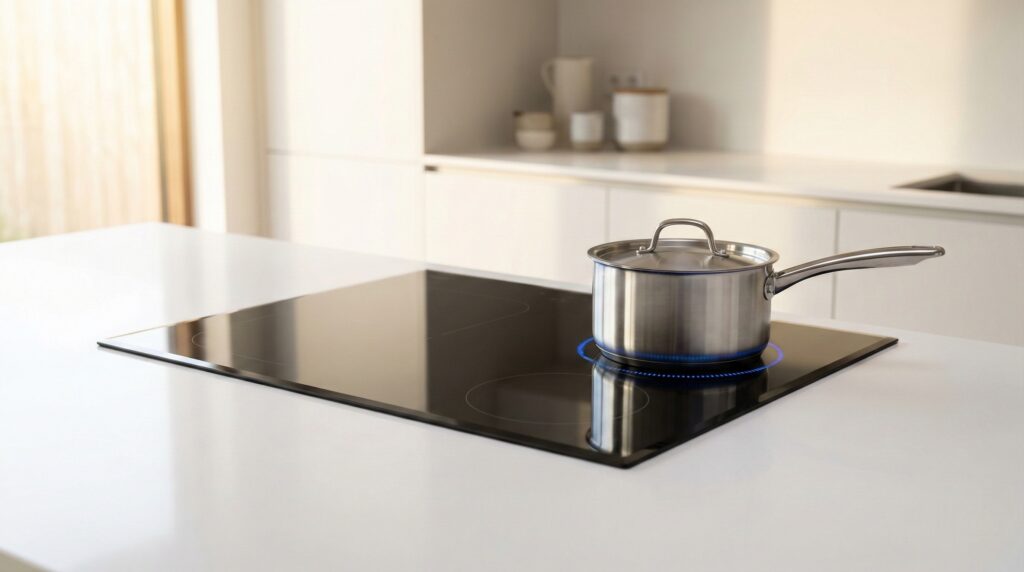
Cooking on an electric stovetop requires cookware with two specific traits: a perfectly flat base and superior heat distribution. Because electric coils and glass-top radiant elements cycle on and off, thin pans often warp or develop hot spots that scorch your food. The most reliable choice for most homes is fully-clad stainless steel, which sandwiches a heat-conducting aluminum core between layers of durable steel. This construction prevents the “rocking pan” syndrome on flat glass surfaces and ensures that heat reaches the edges of the pan, not just the center. For those on a budget, the Tramontina Tri-Ply Clad set is a resilient performer, while the Heritage Steel 5-Ply offers a premium, warp-resistant upgrade for serious home chefs.
The Unique Challenges of Electric Cooking
If you have recently moved from a gas range to an electric one, you have likely noticed that your old pans aren’t behaving the same way. Gas flames wrap around the bottom of a pan, forgiving slight curves or irregular shapes. Electric stoves, however, rely on direct contact or close proximity to a radiant element. On a glass-top stove, even a tiny “wobble” in your pan can result in unevenly cooked proteins and frustratingly slow boil times.
Your home’s energy setup benefits significantly from choosing the right materials. When you use electric kitchen appliances, efficiency is determined by how well the heat is transferred from the heating element to your ingredients. Thermal lag—the time it takes for a burner to cool down or heat up—is the biggest hurdle. Heavy-duty, multi-clad cookware acts as a buffer, smoothing out those temperature swings and giving you the control that electric stoves often lack.
Top-Rated Cookware for Electric Stovetops
Best Overall: Tramontina Tri-Ply Clad
For years, this set has been the open secret of the culinary world, often sold at a price point that makes high-end competitors look overpriced. The “Tri-Ply Clad” designation means the aluminum core runs from the base all the way up the sidewalls. On an electric coil stove, this is vital; it ensures the sides of your pan stay hot even if the coil itself is slightly smaller than the pan’s diameter. In practice, these pans feel substantial without being overly heavy, making them a practical choice for daily meal prep.
✅ What Home Cooks Love
- Exceptional value for a fully-clad set that performs similarly to luxury brands.
- High-quality handles that stay relatively cool on most electric burners.
- Highly durable stainless steel that resists pitting and staining over years of use.
❌ Watch Out For
- Some users report that the lids can feel a bit light or flimsy compared to the pans.
- The exterior finish can scratch if you use abrasive scouring pads too aggressively.
💰 Street Price: $300 – $700
💼 The Verdict: Best for families and home cooks who want professional-grade performance without the “brand name” tax. Skip if you prefer the aesthetic of modern ceramic or matte finishes.
Check price for Tramontina Tri-Ply Clad
Best High-End: Heritage Steel 5-Ply
Warping is the ultimate enemy of the electric glass-top stove. When a pan’s base bows outward, it loses contact with the heat source. Heritage Steel addresses this with a 5-ply construction that is noticeably thicker and more rigid than standard 3-ply options. This family-owned American brand focuses on quality control that prevents the manufacturing defects often seen in mass-produced alternatives. The extra layers of aluminum and stainless steel provide a massive thermal battery, which is perfect for searing steaks on an electric range where heat recovery can be slow.
✅ What Home Cooks Love
- Incredibly flat bases that stay flush against glass surfaces even at high heat.
- The ergonomic handles are hollowed out to stay cool and provide a secure grip.
- Beautiful brushed finish that hides fingerprints and water spots better than mirror-polished steel.
❌ Watch Out For
- The weight can be taxing for those with wrist issues or limited mobility.
- Because it holds heat so well, you have to be careful not to overshoot your target temperature.
💰 Street Price: $800 – $1500
💼 The Verdict: Best for serious enthusiasts who want a “buy it for life” set that won’t warp on high-output electric burners. Skip if you prefer lightweight pans that are easy to toss with one hand.
Check price for Heritage Steel 5-Ply
Best for Glass Surfaces: Caraway Ceramic Set
If you are worried about scratching your pristine glass cooktop, Caraway is a compelling choice. Unlike traditional stainless steel or heavy cast iron, Caraway pans feature a smooth ceramic coating and a heavy aluminum core. This core is highly conductive, allowing the pan to heat up quickly on radiant elements. The design is modern and minimalist, specifically intended for those who want their cookware to look as good as their kitchen. It’s a great way to complement other modern upgrades, much like choosing sleek electric fireplaces for a contemporary living room.
✅ What Home Cooks Love
- The non-stick surface is genuinely impressive, requiring very little oil or butter.
- Smooth, flat bottom design reduces the risk of micro-scratches on glass stovetops.
- Comes with a clever storage rack and lid organizer to keep your cabinets tidy.
❌ Watch Out For
- The ceramic coating is not “forever”—it will lose its non-stick properties over a few years.
- Not dishwasher safe, despite what some marketing might imply; hand-washing is mandatory for longevity.
💰 Street Price: $400 – $600
💼 The Verdict: Best for aesthetics-focused cooks who prioritize easy cleanup and glass surface safety. Skip if you want cookware that will last several decades.
Check price for Caraway Ceramic
The Performance Value Pick: Misen Saucier
The saucier is often the most used pan in a chef’s kitchen, and Misen’s version is a standout. While many people compare Misen to high-end brands like Demeyere, the price is significantly lower. The rounded bottom is perfect for electric stoves because it encourages constant movement of liquids, preventing the “scorch ring” that often forms where the electric element is hottest. It offers a thick 3.0mm construction, which is thicker than many entry-level stainless steel sets, providing better resistance to the intense cycling of electric heat.
✅ What Home Cooks Love
- The curved walls make whisking sauces and stirring risotto much easier than a traditional saucepan.
- Dishwasher-safe design with a comfortable handle that remains stable during heavy pours.
- Offers professional performance at a fraction of the cost of Belgian or French brands.
❌ Watch Out For
- Users have noted that the handle can sometimes feel a bit long, making it feel unbalanced on smaller burners.
- Shipping times from the manufacturer can sometimes be inconsistent compared to major retailers.
💰 Street Price: $75
💼 The Verdict: Best for the “intermediate” cook who wants to master sauces and grains without spending a fortune. Skip if you prefer traditional straight-sided saucepans for better stacking.
Product Comparison Table
| Product Name | Best For | Price Range | Pros/Cons | Visit |
|---|---|---|---|---|
| Tramontina Tri-Ply Clad | families and home cooks who want professional-grade performance without the “… | $300 – $700 | ✅ Exceptional value for a fully-clad set that perfor; High-quality handles that stay relatively cool on ❌ Some users report that the lids can feel a bit lig; The exterior finish can scratch if you use abrasiv |
|
| Heritage Steel 5-Ply | serious enthusiasts who want a “buy it for life” set that won’t warp on high-… | $800 – $1500 | ✅ Incredibly flat bases that stay flush against glas; The ergonomic handles are hollowed out to stay coo ❌ The weight can be taxing for those with wrist issu; Because it holds heat so well, you have to be care |
|
| Caraway Ceramic Set | aesthetics-focused cooks who prioritize easy cleanup and glass surface safety | $400 – $600 | ✅ The non-stick surface is genuinely impressive, req; Smooth, flat bottom design reduces the risk of mic ❌ The ceramic coating is not “forever”—it will lose ; Not dishwasher safe, despite what some marketing m |
|
| Misen Saucier | the “intermediate” cook who wants to master sauces and grains without spendin… | $75 | ✅ The curved walls make whisking sauces and stirring; Dishwasher-safe design with a comfortable handle t ❌ Users have noted that the handle can sometimes fee; Shipping times from the manufacturer can sometimes |
What Real Users Are Saying (Reddit Insights)
The ‘Heat Control’ Realization
The most common piece of advice in community forums like r/cookware is that the equipment is only half the battle. Many users complain about food sticking to stainless steel or burning in non-stick pans on electric stoves, only to realize they are cooking at far too high a temperature. Electric elements stay hot much longer than gas flames. Once a pan is preheated, you often need to drop the setting to “Medium-Low” to maintain a steady sizzle. As one user noted, “Most stovetop cooking is properly done at much lower settings than most people are intuitively prone to use.”
Top Complaints & Warnings
The dreaded “rocking pan” is the number one complaint for electric glass-top users. This happens when a pan is built with a thin base that expands unevenly when heated, causing the center to bow out. On a flat surface, this makes the pan spin or wobble like a top. Real-world feedback also highlights “bubbling” finishes on some mid-range clad pans, which can be a sign of layers delaminating during the manufacturing process. Reddit users frequently warn against “disc-bottom” pans—those where a thick plate is just slapped on the bottom—because the edges of the pan stay cold while the center scorches.
“I have one of those crappy glass cooktops… Four out of five pans rock on my cooktop. I have never had a pan not lay flat on my cooktop, so the rocking in itself blows my mind. I am beyond frustrated.” — r/cookware
Budget Tips & Value Picks
The consensus among budget-conscious enthusiasts is to avoid flashy “celebrity” sets and stick to basics. IKEA 365+ cookware is often cited as a surprisingly decent entry-level option, though it lacks the full cladding of Tramontina. Many users recommend buying individual pieces rather than full sets to ensure your money goes toward the pans you actually use. Another pro-tip from the community: don’t toss your stainless steel if it looks burnt. A little “Bar Keepers Friend” can make a decade-old pan look like it just came out of the box.
Key Buying Factors for Electric Surfaces
Flat Bottoms vs. Textured Bases
For a glass range, a perfectly flat bottom is non-negotiable. If you look at the bottom of some cast iron or older aluminum pans, they have a “smoke ring” or a recessed center. On gas, this doesn’t matter. On electric, it creates an air gap that acts as an insulator, drastically slowing down your cooking. When shopping, place a straight edge (like a ruler) across the bottom of the pan; it should be dead flat or slightly concave (it will flatten out when heated), but never convex.
Thermal Conductivity: Clad vs. Disc Bottom
If you have ever seen a “disc” on the bottom of a stainless steel pan, you are looking at a disc-bottom construction. These can work, but they often have a “shoulder” where the disc ends. On an electric burner, if the burner is larger than the disc, the sides of the pan won’t get any heat. Fully-clad pans (where the aluminum is sandwiched throughout) are the superior choice for electric cooking because they distribute heat evenly across the entire surface, reducing hot spots.
Selecting the right gear is part of a larger strategy for a high-performance home. Just as you might research heating and cooling solutions to optimize your climate control, choosing clad cookware optimizes the energy your stove consumes. It’s about making the most of the electricity you’re already paying for.
Maintenance and Care
The Bar Keepers Friend (BKF) Method
Electric stoves can be brutal on stainless steel. Because the heat is so concentrated, oil can easily polymerize (turn into a sticky, yellow residue) on the sides of your pans. Soap and water won’t touch this. Bar Keepers Friend is a mild abrasive that uses oxalic acid to break down those mineral deposits and burnt-on oils. Simply make a paste with a little water, let it sit for a minute, and scrub gently. It will restore the luster of your Tramontina or Heritage Steel pans in seconds.
For more intensive cleaning after a kitchen disaster, avoid using steel wool on your glass stovetop itself. Use a dedicated glass cooktop cleaner and a razor scraper (held at a 45-degree angle) to remove burnt-on sugar or starch. Keeping your cooktop clean is just as important as keeping your pans clean for maintaining efficient heat transfer.
Best Cookware for Electric Stoves by Use Case
Best for Heavy-Duty Searing
Lodge Cast Iron is the gold standard here. While it is heavy and can scratch glass if you’re not careful, its ability to hold heat is unmatched. This is crucial on electric stoves which can’t “pump” heat back into a cold pan as quickly as gas. Just be sure to set it down gently and avoid sliding it across the surface.
Best Stainless Steel for Beginners
The Tramontina Tri-Ply Clad is the easiest recommendation. It behaves predictably, is incredibly forgiving of mistakes, and is inexpensive enough that you won’t be heartbroken if you accidentally scorch a sauce while learning your stove’s quirks.
Best for Small Kitchens
The Misen Saucier is a “do-everything” vessel. It can boil water for pasta, simmer a delicate béchamel, or even act as a small frying pan for a single egg. If you can only afford one high-quality piece for your electric range, make it a 3-quart saucier.
Frequently Asked Questions
Why do my pans rock or wobble on my glass electric stove?
This “rocking” is usually caused by thermal expansion in thin, poorly-constructed pans. On a glass stove, the base must be perfectly flat for even contact. Higher-end options like Heritage Steel 5-Ply are designed with thicker walls to prevent this warping. If your pan is already warped, there isn’t a permanent fix; it’s better to invest in fully-clad cookware that can handle the cycling heat of electric elements.
Can I use cast iron on a glass-top electric stove?
Yes, you can use Lodge Cast Iron on glass, but you must be careful. Cast iron is heavy and can crack the glass if dropped. It also has a rough texture that can cause micro-scratches if you slide the pan. To use it safely, always lift the pan to move it and ensure the bottom is clean and free of debris that could act as an abrasive against the glass.
Is 3-ply or 5-ply better for electric burners?
For most users, 3-ply (like Tramontina) is more than sufficient. However, 5-ply provides extra “thermal mass,” which means the pan stays hot even when you drop a cold piece of meat into it. This is very helpful on electric stoves, which take longer to recover heat than gas. If your budget allows, 5-ply offers better warp resistance and more consistent temperature control.
Why is my food burning on the lowest setting of my electric stove?
Electric stoves cycle on and off to maintain temperature. Even on a low setting, the element may pulse at 100% power for short bursts. If you use thin pans, they can’t buffer that intense heat, leading to scorched food. Using heavy-duty, clad cookware helps distribute that energy pulse across the entire pan, preventing localized burning even on lower settings.
Are IKEA pots and pans safe for electric stovetops?
Most IKEA 365+ cookware is safe and surprisingly effective on electric stoves. They typically feature a thick base that helps prevent warping. While they may not offer the full-clad performance of a premium set like Misen or All-Clad, they are a solid budget choice for those who are just starting out with an electric range.
Should I upgrade to an induction stove instead of buying new cookware?
If your budget allows for a major appliance change, our guide to the best induction cooktop shows that induction offers much better control than standard electric. However, induction requires magnetic cookware. If you already have high-quality stainless steel like Tramontina or cast iron, those will work on induction, making the upgrade easier.
Conclusion: Is an Induction Upgrade Better?
In many ways, the best “cookware” for an electric stove might actually be a new stove. Many users find that switching from traditional radiant electric to induction solves almost all their heating frustrations. Induction provides the responsiveness of gas with the easy cleanup of glass. However, if an appliance upgrade isn’t in the cards this year, investing in heavy, fully-clad stainless steel is the next best thing.
By choosing pans with flat bases and high thermal mass, you can overcome the inherent limitations of electric coils. Whether you choose the value-packed Tramontina or the heirloom-quality Heritage Steel, the key is understanding your stove’s heat cycles. Take the time to preheat your pans, use a bit of Bar Keepers Friend for maintenance, and you’ll find that electric cooking can be just as rewarding as any other method.
Disclosure: We earn a small commission on qualifying purchases through our Amazon links, at no extra cost to you.