TL;DR
If you want a 24-inch induction cooktop, the safest bet is the model that matches your cutout, your 240V circuit, and the pans you actually use every day. In this narrow size class, layout, usable heating area, and installation fit usually matter more than headline power, so we’d start with Bosch for most households and treat every replacement install as a measurement-first project.
Top Recommended 24 Inch Induction Cooktops
| Product | Best For | Price | Pros/Cons | Visit |
|---|---|---|---|---|
| Bosch 800 Series | Best overall for most homes | $1,800 – $2,700 | Strong brand presence in this niche size; may require costly electrical work | Visit Bosch |
| KitchenAid KSIS730PSS | Best alternative to compare | $1,700 – $2,600 | Appealing brand option for compact kitchens; fit and exact size need close verification | Visit KitchenAid |
Top Pick: Best Overall 24 Inch Induction Cooktops
Bosch 800 Series
Best for: Most households replacing an older compact electric cooktop in a condo, apartment, or smaller single-family kitchen where 24 inches is the only realistic fit.
The Good
- Bosch is one of the few major brands with a clear, active 24-inch cooktop presence, which matters in a category with limited choices.
- Buyer interest and installer familiarity are relatively strong compared with lesser-known compact-cooktop brands.
- Induction should deliver the fast response and lower wasted heat that many electrification-minded buyers want, in line with broader efficiency guidance from ENERGY STAR certified products.
- For a small kitchen with limited counter space, a mainstream brand can make future service and parts support less stressful.
- Research suggests Bosch is a sensible starting point if you care as much about long-term ownership confidence as day-one cooking speed.
The Bad
- Homeowner reports suggest installation cost can climb quickly if your existing circuit is undersized or poorly located.
- Compact 24-inch layouts can still feel tight with two larger pans, even on better-made models.
- Brand-level customer experience is mixed, so after-sale support may not feel as polished as the premium price implies.
Our Take: Bosch 800 Series is our top pick because it best matches what most 24-inch shoppers actually need: a real brand-backed option in a hard-to-shop size, with fewer compromises than off-brand alternatives, provided your cutout and circuit are right.
KitchenAid KSIS730PSS
Best for: Buyers doing a broader kitchen refresh in a townhome or galley kitchen who want to compare a familiar premium appliance brand before settling on Bosch.
The Good
- KitchenAid is a recognizable appliance brand that many US buyers already trust for coordinated kitchen packages.
- This model is relevant enough to deserve a place on your shortlist if you want to compare controls, finish quality, and service networks across major brands.
- It may appeal to shoppers who prefer to stay within one brand family for wall ovens, refrigerators, and dishwashers.
- As with many induction options, you can expect the usual benefits of quick response and cooler-kitchen cooking compared with radiant electric surfaces, which fits the broader electrification case made by the U.S. Department of Energy.
The Bad
- You need to verify exact width and cutout specs carefully before buying, because nominal size alone is not enough in this category.
- There is less clear buyer-reported evidence here to support a stronger ranking.
- Without a confirmed fit, it is harder to recommend for replacement installs where countertop changes would be expensive.
Our Take: KitchenAid KSIS730PSS is worth comparing if you want another established-brand option, but we would only move forward after confirming cutout dimensions, electrical needs, and burner layout against your actual cookware.
How to choose the best 24 inch induction cooktop
The 24-inch category is harder to shop than many buyers expect. You get fewer models than in 30-inch or 36-inch sizes, and the tradeoffs are sharper: some units use three elements instead of four, some crowd four burners too closely together, and some look good on paper but create real headaches when you try to use two big pans at once.
Start with the physical fit. Measure the existing cutout width and depth, the corner radius, and the clearance below the cooktop. If this is a replacement job in an older condo or apartment, do not assume another “24-inch” model will drop in. In this size class, replacement compatibility is often the hardest part of the whole project.
Next, verify the electrical side before you click buy. A built-in induction cooktop is typically a 240V appliance on a dedicated circuit, and amperage can vary. That means your existing wiring, breaker size, and panel capacity matter. If you are replacing a gas cooktop or an older lower-power electric unit, have a licensed electrician review the plan against the NFPA 70 National Electrical Code. This is especially important in an older kitchen with limited spare capacity or a long circuit run, where labor can outweigh the price difference between two cooktops.
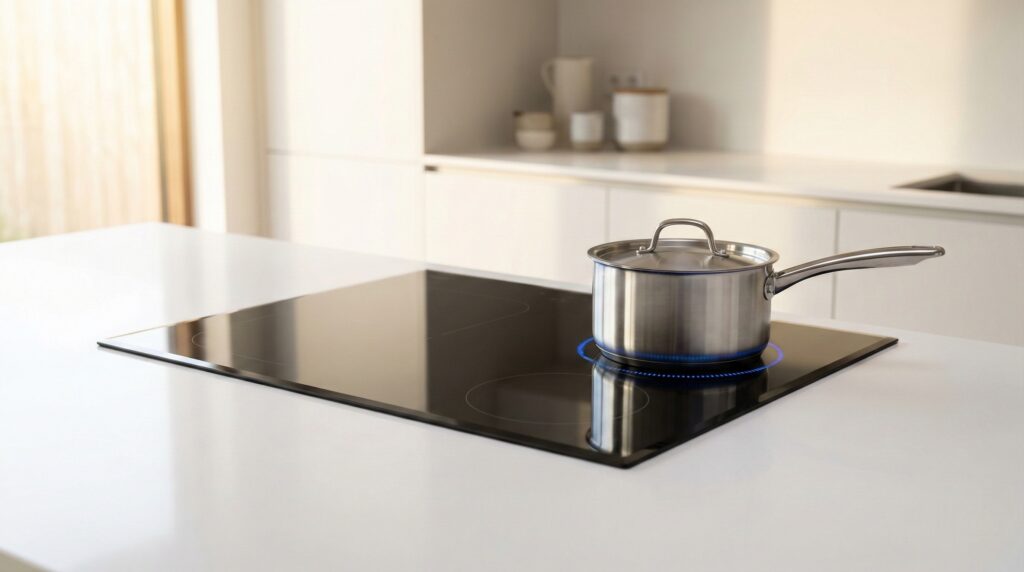
Then think about cookware, not just burner count. A lot of buyers assume four zones automatically means better usability. On a 24-inch top, that is not always true. If you regularly use a 10-inch or 12-inch skillet, you need at least one element with a magnetic heating area that matches it reasonably well. A printed ring on the glass does not guarantee even edge-to-edge heating. Research and homeowner reports both suggest that some compact induction units perform best with medium pans and can leave larger cookware hotter in the center than at the edges.
Also check whether power is shared between zones. Many compact induction cooktops manage output dynamically, so one burner may lose some top-end power when multiple zones are active. That is not automatically bad, but it changes the cooking experience if you often boil pasta, sear in a larger pan, and simmer a sauce at the same time.
Noise is another issue people overlook. Induction cooktops commonly make some fan noise and occasional pan hum, and compact kitchens make that more noticeable. Buyer reviews are useful here because the spec sheet rarely tells you how the fan sounds in a quiet apartment at night. If your kitchen opens directly into a living room or studio space, fan behavior and touch-control responsiveness deserve extra weight in your decision.
Finally, keep your expectations realistic. The best 24-inch induction cooktop is usually the one that makes the fewest compromises for your space, not the one with the most impressive marketing. In a niche category like this, a boringly compatible model from a major brand can be a better buy than a flashier alternative that forces cabinet, countertop, or wiring changes.
FAQ
Are all 24 inch induction cooktops the same cutout size?
No. “24 inch” usually refers to the nominal appliance width, not a universal countertop opening. Always compare the manufacturer’s installation drawing to your existing cutout before ordering, especially for replacement installs in older kitchens where even small differences can turn into countertop work.
Is a 3-burner or 4-burner 24 inch cooktop better?
It depends on how you cook. A 4-zone model can be more flexible for smaller pots and pans, but on a compact surface the layout may feel cramped. If you often use two larger skillets, a better-spaced 3-burner design can be more practical than four tightly packed zones that interfere with each other.
Do 24 inch induction cooktops need special wiring?
Usually yes. Most built-in induction cooktops need 240V service on a dedicated circuit, and the required breaker size can vary by model. Do not assume your old cooktop circuit is adequate. A licensed electrician should confirm breaker sizing, wire gauge, and local code compliance before installation.
Can a 24 inch induction cooktop heat a 12-inch pan evenly?
Sometimes, but it depends on the actual induction coil size and how the zone is designed. A larger skillet works best when the magnetic heating area closely matches the pan base. On some compact cooktops, the center heats strongly while the outer edges lag behind, which is why buyers should look beyond the printed burner circle and consider real-world cooking feedback.
Are induction cooktops noisy?
Some noise is normal. You may hear a cooling fan, a faint buzz, or cookware hum at higher power levels. The pan itself can affect the sound, and compact kitchens make those noises more noticeable. If you are sensitive to sound, buyer reviews and installer feedback are often more helpful than product marketing.
What should I replace first: cookware or cooktop?
Check your cookware first with a simple magnet test. If a magnet sticks firmly to the bottom, the pan is usually induction-compatible. Flat-bottom stainless steel and cast iron often work well. If your current pans are warped, very thin, or non-magnetic, budget for replacements so your new cooktop performs the way it should.
Does induction cooking support home electrification goals?
Yes, for many households it does. Induction fits the broader shift toward efficient electric appliances and can reduce waste heat in the kitchen compared with older electric resistance cooking. For general appliance-efficiency context, it is worth reviewing ENERGY STAR certified products and broader guidance from the U.S. Department of Energy on efficient electric equipment.
Should I worry about service, safety, or recalls before buying?
Yes. Beyond fit and performance, check warranty terms, local servicer availability, and any recent safety notices. If you want to screen for major product issues before purchase, the CPSC product recalls database is a useful place to look.
Looking for these on Amazon? Browse best 24 inch induction cooktop on Amazon →
Bottom Line
For most buyers, Bosch 800 Series is the best place to start because Bosch has a real presence in the 24-inch induction niche and gives you the strongest mix of mainstream-brand confidence, compact-kitchen fit, and likely everyday usability. KitchenAid is a reasonable compare-and-contrast option, but Bosch remains our top recommendation as long as your cutout and 240V circuit line up. Before ordering either one, confirm installation dimensions and electrical requirements first — those are the two most common deal-breakers in this size.
Affiliate disclosure: We may earn affiliate commissions from qualifying purchases. This doesn't influence our reviews.