TL;DR
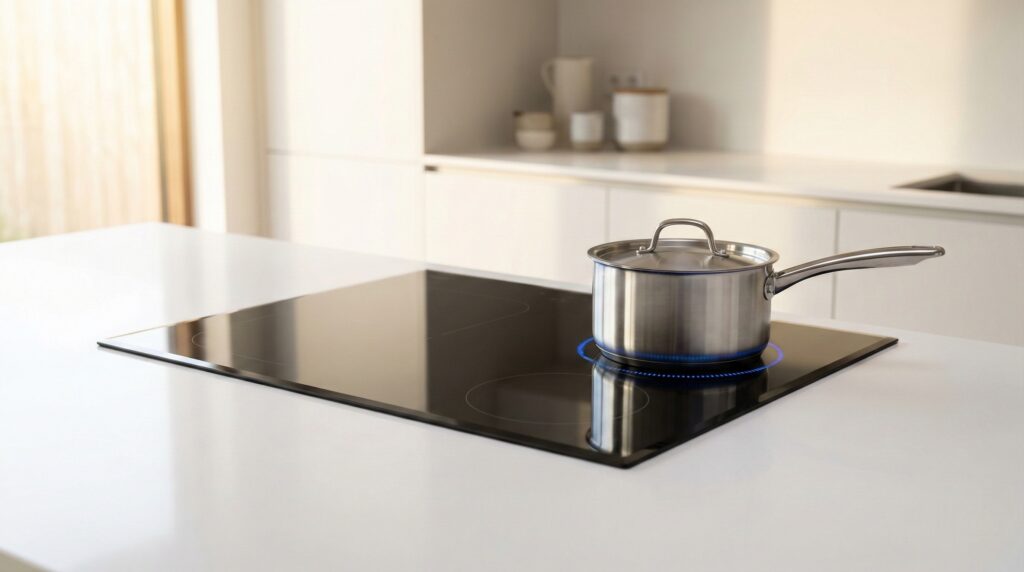
The “best luxury induction cooktop” is the one that fits your existing cutout and electrical service without forcing a surprise remodel. Once fit and power are confirmed, we’d prioritize responsive controls and forgiving pan detection over niche cooking modes — those two things are what make a cooktop feel truly premium day to day.
Top Recommended Luxury Induction Cooktops
| Product | Best For | Price | Pros/Cons | Visit |
|---|---|---|---|---|
| 30” Induction Cooktop | UltraHeat 4.3kW Element & Smart (CBIH3013BE) | 30-inch premium upgrade with smart features | $1300 – $1400 | UltraHeat power focus and smart enablement; you must verify cutout and 240V circuit needs | Visit LG |
| Bosch 800 Series | Buyers cross-shopping dealer-installed luxury kitchens | $1700 – $2300 | Premium line with wide dealer availability; exact induction cooktop SKU and specs vary by model | Visit Bosch |
| Miele 36-inch | 36-inch layouts in high-end remodels | $2800 – $4200 | Luxury positioning and typical strong build expectations; you’ll need to confirm the exact induction model and install spec | Visit Miele |
| Impulse Labs | Future-forward electrification-first kitchens | $3500 – $6500 | Innovation-driven brand appeal; confirm availability, exact configuration, and installation requirements before committing | Visit Impulse |
Top Pick: Best Overall Luxury Induction Cooktops
30” Induction Cooktop | UltraHeat 4.3kW Element & Smart (CBIH3013BE)
Best for: a homeowner replacing a 30-inch electric cooktop in a stone countertop cutout who wants a premium-feeling power boost (UltraHeat) plus smart features, without automatically stepping up to a 36-inch remodel.
The Good
- Clear “luxury-use” intent: a built-in 30-inch induction cooktop SKU with premium positioning (smart-enabled) for higher-end kitchens.
- High-power element focus: the listing highlights an “UltraHeat 4.3kW element” (per manufacturer naming), which is exactly the kind of spec that matters for fast boils and searing.
- 30-inch size can be the most realistic “drop-in upgrade” path when you’re trying to avoid countertop rework, especially in condos and townhomes where a full kitchen tear-out isn’t on the table.
- Induction’s core practical benefits still apply: fast response and less wasted heat compared with resistance electric — and no on-site combustion, which many electrification-minded buyers prefer (per U.S. Department of Energy guidance).
The Bad
- You still need to do the unglamorous part first: confirm the exact cutout dimensions, under-counter clearance (drawers/oven), and required electrical circuit in the install guide before buying.
- “Luxury” can turn into “finicky” if pan detection is picky with smaller cookware — verify the minimum pan diameter for the zones you’ll use most.
- Smart features are only a win if you’ll actually use them; if you hate app setups, prioritize day-to-day control responsiveness instead.
Our Take: If you want a luxury-feeling induction cooktop that’s still anchored in a common 30-inch built-in format, this LG is the most concrete, spec-forward pick here — just treat fit and electrical verification as part of the purchase, not an afterthought.
Bosch 800 Series
Best for: a buyer working with a kitchen designer or appliance dealer (typical in higher-end remodels) who wants a premium induction option with strong channel support and a familiar luxury shortlist brand.
The Good
- Common luxury cross-shop: Bosch’s 800 Series is frequently considered alongside other premium appliances, which can simplify suite matching (cooktop + wall oven + hood).
- Dealer ecosystem can be a real advantage when you’re coordinating delivery windows, cutout templates, and install scheduling for a remodel.
- Good fit for a household that wants a refined, modern UI experience — but still prefers a mainstream premium brand rather than a niche startup.
- If you’re planning electrical work anyway (for example, freeing breaker space in a 200-amp panel that’s already busy with EV charging and heat pump loads), a dealer can help you lock down the exact amp requirements early.
The Bad
- The inputs don’t verify a specific induction cooktop SKU under “800 Series,” so you must confirm you’re looking at an induction model (not radiant electric) and then cross-check the installation spec sheet.
- Customer experience signals can be noisy: Bosch’s Trustpilot profile is a limited sample and not cooktop-specific, so we wouldn’t treat it as performance proof either way.
Our Take: Bosch 800 Series is worth shortlisting if you’re buying through a dealer and want a premium induction cooktop that fits into a coordinated appliance package — just make sure you’re comparing the exact induction model, not the label.
Miele 36-inch
Best for: a 36-inch kitchen layout where you routinely run multiple pans at once (big household, frequent entertaining, or a serious meal-prep routine) and you’re willing to treat installation as a planned project, not a swap.
The Good
- 36-inch width is the “space feels luxurious” move: more room for simultaneous pans, less crowding, and typically better layouts for bridges/flex cooking (depending on model).
- Miele sits firmly in the luxury tier for many buyers, and it’s often chosen specifically for perceived long-term build quality and support expectations.
- Works well when you’re already doing cabinetry/countertop work and can match the cutout exactly instead of hoping an old opening lines up.
- Good fit for a cook who uses larger cookware (stockpots, wide sauté pans, griddles) where extra surface area matters more than niche smart features.
The Bad
- The inputs don’t confirm a specific induction cooktop model or spec, so you’ll need to verify zone layout, minimum pan sizes, and electrical requirements from the exact product’s documentation.
- 36-inch changes can cascade: moving from 30 to 36 often means countertop modification, potential cabinet adjustments, and sometimes a new electrical run — budget accordingly.
Our Take: If your kitchen is already built around a 36-inch opening (or you’re remodeling to one), Miele is a logical luxury shortlist brand — but the exact model spec sheet is non-negotiable before purchase.
Impulse Labs
Best for: an electrification-first homeowner who wants a statement-piece cooking setup in a modern kitchen — especially if you like being an early adopter and you’re comfortable verifying details with the manufacturer directly.
The Good
- Clear “future-forward” positioning: a brand built around electrification can align with whole-home plans like heat pumps, solar, and panel upgrades.
- Strong fit for design-led kitchens where the cooktop is part of the identity of the space, not just an appliance choice.
- Good conversation-starter option for buyers who find traditional luxury brands too conservative and want something different.
- Pairs well with a planned electrical scope of work (for example, when a licensed electrician is already adding circuits for induction, a heat pump water heater, or an EV charger).
The Bad
- No specific cooktop SKU/specs are verified in the provided inputs, so you should confirm everything that affects ownership: zone style (fixed vs full-surface), cookware requirements, warranty terms, and electrical needs.
- Cutout and service requirements could be less “drop-in friendly” than mainstream 30-inch models, depending on configuration.
Our Take: Impulse Labs is compelling if your definition of “luxury” includes innovation and you’re comfortable doing extra homework — but don’t commit until you’ve confirmed the exact configuration and install requirements for your kitchen.
FAQ
Do I need special electrical service for a luxury induction cooktop?
Often, yes: built-in induction cooktops commonly need a dedicated 240V circuit, and the required breaker/amps vary by model. Because mis-sized breakers or undersized wiring can create overheating risk, it’s smart to have a licensed electrician (NEC-certified) confirm your panel capacity and the manufacturer’s requirements, using the NFPA 70 National Electrical Code as the baseline reference your local jurisdiction builds on.
Will my existing countertop cutout fit a new 30-inch or 36-inch cooktop?
Maybe — but don’t assume “30-inch” is a universal opening. Measure the current cutout (width and depth), then compare it to the exact cutout dimensions and clearance notes in the manufacturer’s installation guide (including what’s allowed below the cooktop, like drawers or a wall oven). Brand-to-brand cutouts can differ by enough that you’ll need countertop modification, even when the nominal width matches.
Does induction eliminate the need for a range hood?
No. Induction avoids on-site combustion (a plus for indoor air), but it doesn’t eliminate steam, grease aerosols, smoke, or odors from cooking. Plan ventilation around how you cook — searing, frying, wok-style, and high-heat sautéing still benefit from a properly sized hood, even with induction (general consumer guidance is available via ENERGY STAR certified products resources and broader appliance safety guidance from industry groups).
Why won’t some induction cooktops recognize my pans?
Induction needs magnetic cookware (a simple magnet test on the pan bottom is a quick check), plus many cooktops enforce a minimum pan diameter and can be sensitive to off-center placement. If you use small saucepans or frequently lift and swirl pans, look for models known (in customer experience) to be more tolerant — and verify minimum diameters per zone in the spec sheet before buying.
Are full-surface or free-placement induction cooktops actually better?
They can be — if you truly want to move pans anywhere and you often cook with odd-shaped cookware or multiple small pots. The tradeoff is that full-surface designs can be more expensive and sometimes more particular about cookware type/flatness and placement; many households find traditional fixed zones simpler and more predictable for daily cooking.
What should I check before ordering a high-end induction cooktop online?
Confirm (1) cutout dimensions and cabinet clearances, (2) electrical requirements (voltage and breaker/amp spec), (3) whether your cookware is induction-compatible and meets minimum diameter needs, and (4) return policy for built-in appliances. If you’re changing sizes or adding a new circuit, get an electrician involved early so you’re not stuck with an appliance you can’t legally or safely energize.
How do I know if the model I’m considering is safety-certified?
Look for evidence the cooktop is listed by a recognized testing lab (commonly UL or equivalent NRTL listing) and follow the manufacturer’s installation instructions exactly. If you ever want to check broader safety actions across appliances, the CPSC product recalls database is a practical place to see recall notices and what models are affected.
Looking for these on Amazon? Browse best luxury induction cooktop on Amazon →
Bottom Line
Our top pick is LG’s 30” Induction Cooktop (CBIH3013BE) because it’s the clearest, spec-forward luxury-leaning option in this set while staying in a common 30-inch built-in format. Whichever direction you go, confirm cutout fit and electrical requirements first, then choose based on control feel and pan-detection tolerance — those are the details that most often decide whether “luxury” feels effortless or annoying.
Affiliate disclosure: We may earn affiliate commissions from qualifying purchases. This doesn't influence our reviews.