TL;DR
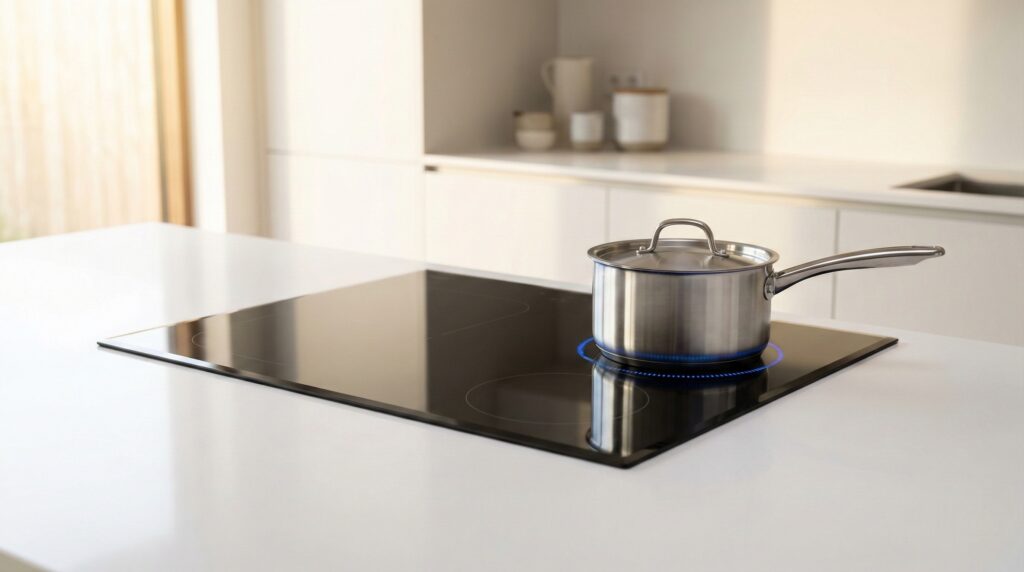
If you want the smoothest experience on an induction cooktop, prioritize two things: a strongly magnetic base and a very flat bottom that resists warping under induction’s rapid heat changes. For most US kitchens, a quality 10–12 inch fully-clad stainless skillet is the most versatile place to start, and you can always add a dedicated nonstick induction pan later if eggs and delicate fish are your daily drivers.
Top Recommended Skillets for Induction Cooktop
| Product | Best For | Price | Pros/Cons | Visit |
|---|---|---|---|---|
| Made In 12-Inch Stainless Steel Frying Pan | Most homes wanting one “do-it-all” induction pan | Check price on Amazon | Fully-clad-style stainless performance for searing and sauces; some customer experience mentions uneven heating or warping | Visit Amazon |
| Heritage Steel Eater Series 12 Inch Frying Pan | Induction cooks who want USA-made positioning and daily-use durability | Check price on Amazon | Induction-ready stainless skillet with strong cooking feedback; some buyer reviews flag finish/rivet-gap quirks | Visit Amazon |
| All-Clad D3 Stainless Steel 10-Inch Frying Pan | Smaller households and quick weeknight sautés on induction | Check price on Amazon | Well-known tri-ply stainless format for responsive cooking; some customer experience mentions scratching and condition issues on delivery | Visit Amazon |
Top Pick: Best Overall Skillets for Induction Cooktop
Made In 12-Inch Stainless Steel Frying Pan
Best for: A homeowner switching to induction in a typical US kitchen (30-inch range or induction cooktop) who wants one skillet that can sear, sauté, and build pan sauces without feeling flimsy.
The Good
- Induction-compatible stainless design (per the product listing), so it should reliably trigger the burner and deliver fast heat changes.
- 12-inch size is the practical “main pan” for family meals: chicken cutlets, fajita veg, shallow frying, and reducing sauces.
- Stainless steel is naturally coating-free, so you can use metal utensils and higher-heat techniques without worrying about nonstick wear.
- Strong buyer feedback volume overall (per listing positioning), which usually means lots of real kitchens have put it through everyday use.
The Bad
- Some buyer reviews report uneven heating and even warping on induction, which is exactly what you’re trying to avoid with induction cookware.
- Like any stainless skillet, it’s not “egg nonstick” by default — you’ll need preheat + fat + patience, or add a separate induction-rated nonstick pan.
- At this price, we expect consistently flat bases out of the box; if yours rocks or spins, it’s a return/exchange situation.
4.5/5 across 2,672 Amazon reviews
“These pans are truly a game-changer. I had a set of cheaper stainless skillets and never got good results. Food often stuck to the pan, I never got the sear I was after, and I thought I just couldn’t get the hang of cooking on stainless steel.Then I decided to buy the Made In 12 inch and 10 inch pans. Wow! The equipment you use definitely makes a big…” — Verified Amazon buyer (5 stars)
“Don’t listen to all those people who can’t cook who claim this pan burnt their food, that’s not the reason this is a bad product.This pan is over-priced, heats unevenly, I sent it back as it warped even when heating slowly as advised. I’m cooking on induction, maybe it’s not adapted but that’s not my problem. I’ve never had a stainless steel pan that stains…” — Verified Amazon buyer (1 stars)
“Misen, made in, lodge, our place’s titanium pan are all good. There’s plenty good brands with stainless steel.” — r/inductioncooking discussion
"These pans are truly a game-changer. I had a set of cheaper stainless skillets and never got good results." — verified buyer, 5 stars
Our Take: If you want one versatile induction skillet and you’re willing to use classic stainless technique (preheat, then oil, then food), this is the best “one-pan starter” in our current list — but inspect flatness early and exchange if you see rocking or warping.
Heritage Steel Eater Series 12 Inch Frying Pan
Best for: A serious home cook on induction who meal-preps breakfast and dinner in the same pan (hash browns, bacon, then eggs) and wants a sturdy stainless skillet with “keep it for years” vibes.
The Good
- Explicitly induction-ready (per listing), so you’re not guessing about compatibility.
- 12-inch format gives you room to brown without crowding — a big deal on induction, where power is high and moisture management matters.
- Stainless cooking surface supports fond development for pan sauces and gravies (a common reason people move away from nonstick).
- Customer experience includes strong “food didn’t stick with a little oil” notes, which aligns with good stainless technique.
The Bad
- Some buyer reviews mention finish imperfections and gaps around rivets, which can be annoying to clean and disappointing at this tier.
- Review volume appears lower than some mainstream competitors, so there’s less crowd-sourced long-term reporting.
- Still not a true nonstick solution for eggs unless your preheat and oil timing are dialed in.
4.5/5 across 228 Amazon reviews
“Amateur home cook. I got the 12 in. eater series. I bought this. Not a “sent for free for review. I like the brushes look vs their other Ti series. I cooked breakfast for dinner the day I got it. Hashbrowns bacon fried eggs, all in the same pan with washing in between. First hashbrowns. A little oil and they didn’t stick. Then bacon and eggs at the same…” — Verified Amazon buyer (5 stars)
“The pan looks and feels nice but the finish is not perfect. Look at the gap between the rivet and the pan in the photo below” — Verified Amazon buyer (3 stars)
"Hashbrowns bacon fried eggs, all in the same pan with washing in between. First hashbrowns. A little oil and they didn’t stick." — verified buyer, 5 stars
Our Take: If you like stainless and want a 12-inch induction pan for repeated daily cooking cycles (breakfast-to-dinner), this is a strong alternative to our top pick — just look closely at rivets/finish when it arrives.
All-Clad D3 Stainless Steel 10-Inch Frying Pan
Best for: An apartment or townhome kitchen with a smaller induction hob where a 10-inch pan matches the coil better for quick sautés, reheats, and two-portion dinners.
The Good
- 10-inch size can heat more evenly on many induction burners because the base is less likely to overhang the heating zone.
- Stainless tri-ply style cookware is a classic choice for induction because it responds quickly and handles frequent power changes well.
- Good fit if you want a lighter, easier-to-handle pan than many 12-inch skillets.
The Bad
- Customer experience (from the available review snippet data) includes complaints about scratching and about receiving a pan in “used” condition.
- As with any stainless skillet, eggs and delicate fish can stick without proper preheat and enough fat.
4.3/5 across 520 Amazon reviews
“My 10 inch pan came faster than Amazon even predicted. The box was packed inside a box. The pan is simply gorgeous and looks, feels, and performs superbly. I cant imagine a fry pan being better and there are some tests on YouTube and Consumer Reports that backs it up. I have gotten away from all NON STICK coatings, cant be good for you and if those coatings…” — Verified Amazon buyer (5 stars)
“Described as being some scratches on outside. Skillet has severe scratches on bottom and inside the skillet! Looks like it has been used and abused. Very disappointing, even as used and good as stated, it’s still quite expensive.” — Verified Amazon buyer (1 stars)
Our Take: If your main induction burner is on the smaller side, a 10-inch stainless pan like this can be the more consistent day-to-day choice — just check the item condition on arrival and don’t treat it like nonstick.
FAQ
How do I know if a skillet works on an induction cooktop?
Use the magnet test: a strong magnet should stick firmly to the bottom of the skillet. Induction cooktops heat cookware through magnetic coupling (not a glowing element), so if the base isn’t strongly ferromagnetic, performance can be poor or the burner may not even turn on; the U.S. Department of Energy explains the basics of how induction cooking transfers energy.
Why does my skillet heat unevenly on induction?
The most common causes are (1) the pan’s magnetic base area is larger than the cooktop’s heating coil, so the center heats hard while edges lag, and (2) the pan bottom isn’t perfectly flat, reducing efficient contact with the induction field. If you consistently see hot rings or cold edges, try a pan whose base diameter better matches your burner, and avoid cookware that rocks or has a crowned bottom.
Can induction cooktops warp pans?
They can contribute to warping, especially with thinner pans, because induction can ramp heat very fast and create steep temperature gradients across the base. To reduce thermal shock, preheat gradually, avoid blasting an empty pan on max power, and don’t move a screaming-hot pan directly under cold water.
Is stainless steel good for induction cooking?
Yes — as long as the base is magnetic and flat. Many stainless skillets intended for induction use a magnetic stainless layer and multi-ply construction that helps spread heat and reduces the odds of hot spots, which matters because induction delivers energy very directly to the base.
Do I need a nonstick skillet for induction?
Not required, but it’s the easiest path for eggs, pancakes, and delicate fish. If you stick with stainless only, plan on using the “preheat, then oil, then food” routine and waiting for natural release before flipping; otherwise, add an induction-rated nonstick skillet and use medium heat to protect the coating.
What pan size is best for induction — 10 inch or 12 inch?
It depends on your burner size and what you cook. A 10-inch skillet often matches common induction coil sizes better (more even heating), while a 12-inch skillet gives you more browning surface for family meals; if the 12-inch base significantly overhangs the heating zone, you can get under-heated edges.
Are there safety or electrical rules I should know for an induction cooktop?
For installation and circuit sizing, follow the manufacturer’s requirements and your local code; if you’re upgrading wiring or a breaker, talk to a licensed electrician (NEC-certified). For a code baseline, the NFPA 70 National Electrical Code is the primary reference used in the US.
Bottom Line
The Made In 12-Inch Stainless Steel Frying Pan is our top pick because it hits the core induction priorities: induction compatibility, all-around stainless versatility, and a size that works as a true “main skillet” for most households. Just remember that induction punishes warped or lightweight pans — inspect flatness early, ramp heat gradually, and use proper stainless technique for stick-prone foods.
Affiliate disclosure: We may earn affiliate commissions from qualifying purchases. This doesn't influence our reviews.