TL;DR
Mini split AC systems offer a high-efficiency alternative to traditional central air, allowing for zoned cooling and significant energy savings. For those seeking the best overall value, the Senville LETO series consistently balances performance with price. If you prefer a “do-it-yourself” approach to avoid the high cost of HVAC contractors, the MrCool DIY series remains the only true plug-and-play option. Budget-conscious buyers often look toward COSTWAY or ROVSUN for bedroom-sized units under $600, while eco-conscious homeowners are increasingly turning to solar-hybrid systems like the EG4 to run their cooling directly off the sun.
After researching and comparing dozens of home electrification products across heating, cooling, and energy efficiency categories, I’ve found that the shift toward mini splits isn’t just a trend—it’s a practical response to rising utility costs. I’ve seen homeowners slash their monthly bills by 40% just by switching from inefficient window units or aging central systems to these targeted ductless setups.
Introduction: Why Mini Splits are Replacing Central Air
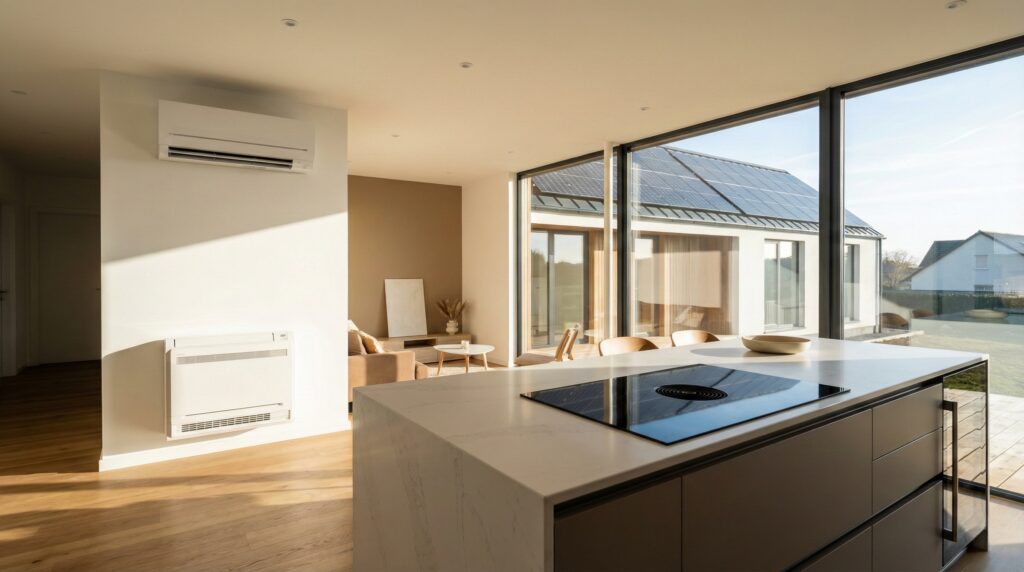
For years, central air conditioning was the gold standard for American homes. But as our focus shifts toward electrification and efficiency, the weaknesses of central air—leaky ducts, the inability to cool one room without cooling the whole house, and massive installation footprints—have become harder to ignore. Your home’s energy setup might benefit significantly from a ductless approach that places the cooling power exactly where you need it.
The beauty of a mini split lies in its simplicity and precision. By removing the need for ductwork, you eliminate the 20% to 30% of energy loss typically associated with air traveling through attic or crawlspace vents. Whether you are converting a garage into an office or trying to make an old farmhouse comfortable without tearing out the walls, these systems provide a flexible path forward. If you’re exploring more options for your home, our heating and cooling solutions roundup covers the top picks for modern climate control.
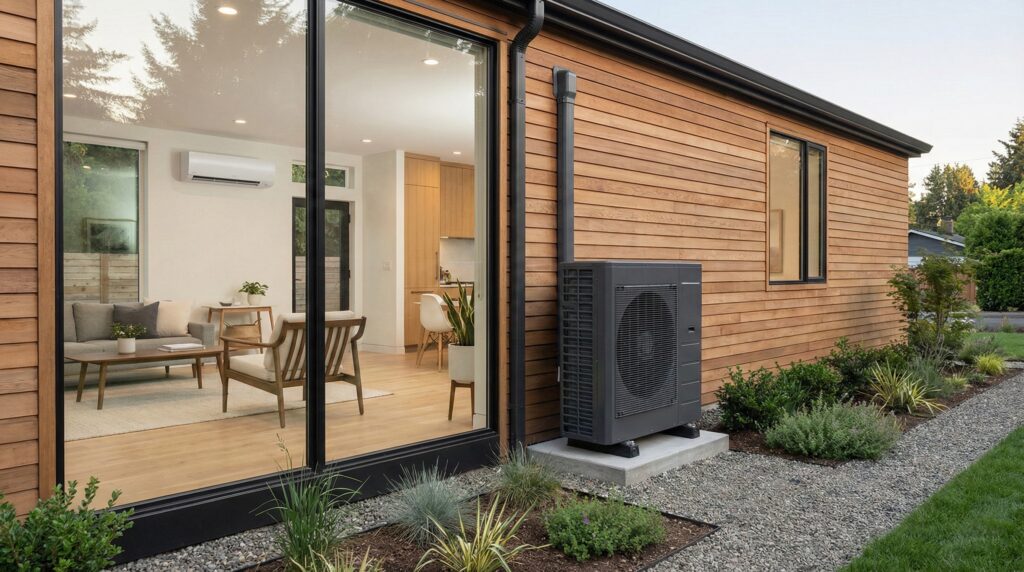
In practice, a mini split acts as a specialized heat pump. It doesn’t just “create” cold; it moves heat from inside your home to the outside. This same technology allows many of these units to provide efficient heating during the winter, making them a year-round solution for total home comfort. Before we dive into the specific units, it’s worth noting that if you’re strictly looking for heating performance, you might want to compare these against our list of the best mini split heat pumps specifically designed for sub-zero temperatures.
Top-Rated Mini Split Units
Senville LETO Series
The Senville LETO series is often the first name that comes up when discussing “bang for your buck.” It’s a reliable workhorse that doesn’t include the flashy bells and whistles of high-end Japanese brands but delivers solid cooling performance and a surprisingly quiet operation. In practice, the LETO series is a favorite for contractors who want to offer a budget-friendly install that won’t result in a callback two weeks later.
The Good
- Extremely quiet indoor whisper mode, perfect for Zoom calls or sleeping.
- Affordable entry point for 12,000 to 24,000 BTU needs.
- Includes a decent installation kit with a 16-foot line set.
The Bad
- The warranty is often voided if you do not have a licensed HVAC technician perform the final connection and vacuuming.
- The remote control feels a bit dated and lacks backlighting, which can be annoying at night.
Should You Buy? Best for budget-conscious homeowners who plan to hire a professional for the install. Skip if you are looking for a true DIY-certified warranty experience.
MrCool DIY Series
MrCool changed the landscape by offering a system that actually encourages the homeowner to do the work. The standout feature is the “Quick Connect” line set, which is pre-charged with R410A refrigerant. You don’t need a vacuum pump or specialized gauges to get this unit running. I’ve seen homeowners complete a full installation in a single afternoon, saving thousands in labor costs.
The Good
- No specialized HVAC tools required for the refrigerant lines.
- Smartphone app integration is standard, allowing you to pre-cool your office before you start work.
- Strong community support and plenty of installation videos available online.
The Bad
- The pre-charged lines are a fixed length; if they are too long, you have to coil the extra behind the outdoor unit, which can look messy.
- The outdoor unit is physically larger and heavier than most competitors in the same BTU class.
Should You Buy? Best for handy homeowners who want to save on labor costs. Skip if you have a very tight space where coiled line sets will be an eyesore.
COSTWAY 11500 BTU
When every dollar counts, the COSTWAY 11500 BTU unit enters the conversation. It is one of the most affordable units on the market that still offers an inverter compressor. While it lacks the high-end efficiency of more expensive models, it provides powerful cooling for medium-sized rooms at a price point that often beats out traditional window units.
The Good
- One of the lowest price-per-BTU ratios available.
- Includes a “Turbo” mode that cools down a hot room impressively fast.
- Simple, no-frills design that blends into most white walls.
The Bad
- The build quality of the plastic housing feels thin and can occasionally rattle at high speeds.
- User manuals are poorly translated, making the initial setup confusing for first-timers.
Should You Buy? Best for guest rooms or workshops that only need occasional cooling. Skip if you need a primary heating source for a cold climate.
ROVSUN 9000 BTU
The ROVSUN 9000 BTU unit is a standout for small-space efficiency. With a SEER2 rating that rivals much more expensive units, it’s designed to sip electricity while keeping a bedroom or small office perfectly chilled. In practice, many users report that this unit is so efficient they barely notice it on their monthly utility bill.
The Good
- High energy efficiency for the price point, often exceeding 20 SEER.
- Very compact indoor air handler, great for rooms with limited wall space.
- Quiet sleep mode that reduces fan speed to a minimum.
The Bad
- Parts can be difficult to source if something breaks outside of the warranty window.
- The technical support is mostly email-based and can be slow to respond.
Should You Buy? Best for small bedrooms (up to 400 sq ft) where efficiency is the top priority. Skip if you need to cool a large, open-concept living area.
EG4 Hybrid Solar Mini Split
If you are looking to take your home electrification to the next level, the EG4 Hybrid is a fascinating piece of tech. It can run directly off DC power from solar panels during the day and switch to AC grid power at night. This essentially allows you to cool your home for “free” during the sunniest parts of the day when cooling demand is highest.
The Good
- Drastically reduces daytime grid reliance without needing an expensive battery bank.
- Plug-and-play solar connectivity (no complex inverter needed for the panels).
- Extremely robust build quality designed for off-grid or hybrid use.
The Bad
- Significantly higher upfront cost compared to standard mini splits.
- You will need to buy and mount solar panels separately to get the full benefit.
Should You Buy? Best for solar enthusiasts and those in high-cost utility areas like California or Hawaii. Skip if you don’t have a clear, sunny spot for extra panels.
Oylus 12000 BTU
Oylus is a newer entrant that focuses on sleek design and integrated smart features. Their 12,000 BTU model is frequently praised for its modern aesthetic and the reliability of its WiFi module. While it doesn’t have the long-term track record of Senville or Pioneer, it offers a polished user experience for the modern smart home.
The Good
- Modern, minimalist design that looks better than the average “white box” air handler.
- Consistently stable WiFi connectivity for app-based control.
- Good dehumidification performance, which is a blessing in humid climates.
The Bad
- Limited long-term reviews on compressor durability compared to established brands.
- The installation kit wiring can be a bit short for some home layouts.
Should You Buy? Best for tech-savvy users who want a unit that looks as good as it performs. Skip if you prefer a brand with decades of history.
Midea U-Shaped Window Unit
While technically a window unit, the Midea U-Shaped model uses mini split technology (specifically an inverter compressor) to offer a hybrid experience. The “U” shape allows the window to close through the middle of the unit, keeping the loud compressor outside and the quiet air handler inside. It’s the perfect middle ground for renters or those who cannot commit to drilling holes in their walls.
The Good
- Incredibly quiet for a window unit; you can actually hear yourself think.
- Allows you to still open and close your window while the unit is installed.
- Blocks out much more outside noise than a traditional “accordion” window AC.
The Bad
- Installation is more complex than a standard window unit and requires a specialized bracket.
- Does not provide heating, so it is a seasonal cooling solution only.
Should You Buy? Best for renters or those who need a “no-drill” solution that feels like a mini split. Skip if you need year-round heating.
Mini Split Comparison Table
| Product Name | Best For | Price Range | Pros/Cons | Visit |
|---|---|---|---|---|
| Senville LETO Series | Overall Value | Check price on Amazon | Reliable; Quiet / Needs Pro Install | |
| MrCool DIY Series | Easiest Install | Check price on Amazon | No Special Tools / Bulky Lines | |
| COSTWAY 11500 BTU | Strict Budgets | Check price on Amazon | Very Affordable / Build Quality | |
| ROVSUN 9000 BTU | High Efficiency | Check price on Amazon | High SEER2 / Slow Tech Support | |
| Oylus 12000 BTU | Small Smart Homes | Check price on Amazon | Great WiFi; Sleek / New Brand | |
| EG4 Hybrid Solar Mini Split | solar enthusiasts and those in… | Check price on Amazon | Drastically reduces daytime grid reliance… / Significantly higher upfront cost… | |
| Midea U-Shaped Window Unit | renters or those | Check price on Amazon | Incredibly quiet for a window unit; you… / Installation is more complex than a… |
Other Notable Alternatives Worth Considering
If the main picks don’t quite fit your needs, consider the DELLA Motto Series. It offers a very balanced feature set with a focus on dehumidification, making it a strong contender for coastal regions. For those intrigued by the EG4 but wanting more brand variety, Airspool provides a similar solar-hybrid unit that has gained significant traction on forums like r/heatpumps. Finally, the Pioneer ductless systems are widely considered the standard “contractor grade” units for those who want a long-standing brand with accessible replacement parts and solid customer support.
What Real Users Are Saying (Reddit Insights)
General Sentiment
In the community discussions on r/HVAC and r/heatpumps, there is a clear divide. Most professionals warn against “cheap Amazon brands,” citing the difficulty of finding replacement parts in five years. However, homeowners often push back, noting that the savings on the initial unit are so high that they could buy a second entire system and still come out ahead compared to a $15,000 Mitsubishi installation from a local dealer.
Top Complaints & Warnings
The biggest pain point for DIYers isn’t the HVAC itself, but the unexpected “site prep.” Many users report that cutting through brick or block walls was significantly harder than expected. Others warn about the high cost of tools if you aren’t using a MrCool pre-charged system.
“Typical turnkey mini split installations cost 3x the materials cost. Your $600 does not even include accessories such as mounting stand, wiring, breaker, or disconnect.” — r/heatpumps
“Big cost for me was cutting through a brick + block wall. Mine is great in my office, but keep in mind these need dedicated electrical runs.” — r/HVAC
Budget Tips & Value Picks
For those on a strict budget, the consensus is to look for Midea-manufactured units. Midea is one of the largest AC manufacturers globally and makes many of the components found in “off-brand” units. Users often suggest using 2-inch foam insulation board to seal window units rather than the flimsy accordion panels they come with for a massive boost in efficiency.
Choosing the Right Unit for Your Space
BTU Sizing: From Bedrooms to Multi-Story Houses
Getting the size right is crucial. A unit that is too small will run constantly and fail to cool the room, while a unit that is too large will “short cycle,” turning on and off so frequently that it never properly dehumidifies the space. Generally, a 9,000 BTU unit covers about 350-400 square feet, while a 12,000 BTU unit handles up to 550 square feet. For a multi-story house, you may need a multi-zone condenser that can power several indoor air handlers at once.
The Importance of SEER2 Ratings
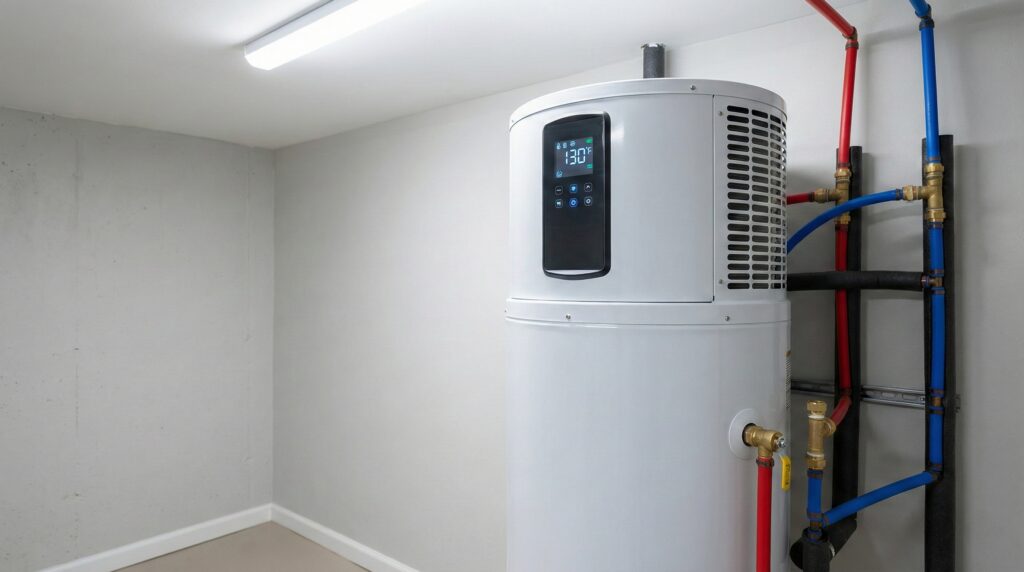
In high-cost utility areas, the SEER2 rating (Seasonal Energy Efficiency Ratio) is your best friend. The “2” indicates it meets newer, more rigorous testing standards. A unit with a SEER2 of 20 or higher is exceptionally efficient. While you pay more upfront, the lower monthly draw on your electrical panel pays for itself within a few seasons. If you’re also upgrading your water heater to save even more, check out our guide on the latest water heating systems for maximum efficiency.
Cold Climate Performance: Michigan and PA Winters
If you live in a place like Michigan or Pennsylvania, you can’t just pick any mini split. You need a “Hyper Heat” or “Low Ambient” model. Standard units lose effectiveness rapidly once temperatures drop below 32°F. High-end units can maintain 100% of their heating capacity even at 5°F. Always check the “heating operating range” before buying if you intend to use this as your primary heat source in the north.
Hidden Costs of Installation: Tools You Will Need
Vacuum Pumps and Flaring Tools
Unless you buy a MrCool DIY unit, you must “evacuate” the lines. This requires a vacuum pump and a manifold gauge set. Buying these tools will add at least $200 to your project cost. Furthermore, many budget units come with pre-flared lines that are prone to leaking; professionals often recommend cutting those off and using a high-quality flaring tool to make your own connections.
Micron Gauges and Nitrogen Testing
To truly ensure your system won’t leak its expensive refrigerant, you need a micron gauge. This tool measures the depth of the vacuum. A standard gauge set isn’t precise enough to tell you if there is a tiny leak. Many DIYers skip this step, only to find their unit stops cooling six months later. Nitrogen testing is another “pro” step that involves pressurizing the lines with nitrogen to find leaks before you release the refrigerant.
Electrical Requirements: Disconnects and Breakers
A mini split isn’t just a “plug-in” appliance. It needs a dedicated circuit from your main electrical panel. You will also need an outdoor “disconnect” box near the condenser so a technician can safely cut power. If your panel is full, you might need to hire an electrician, which can add $500 to $1,000 to the total cost. For more on high-power home upgrades, you can browse our section on high-efficiency home appliances.
Best Mini Split AC by Category
Best for Garages and Workshops
The MrCool DIY Series is the clear winner here. Garages often have concrete floors and block walls, making it difficult to find an HVAC pro willing to do a small, custom job. Being able to do it yourself makes it feasible.
Best for Apartments and Rentals
The Midea U-Shaped Window Unit is the only choice that doesn’t involve permanent modifications. It offers the quiet, efficient performance of a mini split without the “petty” damage to your security deposit.
Best for Off-Grid Living
The EG4 Hybrid Solar is unmatched for cabins or remote homes. Being able to plug panels directly into the AC unit without a complex battery system is a huge technical advantage.
Frequently Asked Questions
Can I install a mini split myself without a license?
Technically, you can perform the physical installation of the indoor and outdoor units. However, handling refrigerant generally requires an EPA 608 certification. This is why the MrCool DIY Series is so popular; its lines are pre-sealed. For other brands like Senville, you may need a pro to finish the job to keep your warranty intact.
What is the difference between SEER and SEER2 ratings?
SEER2 is the updated standard that uses more realistic external static pressure during testing. It more accurately reflects how a unit like the ROVSUN 9000 BTU will perform in a real home rather than a lab. A SEER2 rating will usually be about 4.5% lower than the old SEER rating for the same unit.
Are solar hybrid mini splits worth the extra cost?
If you live in a sunny climate with high electricity rates, yes. Units like the EG4 Hybrid Solar can pay for themselves quickly by eliminating daytime cooling costs. However, if you are in a cloudy region, the extra upfront investment for solar capability might not see a return for many years.
How many mini split units do I need for a 3-story old house?
Typically, you want one air handler per major floor or large room. For an old 3-story house, a multi-zone system with three indoor heads is best. This allows you to cool the third-floor bedroom at night without wasting energy on the first-floor kitchen. For more complex setups, consider consulting our guide on the best mini split heat pump multi-zone options.
Do mini splits work for heating in extreme cold like Michigan?
Yes, but you must choose a unit specifically rated for low-ambient heating. Many standard units fail at 32°F, but “Hyper Heat” models can function down to -13°F. If you’re in Michigan or PA, look for units from Pioneer or Senville that explicitly mention cold-climate optimization to ensure you aren’t left shivering in January.
Conclusion: Is a Mini Split Right for You?
Choosing a mini split comes down to your willingness to deal with the installation. If you are handy and want to save money, a DIY kit is a fantastic project that yields immediate results. If you prefer the peace of mind that comes with a professional warranty, a contractor-installed unit from a brand like Senville or Pioneer is the way to go. As we look ahead to the energy landscape in 2026, these systems are becoming the standard for efficient home electrification. They offer a level of control and savings that old central systems simply cannot match.
We may earn affiliate commissions from qualifying purchases. This doesn’t influence our reviews.